
Blooming
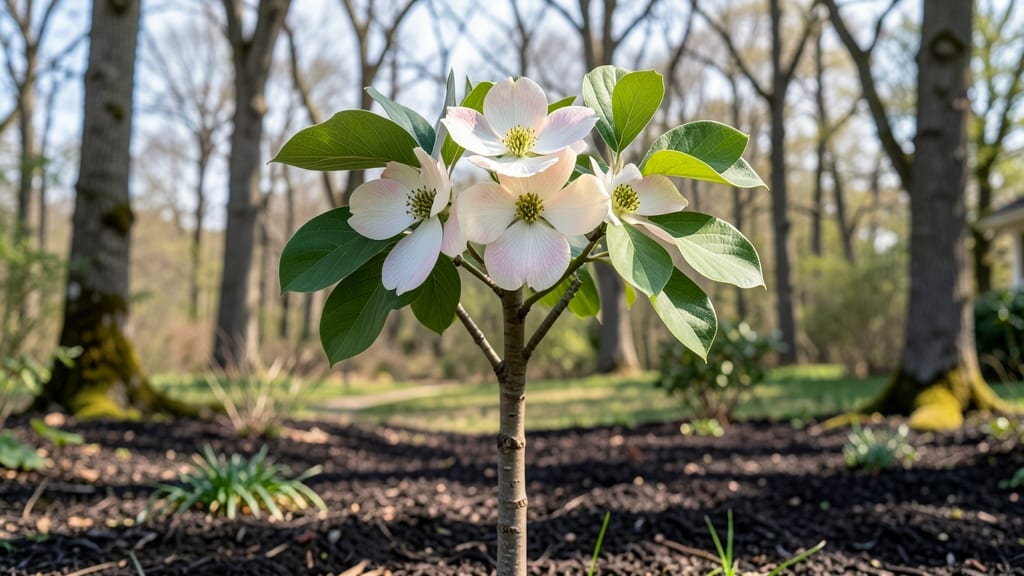
The meaning of dogwood blooms centers on purity, hope, and spring renewal, deeply rooted in Native American traditions and Christian resurrection symbolism. Their delicate blossoms represent the fragile yet powerful transition from winter's end to new growth.
The dogwood's spiritual significance runs deeper than its beauty—it's a living metaphor for resilience.
In Native American traditions, the tree's wood was sacred for crafting tools and ceremonial objects, while its blossoms became symbols of hope during harsh winters. 🌸 Christian lore connects dogwood flowers to Easter, where their white petals are said to represent Christ's purity, and their four petals symbolize the four Gospels.
This dual heritage makes dogwoods a powerful choice for gardens where you want to honor both nature's cycles and spiritual renewal.
What makes these blooms particularly meaningful is their timing—they appear just as winter's grip loosens, signaling nature's promise of rebirth. Many gardeners plant dogwoods not just for their visual appeal, but to create living spaces that reflect these timeless themes of hope and renewal.
💡 In This Article
- Historical and Cultural Significance of Dogwood Flowers
- Best Ways to Incorporate Dogwood Blooms in Gardens
Historical and cultural significance of dogwood flowers
The dogwood's deep cultural roots begin with Native American tribes, who revered its wood for crafting sacred tools and ceremonial objects. The Cherokee, for instance, used dogwood branches to create bows and arrows, while the Iroquois considered the tree's bark medicinal.
These early uses established the dogwood as a symbol of practical strength and spiritual connection to the land. 🌿 The tree's resilience—thriving in both forest understories and open meadows—mirrored Native American values of adaptability and harmony with nature.
European settlers later adopted the dogwood's symbolism, transforming it into a metaphor for Christian themes. During colonial times, the four-petaled white blooms became associated with the Holy Trinity and the Four Gospels, creating a visual link to Easter celebrations.
In 19th-century America, dogwood blossoms appeared in religious art and poetry as symbols of purity and divine protection. The tree's early spring blooming—often before leaves emerge—reinforced its message of hope during Lent and Easter, when Christians reflect on renewal and resurrection.
What makes this symbolism unique is how it blends natural cycles with human spirituality. The dogwood's blooms typically appear between March and May, depending on the species and climate zone, aligning perfectly with the Christian liturgical calendar.
This timing isn't coincidental—it reflects how different cultures observe and interpret nature's rhythms. For example, the Japanese also associate dogwood (called "kiri") with spring festivals, though their symbolism centers more on fleeting beauty than religious themes. 🌸
Modern interpretations continue to evolve. Today, dogwoods appear in weddings as symbols of enduring love (their wood was historically used for wedding rings) and in memorial gardens to represent peaceful transitions.
The tree's adaptability to various climates—from USDA zones 5-9—has also made it a universal symbol of resilience across continents. Whether viewed through a spiritual lens or as a practical garden choice, the dogwood's meaning remains deeply tied to humanity's relationship with nature's cycles.
Interestingly, the dogwood's scientific name, Cornus florida, reflects its dual nature—"florida" meaning "flowery" in Latin, while "cornus" references its wood's hardness. This linguistic connection underscores how the tree embodies both beauty and strength.
In Southern folklore, dogwoods were even said to protect against evil spirits, their blossoms acting as natural charms. This protective symbolism persists today in some garden designs where dogwoods are planted near entrances to welcome positive energy. 💫
The dogwood's cultural journey reveals how a single plant can bridge vastly different worldviews. From Native American sacred groves to Christian Easter decorations, its meaning has remained remarkably consistent: a reminder of nature's capacity for renewal and the human need to find hope in seasonal change.
This adaptability is why dogwoods continue to thrive—not just in gardens, but in our collective imagination.