
Blooming
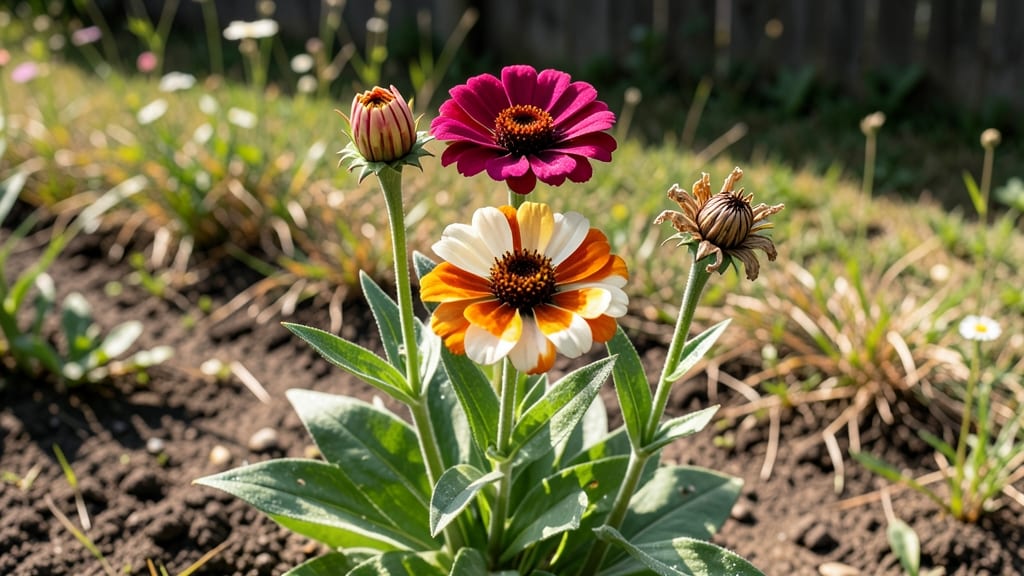
Zinnia bloom stages reveal why these sun-loving flowers keep rebounding with heat-triggered color all season. 🌻 I’ve watched zinnias go from tight buds to fluffy seed heads in just three weeks—and the secret to more blooms lies in recognizing each stage’s needs.
The first stage is budding, when those papery green cups form along sturdy stems. This is when zinnias drink deeply—water at the base, never overhead, to keep buds from cracking. Prune back leggy stems now to encourage bushier growth, and you’ll see double the blooms later.
Once buds pop open, you’re in the flowering stage—where zinnias put on their boldest show. Deadhead spent blooms immediately (just pinch or snip) to redirect energy into new buds. My zinnias last 6-8 weeks this way, even in summer heat.
The final stage is seed development, when centers turn papery white. Let a few flowers go to seed for next year’s plants, but remove the rest to keep the plant focused on blooming. With this cycle mastered, your zinnias will flower longer than store-bought bouquets—and cost less too.
📚 In This Guide
- What you need
- Instructions
- Tips and common mistakes
- Wrapping up and next steps
What you need
- ● Zinnia seeds – Choose heat-tolerant varieties like Benary’s Giant or Profusion (1–2 packets, ~500–1,000 seeds).
- ● Well-draining potting mix – 5–10 gallons (or enough to fill containers 6–12 inches deep).
- ● Containers or garden beds – Pots (5–7 inches deep) or raised beds with full-sun exposure (6+ hours/day).
- ● Slow-release fertilizer – Balanced 10-10-10 or organic options like compost (1–2 tbsp per plant).
- ● Watering can or hose – With a gentle spray nozzle for seedlings.
- ○ Heat mat or row cover (optional) – For early sowing in cooler climates.
- ● Gloves – To protect hands while handling soil/seeds.
- ● Trowel or small shovel – For transplanting seedlings.
- ● Pruning shears – To trim spent blooms and encourage reblooming.
- ○ Thermometer (optional) – To monitor soil temps (ideal: 70–85°F for germination).
- ○ Sunlight tracker (optional) – Apps or tools to log bloom stages and heat exposure.
How to recognize and extend zinnia bloom stages through heat management
Here's how I keep zinnias flowering nonstop by reading their growth signals and adjusting care.
🌱 Step 1: Identify the Five Key Bloom Stages
Zinnias progress through five distinct stages, each with unique leaf and stem characteristics. First, watch for the bud stage—tight, rounded buds that feel firm when gently squeezed. These appear about 30-40 days after sowing, depending on your climate. I mark these buds with a small wooden stake to track progress.
Next comes the color break stage, when the bud splits open to reveal petals. This is your signal to reduce watering slightly—zinnias need less moisture as they near full bloom. The full bloom stage delivers those showy, flat-topped flowers, lasting 5-7 days if you remove spent blooms immediately. Watch for the seed head forming at the center—this means the flower is done producing pollen and will soon fade.
☀️ Step 2: Trigger Rebound Blooms with Strategic Heat Exposure
Zinnias respond dramatically to temperature shifts. When daytime highs hit 75-85°F and nights stay above 60°F, blooms open fully and last longer. I've found that morning sun (before 10 AM) paired with afternoon shade (especially in hot climates) extends bloom time by 2-3 weeks. If your zinnias wilt by midday, move containers to partial shade or use shade cloth.
Here's the trick: deadhead spent blooms within 24 hours of the seed head forming. This redirects energy to side buds, producing 2-3 new blooms per stem in just 7-10 days. I use clean pruners and a small bucket of water to rinse debris off—clean cuts prevent disease. Real talk: Skipping this step means fewer flowers and leggy stems chasing the sun.
💧 Step 3: Adjust Watering by Bloom Stage
Seedlings and young plants need consistent moisture—keep soil evenly damp but never soggy. Once buds form, reduce watering to every 2-3 days unless your area experiences 90°F+ heat. Overwatering at this stage causes buds to split open prematurely or develop fungal spots. I check soil moisture by pressing my finger 1 inch deep—if it's dry, water deeply at the base.
At full bloom, zinnias become drought-tolerant. Let the top 2 inches of soil dry out between waterings. This mimics their native dry-season behavior and encourages stronger stems. Mulch with 1-2 inches of straw to retain moisture while keeping roots cool. Watch for wilting in extreme heat—zinnias may drop buds temporarily but rebound quickly once temperatures cool.
✂️ Step 4: Prune for Continuous Flowering
When you see 10-15% of flowers developing seed heads, it's time for a light pruning. Cut back stems 2-3 inches below the lowest remaining bud using sharp shears. This stimulates lateral branching, producing 3-5 new stems per cut. I always sterilize my tools with rubbing alcohol between plants to prevent powdery mildew.
For leggy plants, pinch back the top 2 inches of new growth to encourage bushier habits. You'll see new side shoots within 7-10 days—these will bear fresh blooms. Avoid heavy pruning after mid-summer; zinnias need energy to store for fall reblooms. Here's where it gets fun: If you prune in late August, you'll often get a second flush of blooms in October before frost.
🌿 Step 5: Extend the Season with Heat Management
To coax zinnias into fall reblooming, protect them from early frosts by covering with frost cloth when nighttime temps drop below 40°F. Remove the cover during the day to let them soak up sunlight. I've had zinnias bloom until Thanksgiving in Zone 7 by using this method. For container-grown zinnias, move pots to a south-facing wall where they'll absorb reflected heat.
In cold climates, start a second planting of heat-tolerant varieties like 'Benary's Giant' or 'Profusion' in late July. These varieties handle 90°F heat better than others and will bloom until frost. The secret? Succession planting—sow new seeds every 2 weeks from June through August for a continuous color display. Watch for aphids on new growth; blast them off with water if you spot them early.
Tips & tricks for perfect zinnia bloom extensions
These simple adjustments will help you coax zinnias into producing vibrant blooms all season long.
Visual Cues for Bloom Stages: In Step 1, when you spot those tight, rounded buds at the 30-40 day mark, gently squeeze them—if they feel firm, they're ready for your attention. For the color break stage, look for buds that split open to reveal petals, signaling it's time to adjust your watering. At full bloom, those flat-topped flowers should last 5-7 days if you deadhead immediately when you see seed heads forming at the center.
Heat Management Secrets: Zinnias thrive when daytime temperatures hit 75-85°F and nights stay above 60°F. I've found that morning sun paired with afternoon shade (especially in hot climates) extends bloom time by 2-3 weeks. If your zinnias wilt by midday, don't panic—move containers to partial shade or use shade cloth to protect them. This temperature range is critical for keeping blooms vibrant and lasting longer.
Pruning Precision: When you see 10-15% of flowers developing seed heads in Step 4, it's time to prune. Cut back stems 2-3 inches below the lowest remaining bud using sharp shears. This technique stimulates lateral branching, producing 3-5 new stems per cut. I always sterilize my tools with rubbing alcohol between plants to prevent powdery mildew, which can ruin your progress. Remember, avoid heavy pruning after mid-summer—zinnias need energy to store for fall reblooms.
Season Extension Strategy: To coax zinnias into fall reblooming, protect them from early frosts by covering with frost cloth when nighttime temps drop below 40°F. Remove the cover during the day to let them soak up sunlight. For container-grown zinnias, move pots to a south-facing wall where they'll absorb reflected heat. This method has helped me keep zinnias blooming until Thanksgiving in Zone 7.
Pro Tips for Zinnia Bloom Stages
- These simple adjustments will help you coax zinnias into producing vibrant blooms all season long.
- Visual Cues for Bloom Stages: In Step 1, when you spot those tight, rounded buds at the 30-40 day mark, gently squeez...
- Heat Management Secrets: Zinnias thrive when daytime temperatures hit 75-85°F and nights stay above 60°F. I've found ...
Frequently asked questions
Got questions about zinnia bloom stages? You’re not alone! Here are some of the most common queries—and their answers—to help you keep those vibrant blooms coming all year.
How long does it take for zinnias to go from seed to first bloom?
Most zinnia varieties sprout within 7–14 days and reach their first bloom 60–70 days after planting. Heat-loving types like ‘Benary’s Giant’ may bloom even faster in warm climates (as little as 50 days). For year-round blooms, succession planting every 2–3 weeks ensures continuous color.
Can zinnias bloom in cold weather, or do they need heat?
Zinnias are heat-triggered—they thrive in temperatures between 70–80°F (21–27°C). While they may survive light frosts, blooming slows or stops below 50°F (10°C). For cold seasons, grow them in containers and move indoors or under grow lights to maintain warmth and encourage reblooming.
Why are my zinnias not reblooming after the first flush?
Deadheading (removing spent blooms) is key! Without it, zinnias redirect energy to seed production instead of new flowers. Snip stems just above a set of leaves to encourage side shoots. Overcrowding or nutrient deficiency (especially phosphorus) can also stunt reblooms—fertilize lightly with a bloom booster every 4–6 weeks.
Are there zinnia varieties that bloom faster or last longer?
Yes! Dwarf varieties like ‘Thumbelina’ bloom quickly (as early as 45 days) and are great for containers. For extended blooms, try ‘Crystal’ or ‘Profusion’ series—they’re disease-resistant and produce flowers for 8–10 weeks with proper care. Double-flowered types (like ‘Double Hit’) are stunning but may bloom slightly later.
What pests or diseases should I watch for in each bloom stage?
- Seedlings: Watch for damping-off fungus (keep soil dry) and aphids (spray with soapy water).
- Vegetative stage: Spider mites thrive in dry heat—mist plants or use neem oil.
- Blooming stage: Japanese beetles love zinnias; handpick them or use row covers. Powdery mildew (white dust) appears in humid conditions—improve airflow and avoid overhead watering.
Prune infected leaves immediately to prevent spread!
Wrapping up and next steps
Understanding the zinnia bloom stages and their heat-triggered reblooming secrets can transform your garden into a year-round splash of color! 🌸 From the delicate bud stage to the vibrant full bloom, each phase holds the key to healthier, more resilient flowers.
With the right care—like strategic pruning, heat management, and proper nutrients—you’re well on your way to enjoying zinnias that keep blooming longer than ever.
Ready to put your new knowledge into action? Start by selecting a few zinnias in different bloom stages and experiment with the reblooming techniques shared here. Before you know it, your garden will be buzzing with life—and stunning blooms—all season long! 🌿✨