Welcome to Rose Bloom Guide
You’ve got a seed packet in your hand—maybe it’s heirloom tomatoes or fragrant lavender—and the instructions say ‘plant in full sun, 6–8 weeks before last frost.’ But your backyard has stubborn shade, your soil drains like sand, and the last time you tried growing anything, the slugs won first.
This site exists for those moments: when the promise of a garden feels just out of reach.
Here, you’ll find the lessons that don’t get written down in seed catalogs: how to cheat shade with the right plants, how to turn stubborn clay into soil that holds water, and why some failures (like the time the zucchini vines collapsed under their own weight) teach more than successes.
No fluff, no ‘ideal’ conditions—just what actually grows, where, and how to make it thrive *in your yard*, not someone else’s.
Our story
The first time Warren Beaudry tried growing food, it was 1998 in a rented backyard in Columbus, Ohio. He’d bought a $10 packet of ‘Easy-Grow’ lettuce seeds, followed the instructions to the letter, and waited. Three weeks later, the soil was bare except for a single, wilted leaf. The problem?
The landlord had installed a new patio over half the garden bed the week before planting. No one had told him shade changes everything.
That failure led to a decade of trial and error—digging test pits to check soil drainage, salvaging failed beds by amending them with compost and mulch, and keeping a notebook of what *actually* sprouted in his corner of the Midwest.
The breakthrough came in 2012, when he swapped the lettuce for ‘Black Seeded Simpson’ lettuce (which tolerates partial shade) and finally got a harvest. The real lesson? Most gardening advice assumes perfect conditions. This site fixes that.
By 2015, the notes had grown into a shared Google Doc with friends who gardened in apartments, urban lots, and rural homesteads. Someone in Chicago asked how to grow tomatoes in a 4’x4’ raised bed; someone in Portland needed shade-tolerant herbs.
The answers became the first drafts of what’s here now. The site launched in 2018 not as a ‘perfect garden’ manual, but as a collection of workarounds for the gardens most people actually have.
What we stand for
This site believes gardening should work for the places and people it’s designed *against*: the small urban plot, the heavy clay soil, the short growing season. We reject the myth that ‘good gardening’ requires sunshine, deep pockets, or a green thumb.
What we offer instead is stubborn problem-solving—like the time we turned a soggy basement into a micro-green growing station using repurposed aquarium lights.
What you will always get here
- Practical fixes for ‘impossible’ growing conditions (e.g., ‘How to grow carrots in rock-hard soil’).
- Clear timelines with real-world adjustments (e.g., ‘Plant peas in Zone 5 by April 15—or risk a late frost’).
- Warnings about what *won’t* work, tested by us (e.g., ‘Avoid ‘Miracle-Gro’ for tomatoes—it causes blossom end rot’).
- Photos of the ugly middle stages (wilting seedlings, lopsided squash) because gardens aren’t just pretty.
Meet the team
The writers here are gardeners who’ve spent years turning ‘shouldn’t grow here’ into ‘thrives here.’ They bring the scars (and the successes) of failed beds, the patience of watching roots tangle underground, and the habit of measuring soil pH with a cheap kit instead of guessing.
Their work is built on the principle that the best advice comes from people who’ve already dug the hole—and know where the rocks are.
Warren Beaudry

Warren Beaudry is the founder of *Rose Bloom Guide*, and his approach to gardening is shaped by the Ohio backyards of his childhood, where his grandpa taught him to ‘listen to the soil’ before listening to the seed packet.
He started this site after realizing most gardening advice ignored the reality of renters, small spaces, and less-than-ideal dirt. His desk in the ‘office’ (a sunroom with a south-facing window) is cluttered with a trowel, a soil moisture meter, and a stack of seed catalogs dog-eared to the ‘hardy’ varieties.
He still gets the spacing wrong on his first try every season—this time, it was the basil, planted 18 inches apart instead of 12.
I don’t trust a gardening tip unless it’s been tested in a place where something *should* have died. The best lessons come from the plants that refuse to cooperate—and then somehow do. Like that time the peppers grew in the shade of the garage because I forgot to rotate the pots. They were smaller, but they were *peppers*. That’s the kind of stubbornness we write about here.
Warren Beaudry
How we create our content
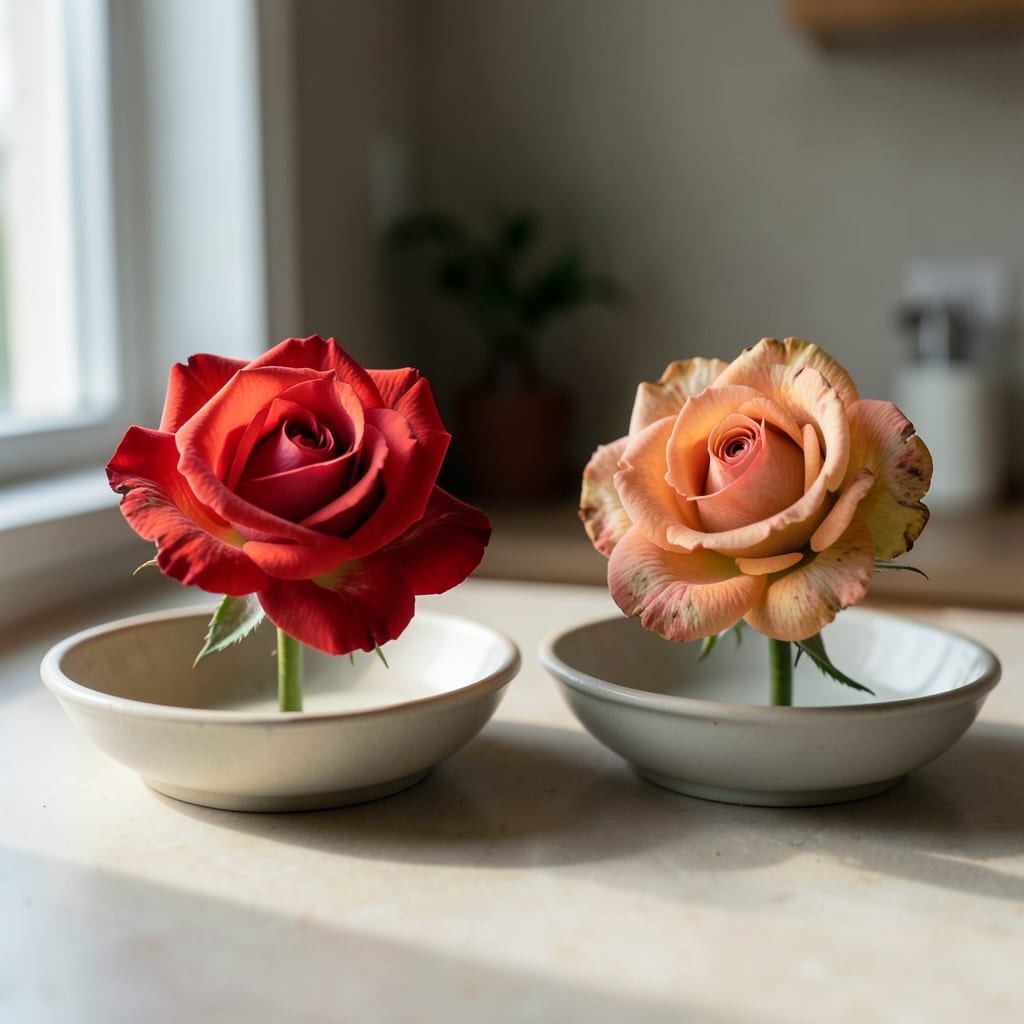
Every guide here begins with a problem someone brought to us—‘My tomatoes keep cracking,’ ‘Nothing grows in this shade,’ ‘My compost smells like rotten eggs.’ We don’t start with a blank page or a ‘perfect’ scenario.
We start with the actual conditions: the pH of the soil, the hours of light, the tools on hand. The first draft is always written in pencil, next to the plant in question, with notes like ‘Day 12: added Epsom salt’ scrawled in the margins.
Step 1: the test bed
We plant (or pot) the subject in the exact conditions described—shady corner, rocky soil, a windowsill in February—and document everything.
That means weighing out compost by the gram if the original advice said ‘a handful,’ timing watering to the minute in a drought, and photographing the ‘before’ stage even if it’s just a pile of dirt.
For vegetables, we track growth in a spreadsheet: ‘Day 0: planted,’ ‘Day 7: 1 inch tall,’ ‘Day 14: aphids appear.’ No shortcuts. If a method fails after three tries, it gets crossed out.
Step 2: the fix-it round
The second phase is where the real work happens. We adjust one variable at a time—more mulch, a different fertilizer, a trellis for vines—and watch what changes.
For example, when ‘determinate’ tomato varieties kept splitting in high heat, we switched to ‘heat-set’ seeds, staggered planting dates, and shaded the plants with cheesecloth.
The final guide isn’t just ‘plant these tomatoes’; it’s ‘plant these tomatoes *this way*, and here’s why the other method failed for us (and likely will for you too).’
Join our community
This site exists because gardening is better when you’re not figuring it out alone.
Here, you’ll find answers to questions like ‘How do I save seeds from my heirloom beans?’ or ‘What’s eating my hostas at night?’—and you’ll also see what others have tried when the same problem turned up in their gardens.
Good suggestions get tested in our ‘Community Fixes’ section, where we run side-by-side comparisons (e.g., ‘Neem oil vs. diatomaceous earth for slugs’). The best part? The failures get shared too, because someone else’s mistake is often the clue you need.
Let's connect
We love hearing about the gardens you’re fighting for—the ones with the stubborn shade, the soil that refuses to cooperate, or the plants that keep surprising you. Tell us what’s working, what’s not, or what you wish someone had warned you about.
If you’ve got a photo of a ‘shouldn’t grow here’ plant thriving in your corner of the world, we’d love to see it. For questions or stories, visit the contact page.
The guides are grouped by category: Advice, Aphids, Blooming, Companion Plants, Container Gardens and Diseases.