
Blooming
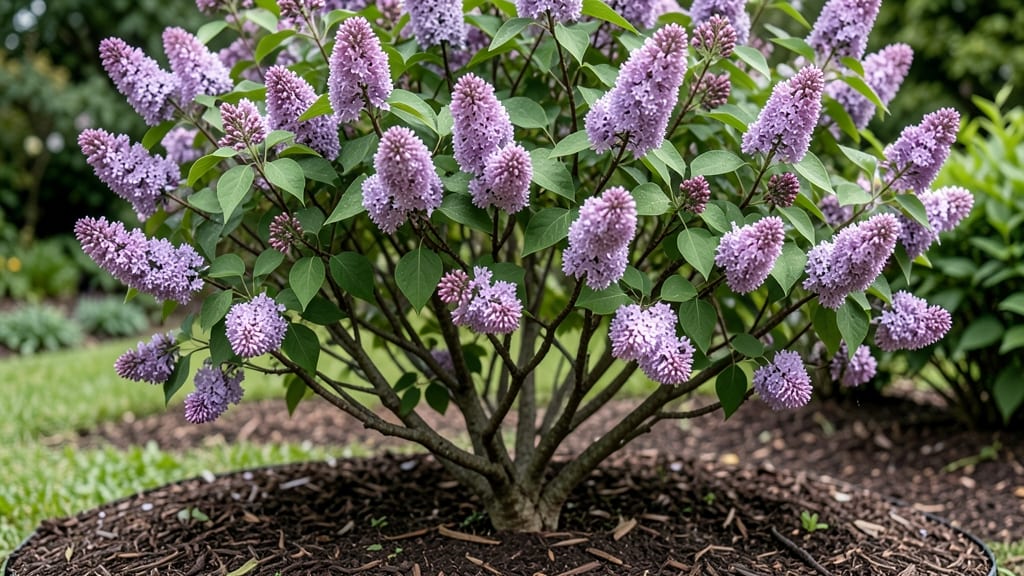
Lilacs bloom on old wood, meaning their flowers grow on last year's stems rather than fresh growth. Cutting back too much or pruning at the wrong time removes next year's blooms, while strategic trimming after flowering promotes healthier regrowth and bigger clusters.
This unique flowering pattern means lilacs store their flower buds during dormancy, so any aggressive pruning after summer can wipe out next season's blooms. 🌸 Unlike shrubs that flower on new wood, lilacs need those mature stems to produce their signature fragrant clusters.
I've learned the hard way that waiting until late summer to prune can turn a lush shrub into a bare branch overnight.
For best results, wait until late June or early July—right after the flowers fade—before making any cuts. This timing ensures you're only removing spent blooms and doesn't touch the dormant buds forming for next year.
A sharp pair of pruners and a clean cut at a 45-degree angle helps prevent disease while encouraging stronger regrowth.
💡 In This Article
- Why Lilacs Rely on Old Wood for Flowering
- Best Pruning Practices to Preserve Lilac Blooms
Why lilacs rely on old wood for flowering
The secret behind lilacs' stunning spring blooms lies in their unique bud formation process. Unlike many shrubs that produce flowers on new wood, lilacs form their flower buds during late summer and fall on the previous year's growth.
These buds remain dormant through winter, waiting for warm temperatures to trigger blooming. The stems that produce these buds are called "old wood," and they must remain intact to support next season's flowers.
Here's what happens botanically: In late summer (around August), lilacs begin developing flower buds at the leaf axils—those small notches where leaves meet the stem. Each bud contains the genetic blueprint for next year's blooms, and removing the stem cuts off the entire flower cluster.
For example, a mature lilac stem might carry 20-30 flower buds along its length, all of which would be lost if you prune it back in fall or winter. 🌿 This explains why lilacs often look bare after aggressive pruning—they've lost their future blooms.
The dormancy period is critical because it allows the plant to store energy in its roots and stems. During this time, lilacs are particularly vulnerable to pruning damage. If you cut back stems after mid-July, you risk removing these precious dormant buds before they've had a chance to mature.
This is why many gardeners notice their lilacs fail to bloom the following year after late summer pruning.
Comparing lilacs to other shrubs highlights this difference. Plants like hydrangeas or forsythia flower on new wood, meaning you can prune them annually without affecting blooms. Lilacs, however, are more delicate—they rely entirely on last year's stems.
Even a 1-inch cut too deep can remove dozens of potential flowers, which is why precision matters when pruning these shrubs.
What makes this even more fascinating is how lilacs prioritize energy. When you prune correctly, the plant directs its resources toward strengthening the remaining stems, resulting in larger, more abundant blooms. The key is understanding that every cut is permanent—once those old stems are gone, so are next year's flowers.
This is why I always recommend marking stems before cutting to visualize what you're removing.
Another important factor is stem thickness. Mature lilac stems (typically 1/2 to 3/4 inch in diameter) produce the most flowers, while thinner stems may have fewer buds. This is why older lilac bushes often outperform younger ones—they've had more years to build up flower-producing wood.
The trade-off is that these mature stems become woody and less flexible over time, which is why structural support may be needed for heavy blooms.
Understanding this process helps explain why lilacs often recover poorly from improper pruning. The plant can't simply grow new stems overnight—it takes years to build up the old wood needed for abundant flowering.
This is why patience and proper timing are essential when working with these beautiful but delicate shrubs. 💫