
Blooming
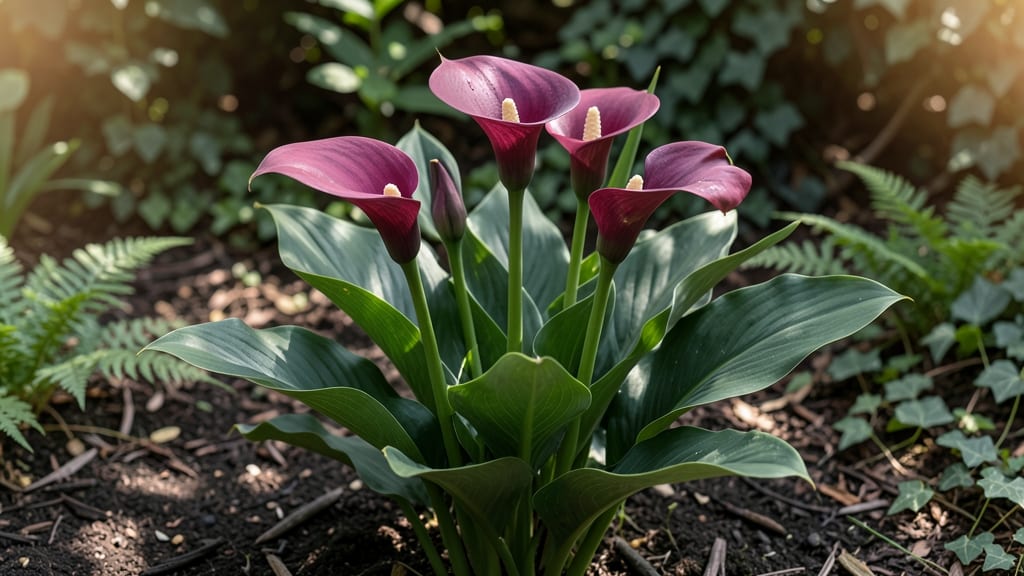
Calla lilies don't bloom continuously all summer, as most varieties flower in spring or early summer before entering heat-induced dormancy. Tropical types like Zantedeschia aethiopica may rebloom with consistent care, while others need seasonal pruning to restart growth in cooler weather.
Most calla lilies actually shut down production during summer's peak heat—it's a survival mechanism. 🌿 The intense sunlight and temperatures trigger a natural dormancy period, forcing the plant to conserve energy until conditions improve.
Tropical varieties like the white calla lily (Zantedeschia aethiopica) are the exceptions, capable of producing multiple blooms if you maintain consistent moisture and partial shade. The key difference lies in their native climates: hardy callas from temperate zones simply can't handle prolonged summer heat without stress.
What many gardeners don't realize is that proper summer care can actually extend blooming seasons. I've found that moving potted callas to shaded areas during afternoon heat waves and increasing water frequency by 30% makes a noticeable difference in plant health.
The right pruning technique—cutting back spent blooms to the first healthy leaf—tricks the plant into focusing energy on root development rather than seed production, which often leads to stronger fall reblooming.
💡 In This Article
- Why Calla Lilies Stop Blooming in Summer Heat
- How to Extend Calla Lily Blooms Through Summer
Why calla lilies stop blooming in summer heat
The primary reason calla lilies halt blooming during summer stems from their natural physiological response to heat stress. When temperatures consistently exceed 85°F (29°C), the plant's metabolic processes shift from flowering to survival mode.
This triggers a hormonal response where ethylene production increases, signaling the plant to enter dormancy—a state where growth slows dramatically to conserve water and energy. The leaves often wilt slightly as a visual cue that the plant is conserving resources, similar to how cacti pucker in dry climates. 🌡️
Tropical calla varieties like Zantedeschia aethiopica handle heat better because they originate from regions with consistent warmth and humidity, like South Africa's coastal areas where temperatures rarely drop below 60°F (15°C).
These types can tolerate 90°F (32°C) with proper care, but even they struggle when humidity falls below 50%.
Hardy calla lilies, bred for temperate zones, simply can't match this resilience—their flowering cycles are genetically programmed to complete by early summer when day lengths shorten and temperatures begin their seasonal decline.
The key difference lies in their root systems. Tropical callas develop extensive fibrous roots that spread horizontally, allowing them to access moisture from larger soil volumes. In contrast, hardy varieties have deeper taproots that seek cooler, moister underground layers during heatwaves.
When surface soil dries out—common in summer—these taproots can't compensate quickly enough, leading to flower bud abortion. This is why you'll often see calla lilies drop buds just as they're about to open during peak summer heat. 🌱
Light exposure plays a secondary but crucial role. While callas need 6-8 hours of sunlight daily for optimal growth, direct afternoon sun (especially between 12 PM and 4 PM) can raise leaf temperatures 10-15°F (5-8°C) above ambient air temperature.
This localized heat stress causes chlorophyll breakdown, reducing the plant's ability to photosynthesize efficiently—a direct energy drain that further inhibits flowering. The result? Even well-watered callas may stop producing blooms as their energy reserves deplete.
What's fascinating is how calla lilies use their leaves as temperature regulators. The broad, waxy leaf surfaces reflect excess sunlight while their vertical orientation minimizes direct exposure. However, when temperatures climb above 95°F (35°C), even this adaptation fails, and the plant's entire system shifts to drought resistance mode.
This explains why you'll often see calla lilies produce fewer but larger blooms in summer—they're prioritizing reproductive success over quantity when resources are scarce. 🌿
For gardeners in hot climates, understanding this heat sensitivity is crucial. The physiological stress response isn't just about wilting leaves—it's a complete metabolic reprogramming that can take 4-6 weeks to reverse once temperatures drop.
This is why many calla lilies show renewed growth in late summer or early fall, when nighttime temperatures begin their gradual decline. The plant essentially "remembers" the seasonal cues that triggered dormancy and waits for more favorable conditions to resume normal growth patterns. 🌅