
Blooming
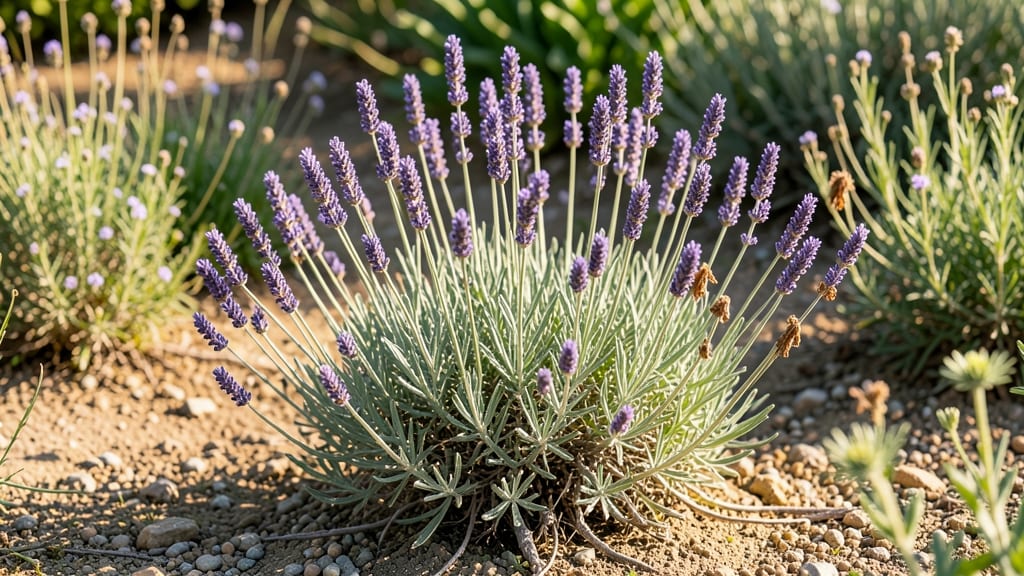
Lavender doesn't bloom continuously all summer—it produces a heat-triggered rebloom in late summer or fall after its main spring bloom, though drought-resistant types like English lavender may extend flowering with proper care and sunlight.
Most lavender varieties follow a seasonal rhythm: their first flush of flowers appears in spring, triggered by longer daylight. 🌿 What makes summer blooms possible is a secondary heat response—typically when daytime temperatures consistently exceed 75°F for several weeks.
This second bloom isn't as abundant as the spring one, but it can last through early fall if you prune correctly after the first flowering and avoid overwatering. The key is mimicking nature's dry conditions, which signal the plant to conserve energy for flower production rather than leaf growth.
Interestingly, not all lavender responds the same way. Spanish lavender, for example, often produces more reliable reblooms than French varieties, while English lavender tends to be more drought-tolerant overall.
I've found that deadheading spent blooms (removing faded flowers) right after the primary bloom encourages new growth, though you should never cut into old wood—this can prevent future flowering entirely.
💡 In This Article
- Lavender Rebloom Science: Heat and Pruning Triggers
- Best Lavender Varieties for Extended Summer Blooms
Lavender rebloom science: heat and pruning triggers
Lavender's secondary bloom is triggered by a complex interaction between temperature and photoperiod (daylight length). When daytime temperatures consistently exceed 75°F (24°C) for at least 2-3 weeks, the plant's hormonal balance shifts—specifically, the ethylene and gibberellin levels increase, which stimulates lateral bud growth where new flowers form.
This heat response is why you often see lavender rebloom in late summer or early fall, mirroring natural seasonal patterns in Mediterranean climates where these plants originated.
The timing of your pruning plays a critical role in this process. After the primary spring bloom, you should remove one-third of the current year's growth (never cutting into old wood) to encourage new shoots.
This pruning stimulates the plant's meristematic cells—the growth points where new buds form. 🌱 What most gardeners miss is that lavender responds to water stress as much as heat.
Light drought conditions (allowing the top 1-2 inches of soil to dry out between waterings) actually enhance flower production by redirecting the plant's energy toward reproduction rather than leaf growth. Overwatering can completely suppress reblooming.
Variety makes a significant difference in rebloom reliability. Spanish lavender (Lavandula stoechas) often produces more consistent secondary blooms than French lavender (Lavandula angustifolia) because its natural habitat experiences more extreme temperature fluctuations.
English lavender (Lavandula x intermedia), while more drought-tolerant, typically requires full sun exposure (6-8 hours daily) and well-draining soil to trigger its heat response. The key is matching your lavender variety to your local climate—cooler regions may only get a partial rebloom, while hotter areas can enjoy nearly continuous flowering.
Here's what's actually happening at the cellular level: when lavender experiences heat stress combined with proper pruning, the plant's apical dominance weakens. This means the terminal buds (at the tips of stems) stop dominating growth, allowing lateral buds to develop into flower stalks.
The plant's defense mechanism against heat—producing more flowers to attract pollinators—evolved in its native Mediterranean environment where summer temperatures often exceed 90°F (32°C). This is why lavender thrives in our hot summer months when given the right conditions.
One common mistake is pruning at the wrong time. Cutting back lavender after the first frost or during winter dormancy can remove next year's flower buds. Always prune immediately after the primary bloom (typically in early summer) and never cut more than one-third of the plant's height.
The shears should be sharp to prevent crushing stems, which can introduce disease. For maximum rebloom potential, consider using a mulch ring around the base to regulate soil temperature and moisture levels.
What most people don't realize is that lavender's rebloom is actually a survival strategy. In the wild, these plants produce a secondary flush of flowers to ensure pollination before winter sets in.
By mimicking these natural conditions—providing heat, proper pruning, and controlled watering—you're essentially helping your lavender follow its biological programming for continuous flowering. The result is that well-cared-for lavender plants can produce 30-50% more flowers in their second bloom compared to unpruned plants.