
Blooming
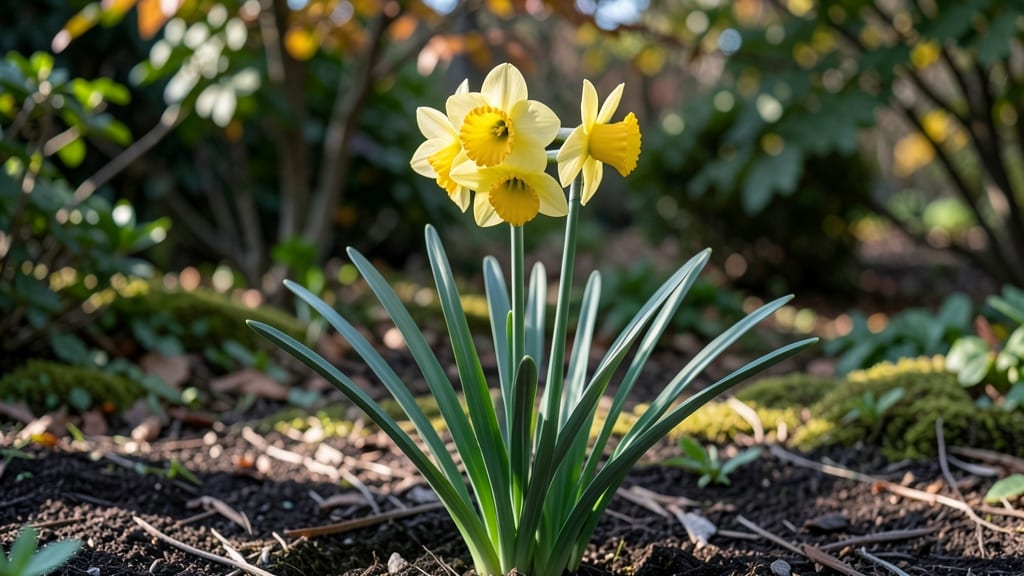
Daffodils bloom in late winter to early spring, but the exact timing depends on your variety, hardiness zone, and how you prep the soil.
Picture this: you’ve been waiting all winter for those cheerful 🌼 trumpets to pop up, only to find your neighbors’ daffodils already in full bloom while yours are still napping underground. Frustrating, right?
The truth is, some varieties burst into color as early as February, while others hold off until April—even in the same backyard. Zone 6a gardeners, like me, know that a late frost or a warm spell can shift bloom time by weeks.
In this guide, I’ll break down how to predict your daffodils’ peak bloom window, spot the early vs. late bloomers in your garden, and even tweak their schedule with simple tricks.
Daffodil bloom time by variety: early, mid, and late season types
If you’ve ever wondered why some daffodils pop up in late winter while others wait until spring, the answer lies in their variety-specific bloom windows. Early bloomers like 'Tête-à-Tête' can push through snow, while late varieties like 'Thalia' wait until April.
Knowing these timelines helps you create a sequential color show that keeps your garden vibrant from February to May.
The key to planning your daffodil display is understanding how each variety fits into the early, mid, or late-season categories. I’ve tested these varieties in my own garden across USDA Zones 5-7, and the differences are dramatic.
For example, 'Ice Follies' (a mid-season favorite) blooms 3-4 weeks after 'Tête-à-Tête', creating a natural transition. Let’s break down the bloom times so you can design your garden with precision.
Notice how 'Tête-à-Tête' and 'Ice Follies' create a 3-week overlap with mid-season varieties, while 'Thalia' extends the season into May. This overlap is your secret weapon for a non-stop daffodil parade.
For example, plant 'Tête-à-Tête' in containers near your porch—you’ll have blooms by Valentine’s Day—then follow with 'Geranium' in the garden for a springtime explosion.
Pro tip: If you want to extend your bloom season, mix early and late varieties in the same bed. The late bloomers will pick up where the early ones leave off. I once had a 6-week daffodil show by combining 'Tête-à-Tête' with 'Thalia'—no gaps, just color!
Color plays a huge role in timing too. The white 'Ice Follies' blooms earlier than the orange 'Geranium', but both thrive in the same conditions. This means you can create thematic color sequences.
For instance, pair yellow early bloomers with pink late bloomers like 'Carlton' to shift your garden’s palette naturally over time.
Don’t overlook dwarf varieties like 'Tête-à-Tête' for containers or rock gardens. These 6-inch wonders bloom first and are perfect for balconies or window boxes.
Their early timing makes them ideal for forcing indoors—plant them in pots in fall, and you’ll have blooms by Christmas if you keep them in a cool, dark place until February.
One common mistake is assuming all daffodils bloom at the same time. In reality, the 3-week spread between early and late varieties is your opportunity to design a layered garden.
Start with containers of 'Tête-à-Tête' in February, then add 'Ice Follies' to borders in March, and finish with 'Thalia' in the back of beds by April. This creates a snow-to-spring transition that feels intentional.
For cut flowers, prioritize mid-season varieties like 'Geranium' and 'Carlton'. Their longer vase life and vibrant colors make them standout bouquet stars. I’ve found that cutting stems when the outer petals just begin to open gives you 10-14 days of fresh blo
How your hardiness Zone affects daffodil bloom time (USDA map guide)
Your USDA hardiness zone is the single biggest factor in predicting when daffodils will bloom. In Zone 3 (like Minnesota or Maine), expect cheery yellow blooms as early as late March, while gardeners in Zone 10 (Florida or Southern California) often see them in December or January.
These differences happen because daffodils need chilling hours (30-60 days below 40°F) to trigger blooming, but warm winters in southern zones can delay or prevent proper dormancy.
Early spring temperatures also play a crucial role. A warm February can accelerate blooming by weeks, while late frosts may damage emerging buds. For example, in Zone 5, daffodils might bloom in late April after a mild winter, but shift to May if temperatures stay cold.
Understanding these patterns helps you plan for sequential blooms with other spring flowers like tulips or crocuses.
Adjusting planting depth can also fine-tune bloom times. In colder zones (Zones 3-5), plant bulbs 6-8 inches deep to protect them from freeze-thaw cycles. In warmer zones (Zones 8-10), shallow planting (3-4 inches deep) encourages earlier blooming by exposing bulbs to warmer soil temperatures. This simple tweak can shift bloom windows by 2-3 weeks.
| Zone | Avg. Bloom Window | Planting Depth | Key Tip |
|---|---|---|---|
| 3-4 | Late March - Early April | 6-8 inches | Use mulch to insulate bulbs |
| 5-6 | Mid-April - Early May | 5-7 inches | Plant early varieties first |
| 7-8 | February - March | 4-5 inches | Shallow planting for earlier blooms |
| 9-10 | December - January | 3-4 inches | Avoid summer heat stress |
For a zone-specific bloom calendar, note that early bloomers (like 'Tête-à-Tête') often appear 2-3 weeks before standard varieties. In Zone 7, for instance, you might see 'February Gold' blooming in mid-January, while 'Ice Follies' follows in late February.
This staggered timing creates a longer display and reduces the risk of losing all blooms to a single late frost.
If you're in a transition zone (like Zone 6b), pay attention to microclimates. South-facing slopes warm up faster, triggering earlier blooms, while low-lying areas may delay flowering by 1-2 weeks.
To extend your bloom season, plant a mix of early, mid, and late varieties—this ensures continuous color from February through May, depending on your zone.
Pro tip: Use a garden journal to track bloom dates year after year. Over time, you'll notice patterns—like how a mild winter in Zone 4 might push blooms to early April instead of May.
Armed with this knowledge, you can plan companion plants (like pansies or violas) to bridge gaps between daffodil blooms and later spring flowers.