
Blooming
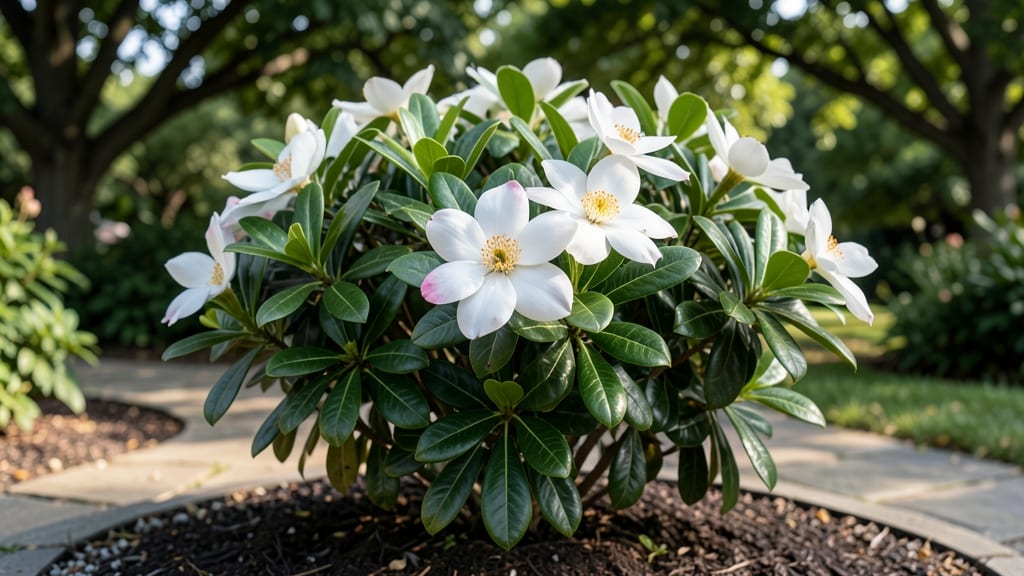
Gardenias bloom during late spring through early fall months, with their most abundant flowers appearing from May to July in most U.S. regions. Some varieties like Gardenia jasminoides may continue blooming into September, while warmer climates (zones 8-10) often enjoy nearly year-round displays. Cooler zones (6-7) typically see shorter blooming periods following winter dormancy.
Understanding gardenia bloom timing comes down to two key factors: your local climate and the specific variety you're growing. 🌸 In my experience, gardenias in zones 9-11 can produce flowers almost continuously, while those in zones 6-7 might only bloom for 2-3 months each year.
The most popular variety, Gardenia jasminoides, tends to peak in late spring but can reward patient gardeners with sporadic blooms through summer if given proper care.
What many gardeners don't realize is that these plants actually set flower buds in the previous year, which means winter care is just as important as summer maintenance. I've found that providing consistent moisture during dry spells and avoiding heavy pruning during dormancy can significantly extend the blooming window.
The right balance of sunlight (at least 6 hours daily) and slightly acidic soil (pH 4.5-6.0) also makes a noticeable difference in how long your gardenias will keep producing those fragrant white blooms.
💡 In This Article
- Gardenia Bloom Seasons by Variety and Climate Zones
- How to Extend Gardenia Blooming Seasons with Care
Gardenia bloom seasons by variety and climate zones
The blooming window for gardenias varies dramatically based on both the specific variety and your local climate zone. Gardenia jasminoides, the most common type, typically kicks off its main flowering in late April to May, reaching peak bloom in June and tapering off by August.
However, in warmer zones (8-10), these plants can produce sporadic blooms year-round, with secondary flushes appearing in late summer or even early winter when temperatures remain mild.
For colder climates (zones 6-7), winter dormancy plays a crucial role.
The plant's energy reserves built during summer growth fuel next year's blooms, which is why gardenias in these regions often only produce flowers from mid-June to early August. Gardenia augusta, a more cold-tolerant variety, follows a similar pattern but may begin blooming slightly earlier in May and extend into September in ideal conditions.
Meanwhile, Gardenia radicans, a climbing variety, tends to have a more extended bloom season from May through October in tropical zones (10-11).
What's fascinating about gardenias is how they use photoperiodism—the plant's internal clock that responds to daylight length. In northern climates, the increasing daylight of spring triggers bud formation, while in southern climates, the more consistent daylight throughout the year allows for continuous but staggered blooming.
This is why you'll often see gardenias in Florida or Hawaii producing flowers in every season, while those in New England might only get one main flush each year.
The soil temperature also influences bloom timing. Gardenias prefer soil temperatures between 65-75°F for optimal growth and flowering. In cooler zones, the ground often stays too cold in early spring, delaying bud development until late May or June.
This is why gardeners in zones 6-7 sometimes see their plants bloom later than those in warmer regions, even if planted at the same time. The root zone temperature is particularly critical—keeping mulch around the base helps maintain consistent soil warmth.
Another key factor is the plant's age. Young gardenias (under 3 years old) often produce fewer blooms as they focus energy on root and foliage development. Mature plants, particularly those in zones 9-11, can produce hundreds of blooms per season when given proper care.
The contrast between a 5-year-old plant in Miami and one in Boston highlights how climate dictates not just timing but also the sheer volume of flowers.
In tropical zones, you might see continuous blooms with only brief pauses between flushes, while northern gardenias might produce all their flowers in just a 6-week window.
What most gardeners overlook is how elevation affects bloom timing. Even within the same climate zone, plants at higher elevations (like those in the Appalachian Mountains) may bloom 2-4 weeks later than those at sea level due to cooler temperatures.
This creates microclimates where gardenia bloom seasons can shift dramatically over just a few miles. For example, a gardenia in Charleston, SC (zone 8b) might bloom from April to October, while one in Asheville, NC (zone 7a) at similar latitude might only bloom from June to August.