
How To
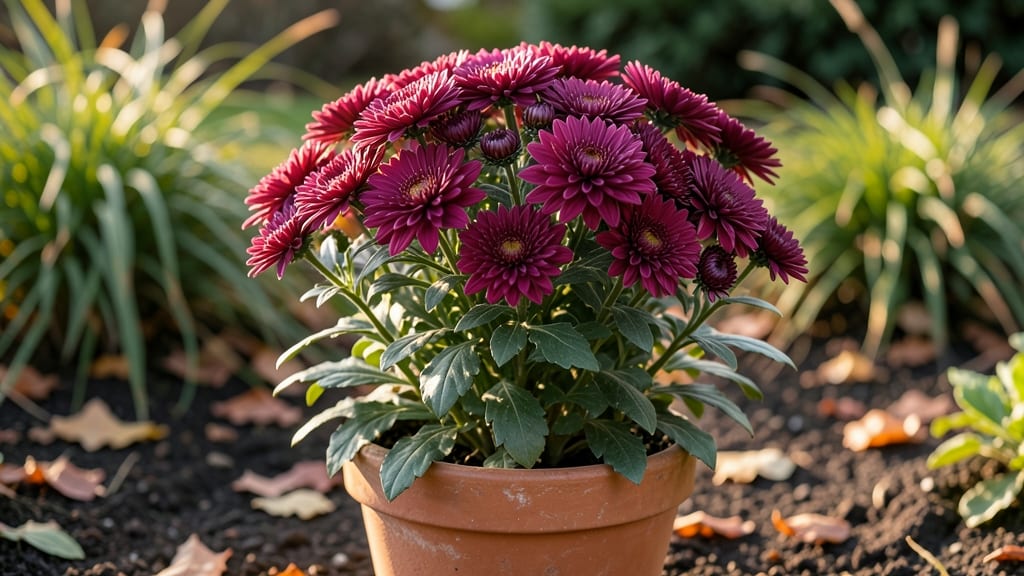
Mums in pots bloom for 4 to 8 weeks depending on variety—hardy mums last 6-8 weeks while garden mums typically peak at 4-6 weeks. Optimal conditions like consistent light exposure and moderate temperatures help sustain their vibrant display longer.
Understanding these timeframes helps you plan your garden displays strategically. 🌸 Hardy mums, bred to withstand cooler climates, naturally extend their bloom period because they enter dormancy later. Meanwhile, garden mums—often grown for their vibrant colors—rely heavily on proper container care to reach even their shorter peak.
I've found that placing pots in east-facing locations provides the ideal balance of morning sun without midday heat stress, which can dramatically cut bloom duration.
What's interesting is how temperature plays a hidden role: mums planted in containers are more vulnerable to heat fluctuations than in-ground plants. A sudden heatwave can cause buds to drop prematurely, while consistent afternoon shade helps preserve energy for longer flowering.
This is why I always recommend monitoring your local forecast and adjusting watering schedules during heatwaves—dry soil accelerates wilting.
💡 In This Article
- Mums Bloom Duration by Variety and Light Requirements
- Tips to Maximize Mum Flowering in Containers
Mums bloom duration by variety and light requirements
The difference between hardy and garden mum varieties comes down to their genetic adaptations. Hardy mums, like those bred for zones 4-7, develop a natural dormancy mechanism that allows them to extend their bloom period by 2-3 weeks compared to garden mums.
This is because their growth cycles are synchronized with cooler fall temperatures, where they can continue producing flowers even as nights get shorter.
The key difference lies in their photoperiod sensitivity—hardy mums require shorter daylight hours to trigger bud formation, while garden mums bloom more aggressively in longer summer days but fatigue faster.
Light intensity plays an equally critical role in determining bloom duration. Mums need 6-8 hours of direct sunlight daily to produce their signature vibrant blooms, but the quality of that light matters just as much.
Full sun exposure (6+ hours) in cooler climates can extend blooming by up to 2 weeks compared to partial shade (3-4 hours), where flowers may appear smaller and less abundant.
What's fascinating is how light affects the plant's internal clock: excessive afternoon sun (especially after 3:00 PM) can cause heat stress, leading to premature bud drop. This is why I recommend placing pots in east-facing locations where they get morning sun without the midday heat.
The temperature threshold for optimal mum blooming sits between 55-75°F, with ideal daytime temps around 65-70°F. When temperatures rise above 80°F, mums enter survival mode, diverting energy to cooling rather than flowering.
This explains why container-grown mums often bloom 1-2 weeks shorter than in-ground plants—their smaller root systems can't regulate temperature as effectively. The solution?
Use containers with 10-12 inches of depth filled with well-draining soil to maintain cooler root zones, and consider adding a lightweight shade cloth (30%) during heatwaves to protect the foliage.
Color also influences bloom duration, with darker varieties like 'Black Beauty' often lasting 5-7 days longer than bright pastels. This is because darker petals absorb more heat, which paradoxically helps maintain flower integrity in cooler conditions. The trade-off? Darker blooms may wilt faster in intense afternoon sun.
Meanwhile, bi-color varieties tend to have intermediate bloom times, typically 3-5 days longer than single-color mums. This color-related variation occurs because different pigment concentrations affect the plant's energy allocation during flowering.
Seasonal timing matters too. Mums planted in late summer (August) will bloom 4-6 weeks longer than those planted in early fall, because they've had more time to establish roots before the first frost.
The root-to-flower ratio is critical: for every 1 inch of plant height, you need 3-4 inches of root depth to sustain prolonged blooming. In containers, this means choosing pots with at least 12-inch diameters to accommodate adequate root growth without overcrowding.
One surprising factor is soil pH—mums prefer slightly acidic conditions (pH 6.0-6.5). When soil pH rises above 7.0, nutrient uptake decreases, particularly for magnesium and iron, which are essential for flower production. This can cut bloom duration by up to 30% if left uncorrected.
Test your pH annually and amend with elemental sulfur if needed, as container soils tend to become more alkaline over time due to evaporation and mineral buildup.