
Shrubs
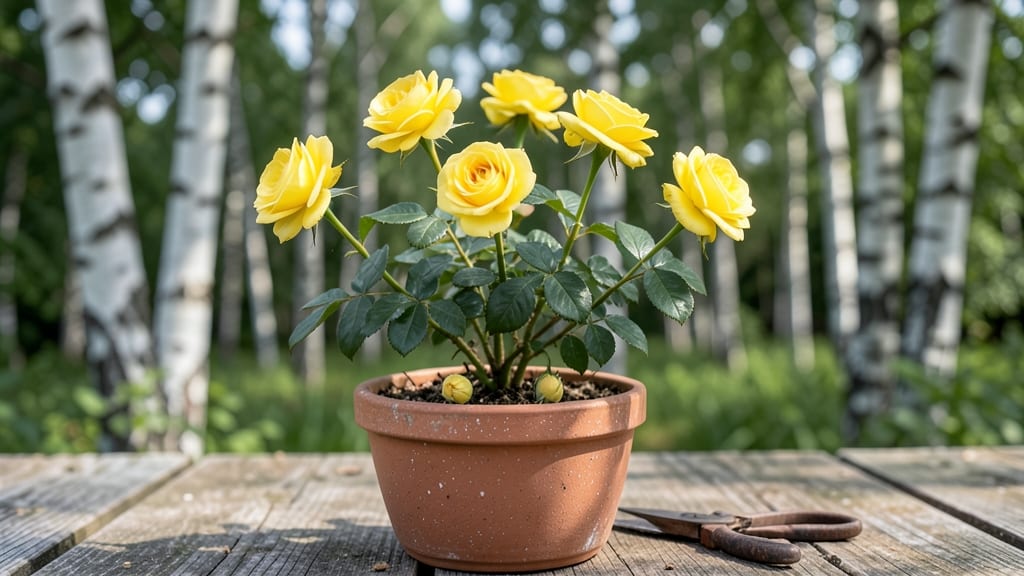
Growing a small yellow rose bush like 'The Fairy' or 'Bonica' brings sunshine to patios and containers with minimal fuss. ✨ These compact varieties pack big blooms into tiny spaces, perfect for balconies or small gardens where big bushes won't fit.
The key is choosing the right variety, giving it the right start, and keeping it pruned to stay tidy.
Start with well-draining soil and a spot that gets 6-8 hours of sunlight daily—morning sun and afternoon shade works best in hotter climates. Plant in containers at least 12 inches deep with drainage holes, and space bushes 2-3 feet apart if planting in the ground.
Water deeply when the top inch of soil feels dry, and mulch around the base to keep roots cool.
You'll see nonstop blooms from early summer through fall if you prune regularly—cut back leggy stems after each flush of flowers and shape the bush in late winter. Feed with a balanced rose fertilizer every 4-6 weeks during growing season, and watch for pests like aphids or black spot fungus.
A quick spray of neem oil keeps them at bay.
These roses thrive in containers for years with proper care, adapting to everything from city patios to countryside gardens. The secret is consistency: regular watering, seasonal pruning, and a little attention to soil health.
Before you know it, you'll have a bush bursting with cheerful yellow blooms that neighbors will envy.
Root Causes Behind Stunted Growth
Understanding why your small yellow rose bush stays compact—whether naturally or unexpectedly—starts with digging into the science behind its growth patterns. While some varieties are bred to remain petite, others may struggle due to environmental or care-related factors.
Here’s why your rose bush might be staying small, and what’s really holding it back.
Some rose varieties are genetically predisposed to stay compact, thanks to selective breeding. Dwarf or patio roses, including certain yellow-hued cultivars like 'Munchkin' or 'Fairy Tale' series, are bred to mature at 2–3 feet tall with a similar spread.
These roses have shorter internodes (the segments between leaves and nodes) and slower growth rates, making them ideal for containers or small gardens.
How to check:
- Look for the rose’s cultivar name on the tag or packaging. If it’s labeled as "dwarf," "miniature," or "patio," its small size is intentional.
- Compare it to standard roses (like hybrid teas), which can grow 4–6 feet tall—your compact bush won’t suddenly "grow out" unless it’s a mislabeled variety.
If your rose bush isn’t genetically small but remains stunted, root-bound conditions are often the culprit. Roses need room to spread their roots—typically 12–18 inches deep and 18–24 inches wide—to access water, nutrients, and stability.
When roots circle tightly in a pot or hit hardpan (compacted soil) in the ground, they can’t expand, triggering a stress response that limits above-ground growth.
Signs of root restriction:
- Roots growing in tight circles when you check the pot.
- Yellowing leaves or stunted new growth despite regular watering.
- The bush topples easily when touched (roots aren’t anchoring it well).
Actionable fix:
- Repot into a larger container (1–2 gallons bigger) with fresh, well-draining soil.
- If planted in the ground, loosen the soil around the roots with a garden fork to encourage outward growth.
- 💡 Pro Tip: For container roses, prune roots by 10–20% when repotting to stimulate new growth.
Roses are sun-worshippers and need 6–8 hours of direct sunlight daily to thrive. Without enough light, they:
- Stretch (elongated, weak stems).
- Produce fewer blooms.
- Stay compact (a survival tactic to conserve energy).
How to diagnose:
- Check the direction of your bush’s growth. If it’s leaning toward a window or light source, it’s light-deprived.
- Pale or sparse foliage is another red flag.
Solutions:
- Move the pot to a sunnier spot (south or west-facing is ideal in the Northern Hemisphere).
- Use a reflective surface (like a white wall or mirror) to bounce extra light onto the bush.
- Supplement with a grow light (12–14 hours/day) if outdoor light is insufficient.
Watering is a balancing act—roses need consistent moisture but hate soggy roots. Both underwatering and overwatering can stunt growth by:
- Stressing the plant (limiting nutrient uptake).
- Encouraging root rot (which blocks water/oxygen flow).
- Triggering nutrient deficiencies (e.g., yellow leaves from poor iron uptake).
How to tell if water is the issue:
| Symptom | Cause | Fix |
|---|---|---|
| Wilted leaves | Underwatering | Water deeply 1–2x/week (check soil moisture) |
| Yellowing leaves | Overwatering or poor drainage | Improve drainage, water only when top 1–2" of soil is dry |
| Brown, crispy edges | Underwatering + heat stress | Mulch to retain moisture, water in early morning |
🌡️ Pro Tip: Stick your finger 1–2 inches into the soil—if it’s dry, water; if it’s damp, wait. Morning watering reduces evaporation and fungal risks.
Even the hardiest roses need rich, well-draining soil packed with nitrogen (N), phosphorus (P), and potassium (K). If your soil is nutrient-poor, compacted, or too acidic/alkaline, your bush will focus on survival rather than growth.
Common deficiencies causing stunted growth:
- Nitrogen (N) deficiency: Leads to pale green or yellow leaves and slow stem growth. Fix: Apply a balanced fertilizer (10-10-10) or compost.
- Phosphorus (P) deficiency: Causes weak roots and few blooms. Fix: Use bone meal or a high-phosphorus fertilizer (5-10-5).
- Compacted soil: Roots can’t breathe, leading to poor nutrient absorption. Fix: Amend soil with perlite, sand, or compost to improve aeration.
Soil test tip:
- Use a home soil test kit (available at garden centers) to check pH and nutrient levels. Roses prefer pH 6.0–6.5.
Extreme temperatures or pests can halt growth by diverting the plant’s energy away from expansion.
Common stressors: - Cold damage: Early frosts or late springs can shock new growth, causing it to wither. - Heat stress: Intense sun + dry soil = leaf scorch and stunted shoots. - Pests (aphids, spider mites, Japanese beetles): They sap nutrients from leaves and stems, weakening the plant.
How to protect your rose:
- Mulch (2–3 inches of organic mulch) to regulate soil temperature.
- Shade cloth (30–50%) for young plants in hot climates.
- Neem oil spray or insecticidal soap to combat pests.
If your rose is in a container, the size and material of the pot can directly impact growth. Small pots limit root expansion, while plastic pots can trap excess moisture (leading to root rot). Terracotta pots dry out faster but may not insulate well in cold weather.
Container checklist for healthy growth:
- Minimum pot size: 12–15 gallons for mature dwarf roses (5–6 gallons for miniatures).
- Drainage holes: Non-negotiable—waterlogged roots = stunted growth.
- Lightweight potting mix: Use a blend with perlite, vermiculite, or compost for aeration.
🔥 Quick Fix: If repotting isn’t an option, top-dress with compost every 2–3 months to feed roots without disturbing them.
Revive and Protect Your Compact Rose
If your small yellow rose bush isn’t thriving, don’t panic—most issues have simple fixes! Below, we’ve mapped common problems to practical solutions, so you can restore its lush, blooming beauty in no time. Plus, we’ll share prevention tips to keep your rose bush healthy long-term.
Yellow leaves are often a sign of overwatering, underwatering, or nutrient deficiencies. Here’s how to diagnose and treat:
💧 Overwatering?
If the soil feels soggy and leaves turn yellow with brown edges, your rose bush is drowning. Stop watering immediately and let the top 2 inches of soil dry out before watering again.
- 🔥 Fix: Use well-draining soil (mix in perlite or sand) and water only when the topsoil is dry.
- 🌡️ Prevention: Ensure containers have drainage holes and avoid watering on a strict schedule—check moisture first!
💦 Underwatering?
Crispy, yellowing leaves with dry soil indicate thirst. Roses need consistent moisture, especially in containers.
- 🔥 Fix: Water deeply until it drains from the bottom, then repeat every 2–3 days (adjust for heat/drought).
- 💡 Pro Tip: Mulch with shredded bark to retain moisture and reduce evaporation.
🌿 Nutrient Deficiency?
Pale yellow leaves (especially on new growth) may mean your rose lacks nitrogen, iron, or magnesium.
- 🔥 Fix:
- For nitrogen: Use a balanced rose fertilizer (10-10-10) every 4–6 weeks.
- For iron/chlorosis (yellow between veins): Apply chelated iron or use a foliar spray.
- For magnesium: Sprinkle Epsom salt (1 tbsp per gallon of water) monthly.
- ✨ Prevention: Test soil pH (roses prefer 6.0–6.5) and amend with compost or lime if needed.
A healthy rose bush is less prone to pests and diseases, but here’s how to tackle them if they strike:
🐜 Spider Mites or Aphids?
Tiny webs or clusters of tiny insects sucking on leaves? Act fast!
- 🔥 Fix:
- Blast off pests with a strong spray of water.
- Apply neem oil (mix 1 tbsp with 1 quart of water + a drop of dish soap) and spray every 5–7 days.
- Introduce ladybugs or lacewings (natural predators).
- 🎯 Prevention: Encourage beneficial insects with companion plants like marigolds or basil.
🍄 Powdery Mildew or Black Spot?
White fuzzy patches or dark spots on leaves? Fungal infections thrive in humid conditions.
- 🔥 Fix:
- Prune infected leaves immediately and dispose of them.
- Spray with a baking soda solution (1 tsp baking soda + 1 quart water + a drop of soap) weekly.
- For severe cases, use fungicide (copper-based or sulfur-based).
- 🌡️ Prevention:
- Water at the base (not overhead) to keep leaves dry.
- Space plants for good airflow (avoid crowding in containers).
- Remove fallen leaves/debris to reduce spores.
If your rose bush is leafy but not flowering, it might need a little push!
✂️ Prune for Growth
Overgrown or leggy roses often skip blooming. Prune strategically:
- 🔪 When: Prune in early spring (before new growth) or after blooming.
- 👨🍳 How:
- Cut back 1/3 of the oldest canes to encourage new stems.
- Trim dead or crossing branches to improve airflow.
- Leave 3–5 buds on each stem for future blooms.
- 💡 Pro Tip: Use sterilized shears to prevent disease spread.
🌞 Boost Sun and Fertilizer
Roses need 6+ hours of sun and regular feeding to bloom.
- 🔥 Fix:
- Move to a sunnier spot if possible (even partial shade is better than deep shade).
- Fertilize with a high-phosphorus formula (like 5-10-5) in spring and summer.
- ⏰ Timing Matters: Stop heavy fertilizing in late summer to let the bush harden off for winter.
Since your rose bush is in a container, it has unique needs:
- 🌱 Repot Every 2–3 Years: Refresh soil with compost and check for root-bound roots (gently loosen if circling).
- 💧 Winter Protection: Move containers to a sheltered spot or wrap in burlap to insulate roots.
- 🌿 Soil Mix: Use a blend of potting soil + perlite + compost for drainage and nutrients.
With these fixes, your small yellow rose bush should bounce back stronger than ever! 🌸💛 Remember: consistency is key—whether it’s watering, pruning, or pest control. Happy gardening!
Frequently asked questions
Which small yellow rose varieties bloom the longest?
'The Fairy' and 'Bonica' are top picks for continuous blooms, producing cheerful yellow flowers from early summer through fall with minimal deadheading. For even longer seasons, try 'Munchkin'—it's cold-hardy and reblooms reliably after light pruning. All three thrive in containers or small gardens!
Can I grow a small yellow rose bush in a hanging basket?
Varieties like 'Fairy Tale' or 'Fairy' do beautifully in 12-inch hanging baskets with proper care. Use a lightweight potting mix with perlite, water when the top inch feels dry, and fertilize every 4 weeks. Just ensure it gets 6+ hours of sunlight daily—morning sun works best in hot climates.
Why are my yellow rose blooms fading faster than usual?
Quick fading often signals underwatering or nutrient stress. Check soil moisture—water deeply when the top inch is dry. Also verify your fertilizer: yellow roses need balanced NPK (10-10-10) every 4-6 weeks during growing season. Overly hot weather can also shorten bloom life—provide afternoon shade if temperatures exceed 90°F.
How do I overwinter a potted small yellow rose bush?
Move containers to a sheltered spot (like a garage or covered porch) before 30°F temps. Wrap the pot in burlap and cover with mulch (straw or leaves). Water sparingly—only when soil is completely dry. In spring, prune back dead canes by 1/3 and resume regular care when night temps stay above 45°F.
Are small yellow roses fragrant?
Most compact yellow varieties like 'Fairy' and 'Bonica' have light, sweet fragrance—not overpowering but pleasant enough for close-up enjoyment. For stronger scent, try 'Knock Out' yellow roses (though they're slightly larger). The best way to experience it is to brush fingers against blooms in the morning when oils are most concentrated!