
Pests and Diseases
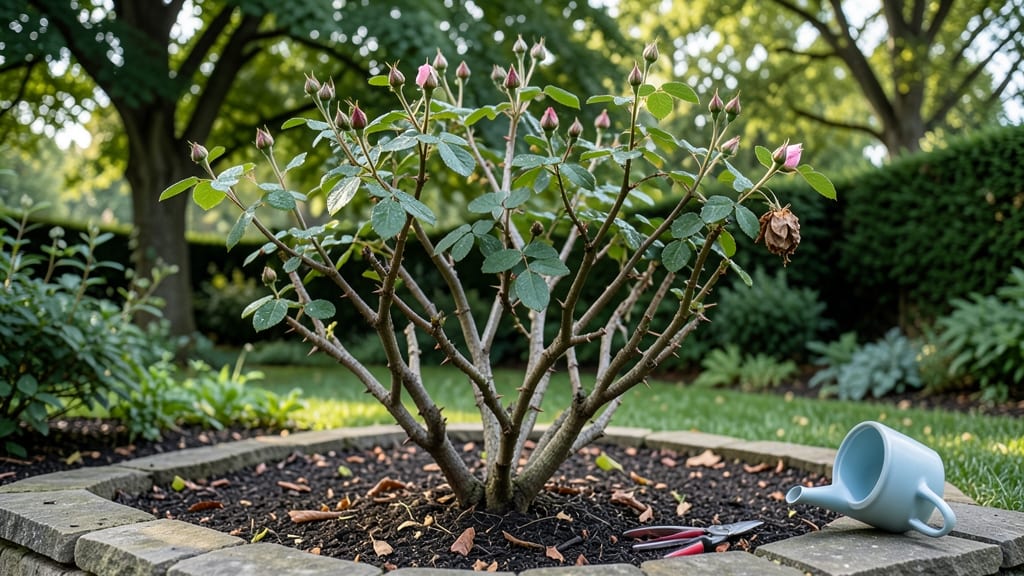
Seeing the leaves falling off your rose bush in July is alarming—but before you panic, check whether pests, disease, or even overwatering might be the culprit. roses can drown).
I’ve seen this happen to every type of rose—hybrid teas, climbers, even those stubborn shrub roses—and the fixes are simpler than you’d think.
The most common culprits are black spot fungus, spider mites, or sudden temperature swings. Black spot shows up as dark spots with yellow halos, while spider mites leave behind tiny webs and speckled leaves.
Overwatering? Check the soil—if it’s soggy, roots can’t breathe. The good news? Each problem has a targeted fix, from pruning to neem oil sprays, that can turn things around in just a few weeks.
You’ll end up with a bush that’s not just holding onto its leaves, but thriving with vibrant green foliage and more blooms than you’ve seen in years.
The key is acting fast—once the leaves are gone, the plant’s energy goes into recovery, not flowers. Let’s get your rose back on track.
This works for any rose type, from delicate heirlooms to hardy landscape varieties. Whether you’re dealing with a single bush or a whole garden, the same principles apply—just adjust the timing and tools to your situation. Here’s how to diagnose and fix it for good.
Root Causes Behind Dropping Leaves
If your rose bush is shedding leaves like it’s auditioning for a horror movie, don’t panic—there’s usually a logical explanation. Understanding the why behind the leaf loss is the first step to reviving your plant.
Below, we break down the most common culprits, from sneaky pests to environmental stressors, with science-backed insights to help you diagnose the issue accurately.
Roses are dramatic divas—they thrive in specific conditions, and even minor shifts can trigger leaf drop. Environmental stress is often the most overlooked cause, yet it’s one of the easiest to fix.
🔥 Extreme Temperature Swings
Roses prefer moderate climates (typically 60–85°F during the day and 50–65°F at night). Sudden temperature drops—like a late spring frost or a scorching summer heatwave—can shock the plant, causing leaves to yellow and fall prematurely.
- Cold stress: Temperatures below 32°F can damage cell membranes, leading to chilling injury. This disrupts nutrient flow, causing leaves to wilt and drop.
- Heat stress: When daytime temps exceed 90°F without adequate hydration, roses experience transpiration stress. Their stomata (pores) close to conserve water, but this also halts photosynthesis, starving the leaves of energy.
💡 Pro Tip: Mulch around the base of your rose bush with 2–4 inches of organic matter (like wood chips or straw) to insulate roots and regulate soil temperature. In extreme heat, provide drip irrigation in the early morning to avoid fungal issues.
💦 Overwatering or Underwatering
Roses hate soggy feet and thirsty roots. Both extremes disrupt nutrient uptake, leading to leaf drop.
- Overwatering: Waterlogged soil cuts off oxygen to roots, causing root rot (often from Phytophthora or Pythium fungi). The plant can’t absorb water or nutrients, so leaves turn yellow (chlorosis) and drop.
- Underwatering: Dry soil triggers wilting as the plant conserves moisture. Chronic dehydration weakens the plant, making it susceptible to pests and diseases.
🎯 Actionable Fix:
- Check soil moisture by sticking your finger 2 inches deep—if it’s dry, water deeply. If it’s soggy, hold off until the top 1–2 inches are dry.
- Improve drainage by amending clay soil with compost or perlite and ensuring pots have drainage holes.
☀️ Sunburn or Light Deficiency
Roses need 6–8 hours of sunlight daily, but too much direct sun (especially in hot climates) can scorch leaves, while too little weakens the plant.
- Sunburn: Leaves exposed to intense afternoon sun (especially in dry conditions) develop brown, crispy edges—a sign of photoinhibition, where light overwhelms the plant’s ability to process energy.
- Shade stress: In low-light conditions, roses produce small, pale leaves and drop them to conserve energy, as photosynthesis slows.
🌿 Solution: Gradually acclimate roses to full sun by pruning nearby shade sources or moving potted roses to a slightly sunnier spot. For sunburn, provide afternoon shade with a lightweight shade cloth (30–50% coverage).
Tiny invaders can devour your rose bush from the inside out. Look for chewed leaves, sticky residue, or webs—these are red flags for pest infestations.
🐛 Japanese Beetles: The Leaf Skeletons
These green-and-copper metallic beetles (and their grubs) are notorious for skeletonizing rose leaves—eating everything but the veins. Their feeding triggers stress, causing leaves to drop prematurely.
- Signs: Irregular holes, scattered frass (chewed leaf debris), and beetles clustered on flowers.
- Why it happens: Beetles inject oral secretions that disrupt the plant’s jasmonic acid defense system, weakening the rose.
🔥 Quick Fix: Handpick beetles into soapy water or use neem oil (spray in the evening to avoid harming bees). Milky spore (a natural bacteria) can control grubs in the soil.
🕷️ Spider Mites: The Tiny Suckers
These microscopic arachnids thrive in dry, hot conditions and pierce leaves to suck out cell sap. Their feeding causes stippling (tiny yellow dots) and eventual leaf drop.
- Signs: Fine webbing on undersides of leaves, bronzing or silvering of foliage.
- Why it happens: They multiply rapidly in low-humidity environments, draining the plant of nutrients and clogging stomata with toxic saliva.
🌡️ Treatment: Increase humidity with misting or a pebble tray. Spray with water + dish soap (1 tsp per gallon) or horticultural oil to suffocate them.
🐛 Aphids: The Sticky Menace
These soft-bodied insects cluster on new growth, sucking sap and excreting honeydew—a sticky substance that attracts sooty mold. Infested leaves curl, yellow, and drop.
- Signs: Sticky residue on leaves, black mold, and distorted growth.
- Why it happens: Aphids trigger plant stress hormones (like ethylene), accelerating leaf senescence (aging).
✨ Natural Remedy: Blast them off with a strong water spray or introduce ladybugs or lacewings (natural predators). For severe cases, use insecticidal soap.
Fungi love damp, warm conditions and can turn your rose bush into a leaf-dropping disaster. These pathogens thrive in poor air circulation and overhead watering.
🍄 Black Spot: The Classic Leaf Killer
Caused by the fungus Diplocarpon rosae, black spot creates dark, circular lesions with yellow halos. Infected leaves turn brown, crisp, and fall off.
- Why it happens: The fungus penetrates leaf tissue through stomata, disrupting chlorophyll production and clogging nutrient pathways.
- Perfect conditions: Warm,
How to Revive Your Rose Bush
When your rose bush starts shedding leaves, the first step is identifying the culprit—but knowing how to fix it is just as important. Below, we’ve mapped out practical, step-by-step solutions for the most common causes, along with prevention tips to keep your roses lush and healthy.
No green thumb required—just follow along!
Fungal infections thrive in damp, shaded conditions, turning your rose leaves into a sad, spotted mess. Here’s how to banish the fungi and protect your plant:
🔥 Step 1: Prune the Problem Areas
- 👨🍳 Remove infected leaves immediately—don’t leave them on the ground (they’ll reinfect!). Use sterilized pruners (wipe with rubbing alcohol) to avoid spreading spores.
- 🔪 Trim back to healthy growth (about ¼ inch above a leaf node).
Dispose of clippings in the trash not the compost bin.
🍳 Step 2: Apply Fungicide
- 💡 Organic option: Mix 1 tbsp baking soda + 1 tsp dish soap + 1 gallon water in a spray bottle.
Test on a small area first—some roses are sensitive. - 🌡️ Chemical option: Use a copper-based fungicide (like Bordeaux mixture) or a neem oil spray (1 tsp neem oil + 1 tsp soap per quart of water).
Reapply every 7–10 days until new growth appears. - ⏰ Best time to spray: Early morning or late evening when humidity is high (fungi love moisture!).
🎯 Prevention Tips
- ✨ Improve airflow: Space plants 3–4 feet apart and avoid overcrowding.
- 🌧️ Water wisely: Water at the base (not overhead) and early in the day so leaves dry quickly.
- 🍂 Clean up debris: Remove fallen leaves and mulch 12 inches away from the bush to reduce humidity.
Pests suck the life out of roses—literally. Here’s how to evict the invaders and keep them from returning:
🔥 Step 1: Inspect & Isolate
- 🔍 Check undersides of leaves for tiny bugs, webbing, or chewed edges. If found, quarantine the plant until treated.
- 🕷️ For spider mites: Look for fine webbing—a sure sign they’ve moved in.
🍳 Step 2: Blast Them Away
- 💡 DIY spray: Mix 1 tsp castile soap + 1 tsp vegetable oil + 1 quart water.
Spray directly on pests (they’ll drop off). - 🌡️ For aphids: Blast them off with a strong stream of water from a hose. - 🎯 For Japanese beetles: Handpick them into soapy water (wear gloves—they bite!).
🔪 Step 3: Use Natural Predators (Long-Term Fix)
- 🐞 Ladybugs and lacewings eat aphids. Buy them online or attract them with dill or fennel plants.
- 🐛 Nematodes (microscopic worms) kill grubs. Apply beneficial nematodes to the soil in spring/fall.
🎯 Prevention Tips
- ✨ Install row covers early in the season to block beetles.
- 🍂 Prune regularly to remove egg-laying spots (beetles love new growth!).
- 🌡️ Avoid over-fertilizing—soft new growth attracts pests.
Roses are tough, but extreme conditions can make them drop leaves faster than a bad haircut. Here’s how to bring them back to balance:
🔥 Step 1: Check the Soil
- 💡 Stick your finger 2 inches deep—if it’s dry, water deeply.
If it’s soggy, hold off until the top inch is dry. - 🌧️ Mulch properly: Use 2–3 inches of organic mulch (like shredded bark) to retain moisture (drought) or prevent rot (overwatering).
🍳 Step 2: Adjust Watering Habits
- 🌡️ Deep watering (1–2 times per week) is better than daily light sprinkles.
- ⏰ Water in the morning so leaves dry by evening (reduces fungal risk).
🎯 Prevention Tips
- ✨ Use drip irrigation or soaker hoses to deliver water directly to roots.
- 🌳 Provide afternoon shade in extreme heat (use shade cloth if needed).
- 🍂 Avoid compacted soil—loosen it gently with a fork to improve drainage.
If your roses are dropping leaves + looking pale or yellow, they’re screaming for nutrients. Here’s how to feed them right:
🔥 Step 1: Test Your Soil
- 📊 Grab a soil test kit (or send a sample to your local extension office). Roses need:
- pH 6.0–6.5 (too acidic? Add lime; too alkaline? Use sulfur).
- Balanced NPK (10-10-10) fertilizer in spring and early summer.
🍳 Step 2: Fertilize Correctly
- 💡 Organic option: Mix compost, worm castings, or fish emulsion into the soil.
- 🌡️ Slow-release granules (like Osmocote) feed roses all season without burning roots.
- ⏰ Feed in stages:
- Early spring (before buds form): High-nitrogen for growth.
- Mid-summer (after blooming): Shift to phosphorus/potassium (like 5-10-10) for root strength.
🎯 Prevention Tips
- ✨ Don’t overdo it! Too much fertilizer = leaf burn and more stress.
- 🍂 Side-dress with compost every 6–8 weeks for a steady nutrient boost.
- 🌱 Avoid synthetic fertilizers late in the season—they encourage tender new growth that won’t survive winter.
If your rose bush is suddenly shedding leaves (not just a few here and there), act fast:
- 🚨 Check for shock signs (wilting, brown stems)—could be root rot or transplant shock.
- 💧 Water deeply (if soil is dry) or hold off (if roots are drowning).
- 🌡️ Move to a shadier spot if heat-stressed.
- 🍂 Trim back 1/3 of the bush to reduce stress and encourage new growth.
Remember: Roses are resilient! With the right care, your bush will bounce back—and next season, it’ll be thicker, healthier, and more beautiful than ever. 🌹💪
Frequently asked questions
Why are my rose bush leaves falling off suddenly?
Sudden leaf drop is usually a stress signal from your rose bush. The most common causes are fungal infections (like black spot), pest infestations (such as spider mites or aphids), or environmental shocks like extreme heat or overwatering. Check for yellow spots, tiny webs, or chewed edges to identify the exact issue.
Can I save my rose bush if most leaves have already fallen?
Yes! Even with significant leaf loss, your rose bush can recover. Focus on pruning back 1/3 of the bush to reduce stress, adjusting watering (deep but infrequent), and applying a balanced fertilizer (like 10-10-10). New growth should appear within 2-4 weeks if the roots are still healthy.
What’s the fastest way to stop black spot fungus?
For immediate results, prune off infected leaves (sterilize your tools with rubbing alcohol) and apply a baking soda spray (1 tbsp baking soda + 1 tsp dish soap per gallon of water). Reapply every 7-10 days and improve airflow by spacing plants 3-4 feet apart. Copper fungicides also work well for severe cases.
Are fallen rose leaves harmful to my garden?
Yes, fallen rose leaves can spread fungal spores or pests if left on the ground. Remove them immediately and compost separately (not in your garden bed) to prevent reinfection. For black spot, dispose of them in the trash rather than composting.
How often should I fertilize a rose bush recovering from leaf loss?
Start with a light application of balanced fertilizer (10-10-10) in early spring, then side-dress with compost every 6-8 weeks during the growing season. Avoid heavy fertilizing until new growth appears—too much can stress the plant further.