
Diseases
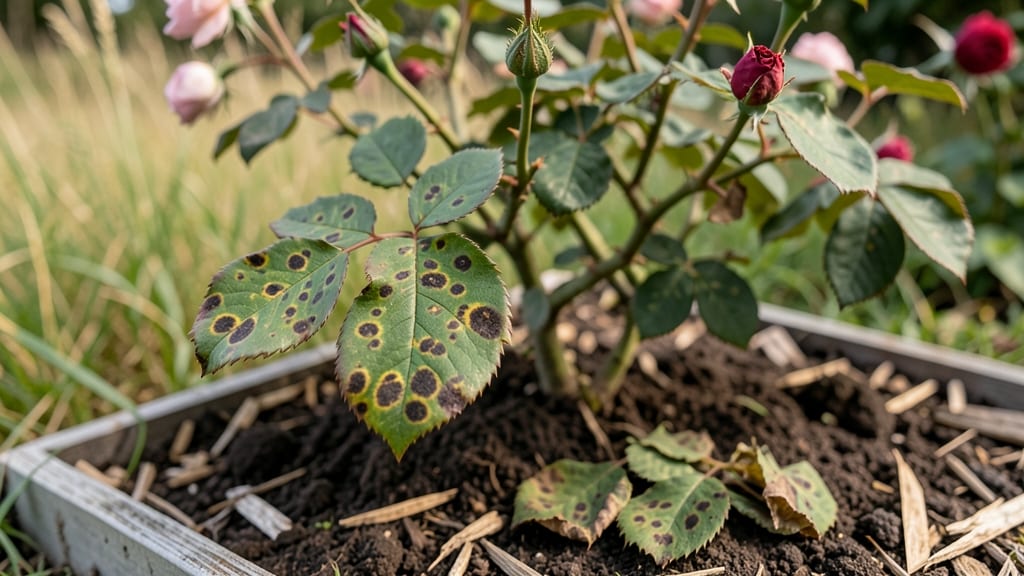
Your roses are sending an SOS with yellow leaves and brown spots—this is black spot, the fungal villain that turns lush foliage into a sad, spotted mess. 🌿 I’ve battled this stubborn disease for years, and I’ll show you how to diagnose it (yes, there are lookalikes) and stop it before it ruins your blooms.
The culprit thrives in damp, shady conditions, but it’s not just one fungus—black spot, powdery mildew, and bacterial leaf spot all create similar chaos. The good news? Pruning infected leaves, improving airflow, and applying the right fungicide (organic or chemical) can bring them back to vibrant green in weeks.
You’ll learn to spot the difference between fungal infections and nutrient deficiencies, plus how to adjust watering and sunlight to prevent future outbreaks. By the end, your roses will be thriving again—no more sad, spotted leaves ruining your summer blooms.
Whether you’re dealing with heirloom roses or hybrid teas, these solutions work for all varieties. Let’s get your roses back to their best before the spots spread further.
Root Causes Behind Yellowing Spots
When your prized roses start showing yellowing leaves with brown spots, it’s rarely a coincidence—it’s a cry for help from your plants. Understanding the why behind these symptoms is the first step to saving your garden.
Below, we break down the most common culprits, backed by science, so you can diagnose the issue like a pro.
Fungal diseases are the #1 reason rose leaves develop yellowing with brown spots. These pathogens thrive in warm, humid conditions and can spread rapidly if left unchecked. Here’s how they strike:
- Black Spot (Diplocarpon rosae):
- How it works: This fungus infects leaves through stomata (tiny pores) or wounds, releasing toxins that disrupt chlorophyll production. The result? Yellow patches with dark brown, circular spots (often with a feathery edge).
- Why it spreads: Overhead watering, poor air circulation, and wet foliage create the perfect breeding ground. The fungus also overwinters in fallen leaves, ready to pounce in spring.
- Tell-tale sign: Look for purplish-black spots on the underside of leaves—a dead giveaway.
- Powdery Mildew (Erysiphe spp.):
- How it works: This fungus coats leaves in a white, powdery film, blocking sunlight and causing yellowing. Brown spots may appear later as the infection advances.
- Why it spreads: Thrives in high humidity (60%+) and low light, often attacking roses in shaded or crowded areas.
- Tell-tale sign: A mealy, white residue on leaves, especially on young shoots.
- Botrytis Blight (Botrytis cinerea):
- How it works: This fungus causes water-soaked, brown spots that eventually turn gray and fuzzy. It targets stressed roses (e.g., after pruning or heavy rain).
- Why it spreads: Loves moist, stagnant air and thrives in wounds or dead tissue. Common in spring and fall when temperatures hover around 60–75°F (15–24°C).
While fungi often get the blame, pests can also trigger yellowing with brown spots by feeding on leaves or spreading diseases. Here’s how:
- Japanese Beetles:
- How they attack: These metallic-green beetles skeletonize leaves, leaving behind a lace-like pattern of brown, chewed edges. Their feeding weakens the plant, causing yellowing.
- Why it happens: They target roses in late summer and are drawn to stressed or over-fertilized plants.
- Spider Mites:
- How they attack: These microscopic pests pierce cells, causing stippling (tiny brown/yellow dots) that merge into larger spots. Severe infestations lead to leaf drop.
- Why it happens: Thrives in dry, hot conditions and multiplies rapidly on dusty or drought-stressed roses.
- Aphids & Scale Insects:
- How they attack: These sap-suckers excrete sticky honeydew, which fosters sooty mold—a black fungal growth that blocks sunlight, leading to yellowing.
- Why it happens: Often found on new growth and spread by ants (who farm them for honeydew).
Extreme or fluctuating conditions can burn leaves or trigger nutrient deficiencies, mimicking disease symptoms. Here’s how:
- Heat Stress:
- How it happens: Prolonged temperatures above 90°F (32°C) cause leaves to scorch, turning yellow with crispy, brown edges.
- Why it shows up: Roses wilt to reduce water loss, but this process damages cells, leading to necrotic (dead) spots.
- Cold Damage:
- How it happens: Freezes or late spring frost can blacken leaf edges (called winter burn), with yellowing spreading inward.
- Why it happens: Ice crystals rupture cell walls, and thawing accelerates decay.
- Water Issues:
- Underwatering: Leaves curl and develop brown, crispy edges as the plant conserves water, often starting at the tips.
Too much of a good thing can backfire. Here’s how chemicals contribute to yellowing spots:
- Over-Fertilization (Especially Nitrogen):
- How it happens: Excess nitrogen promotes soft, lush growth that’s prone to fungal infections (like black spot). Brown spots may appear as the plant struggles to process the overload.
- Sign to watch for: Dark green leaves with yellowing at the tips, followed by brown patches.
- Herbicide or Pesticide Drift:
- How it happens: Systemic herbicides (e.g., glyphosate) or strong fungicides can bleach leaves, causing yellowing with brown, irregular spots.
- Why it’s tricky: Symptoms may not appear for days or weeks after exposure.
- Salt or Chlorine Buildup:
- How it happens: Using tap water high in chlorine or municipal runoff water can cause brown, crunchy leaf tips due to salt accumulation in soil.
- Sign to watch for: Yellowing along leaf margins with a white crust on soil surface.
Roses need a balanced diet. When one nutrient is missing, leaves send distress signals—often as yellowing with brown spots:
| Deficiency | Symptoms | Why It Happens |
|---|---|---|
| Magnesium (Mg) | Yellowing between leaf veins (interveinal chlorosis) with brown spots forming in severe cases. | Poor soil drainage or high pH (above 7.0) locks out magnesium. Common in sandy soils. |
| Potassium (K) | Brown, scorched spots on leaf edges (marginal burn) with yellowing inward. | Over-fertilizing with nitrogen or drought stress depletes potassium reserves. |
| Iron (Fe) | Pale yellow leaves with brown, necrotic spots (often on new growth). | Alkaline soil (pH > 7.0) or compacted soil restricts iron uptake. |
How to Fix Your Roses Now
Revive your roses with these targeted fixes—whether your plants are battling fungal blight, pests, or environmental stress. Below, we map the most likely causes to simple, actionable solutions, plus prevention tips to keep your garden thriving.
If brown spots with yellow halos are spreading fast, fungal blight is likely the culprit. Act quickly to stop it from killing your roses.
🔥 Step 1: Remove Infected Leaves Immediately
- How: Snip off all yellowing or spotted leaves with clean pruners (sterilize with rubbing alcohol between cuts).
- Why: Fungi spread via spores—removing infected foliage cuts off their food source.
- Pro Tip: 💡 Drop infected leaves in a sealed bag (not the compost!) to prevent reinfection.
🍳 Step 2: Apply a Fungicide (Organic or Chemical)
| Option | How to Use | When to Apply |
|---|---|---|
| Neem Oil | Mix 1 tbsp neem oil + 1 tsp mild soap + 1 quart water. Spray evenly (top/bottom of leaves). | Early morning or evening (avoid direct sun). Repeat every 7–10 days. |
| Baking Soda Spray | 1 tsp baking soda + 1 quart water + few drops of soap. Spray until leaves glisten. | Every 2 weeks (preventative). |
| Copper Fungicide | Follow label instructions (e.g., spray until runoff). | At first sign of spots + after rain. |
🌡️ Step 3: Improve Airflow & Light
- Prune overcrowded branches to increase airflow (fungi love damp, shaded areas).
- Space plants 3–4 feet apart if possible.
- Water at the base (never overhead) to keep leaves dry.
✨ Prevention for Next Season
- Plant resistant varieties (e.g., ‘Knock Out’ roses tolerate disease better).
- Mulch with 2–3 inches of organic matter (straw or wood chips) to deter soil-borne fungi.
- Water early morning so foliage dries by sunset.
If brown spots appear sticky (honeydew) or leaves look chewed, pests may be the issue.
👨🍳 Step 1: Blast Off Pests with Water
- How: Use a strong hose spray to dislodge aphids or mites from leaves.
- When: Do this early morning on a sunny day (pests hate humidity + sunlight).
🔪 Step 2: Apply Natural or Chemical Controls
| Pest | Solution | Reapplication |
|---|---|---|
| Aphids | Soap spray (1 tsp castile soap + 1 quart water) or ladybugs (release 50–100 near plants). | Every 3–5 days until gone. |
| Spider Mites | Neem oil or predatory mites (sold at garden centers). | Every 5–7 days. |
| Scale Insects | Prune infested branches + spray with horticultural oil (follow label). | Once in early spring. |
🎯 Step 3: Encourage Beneficial Insects
- Plant marigolds, dill, or fennel nearby to attract ladybugs, lacewings, and parasitic wasps.
- Avoid broad-spectrum pesticides (they kill good bugs too!).
Yellowing leaves with brown edges or wilting may signal stress from poor care.
📊 Step 1: Test Your Soil
- DIY Test: Mix 1 cup soil + 1 cup vinegar. If it fizzes, your soil is too alkaline (roses prefer 6.0–6.5 pH).
- Fix: Add sulfur (for alkaline soil) or lime (for acidic soil) per package instructions.
🥗 Step 2: Adjust Watering
- Overwatering? Let soil dry 2–3 inches deep between waterings. Use a moisture meter if unsure.
- Underwatering? Water deeply 1–2 times per week (early morning).
🍎 Step 3: Fertilize Correctly
- Use a balanced rose fertilizer (10-10-10 or 5-10-5) every 4–6 weeks in growing season.
- Avoid high-nitrogen fertilizers (they cause leafy growth but weak roots).
- Pro Tip: 🌡️ Feed after pruning (early spring) for best results.
If more than 50% of leaves are infected or your rose looks completely stressed:
- Prune back to healthy green growth (cut 1/3 of the plant if needed).
- Repot (if in containers) with fresh, sterile potting mix.
- Isolate the plant until fully recovered to prevent spread.
Remember: 🌟 Consistency is key—fungicides, watering, and pruning must be regular to see results. With these steps, your roses should bounce back in 2–4 weeks!
Frequently asked questions
Why do my rose leaves turn yellow with brown spots even after I removed the infected ones?
Fungal spores can linger in the soil or on tools, so even after pruning, new infections may occur. Sterilize your pruners with rubbing alcohol between cuts, and apply a fungicide like neem oil or copper spray to prevent reinfection. Also check for hidden spots on stems or undersides of leaves.
Can I still use my rose blooms if the leaves have brown spots?
Yes, but only if the spots are on older leaves and haven't reached the stems or buds. Fungal diseases like black spot rarely spread to flowers, so you can still enjoy your blooms. However, remove all spotted leaves before they touch the blooms to prevent contamination.
How do I tell if my rose's brown spots are from disease or just old age?
Disease spots usually have yellow halos and appear on multiple leaves, while aging leaves turn brown uniformly from the edges inward. Check for feathery edges (black spot) or powdery residue (mildew). If spots spread quickly, it's likely a fungal infection.
Will rain make my rose's brown spots worse?
Rain spreads fungal spores and keeps leaves wet, creating perfect conditions for disease. Water at the base of plants in the morning (not overhead) and prune for better airflow. After heavy rain, apply a fungicide like baking soda spray as a preventive measure.
Can I save my rose bush if most leaves are already brown and spotted?
You can still revive it with aggressive treatment! Prune back to healthy green growth (cut 1/3 of the plant if needed), repot with fresh soil, and apply fungicide. Isolate the plant until new growth appears. With consistent care, roses are resilient and can recover in 4-6 weeks.