
Pests and Diseases
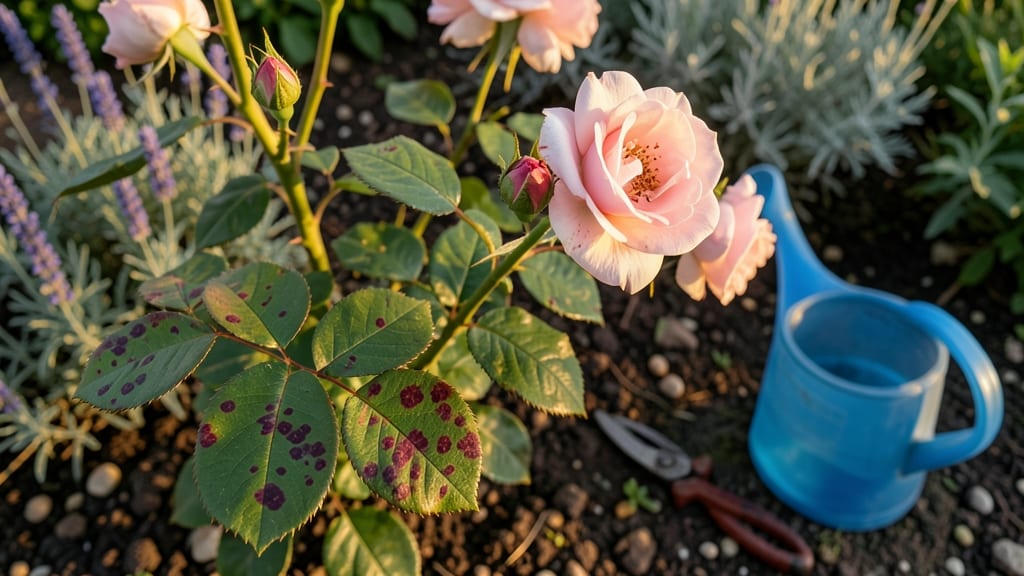
Those red spots on rose leaves are more than just a cosmetic issue—they’re a fungal blight warning. 🌿 I’ve battled black spot and rust on my roses for years, and I’ve learned the three-step cure that stops the spread before it ruins your bushes.
The key is acting fast, because once those spots take over, your plant’s energy shifts from blooms to survival.
Most red spots start as tiny dots that grow into larger, irregular patches with yellow halos. Black spot leaves behind black, velvety spots, while rust creates orange-pustule clusters on the undersides.
Overwatering, poor airflow, and wet foliage create the perfect storm for these diseases—so pruning for airflow and watering at the base (not overhead) is half the battle.
You’ll need copper fungicide for severe cases, but for early stages, a mix of baking soda, oil, and dish soap works wonders. Spray your roses every 7–10 days until new growth appears without spots.
The real secret? Cleaning up fallen leaves and pruning infected stems immediately—don’t let those spores hitch a ride to next year’s blooms.
With this approach, your roses will bounce back faster than you think. The first flush of blooms after treatment is always the sweetest—proof that even a struggling plant can recover with the right care. Let’s get those leaves healthy again.
Root Causes Of Leaf Spots
Red spots on rose leaves are rarely just a random quirk of nature—they’re usually a plant’s SOS signal, triggered by specific environmental stressors or microbial invaders. Understanding the why behind these spots is the first step to stopping them in their tracks.
Below, we break down the most common culprits, their science-backed mechanisms, and how they hijack your roses’ health.
Fungi are the #1 cause of red or dark brown spots on rose leaves, thriving in damp, humid conditions. These microscopic organisms release enzymes that break down plant cell walls, creating necrotic (dead) tissue—visible as spots. Some of the worst offenders include:
- Black Spot (Diplocarpon rosae):
- Causes dark red or purple spots with yellow halos, often with black centers.
- Spores spread via water splashes (rain, overhead watering) and wind.
- Fungi overwinter in fallen leaves, reinfecting in spring.
- Powdery Mildew (Podosphaera pannosa):
- Starts as pale red or grayish patches that turn crusty white.
- Loves high humidity (70%+) and poor air circulation.
- Weakens leaves, making them susceptible to secondary infections.
- Rust (Phragmidium spp.):
- Produces orange-red pustules (spore sacs) on undersides of leaves.
- Spreads via windborne spores and thrives in cool, wet springs.
- Can distort new growth if left unchecked.
💡 Pro Tip: Fungal spores love moisture—they can germinate within 4–6 hours of leaf wetness. That’s why morning watering (before 10 AM) is critical.
Not all red spots are fungal. Extreme weather or poor growing conditions can damage leaf cells directly, causing stress-related discoloration:
| Cause | Spot Appearance | Why It Happens |
|---|---|---|
| Sun Scorch | Dry, reddish-brown patches on leaf edges (often on south-facing sides). | Intense sunlight + low water = oxidative stress in cells. Common in newly planted roses or after drought. |
| Cold Damage | Water-soaked red or black spots after frost, often with crispy edges. | Ice crystals rupture cell membranes, causing freeze-thaw injury. More likely in tender rose varieties. |
| Nutrient Deficiency | Pale red/yellow spots between veins (often with purple stems). | Lack of magnesium (Mg) or potassium (K) disrupts chlorophyll production, leading to interveinal chlorosis. |
🔥 Key Insight: Environmental spots won’t spread like fungi—but they weaken the plant, making it easier for pathogens to move in later.
Some red spots are actually entry wounds from pests feeding on your roses. Here’s how they do it:
- Spider Mites (Tetranychus urticae):
- Tiny pests pierce cells to suck sap, leaving stippled red or yellow spots.
- Thrive in dry, hot conditions (they desiccate leaves first).
- Heavy infestations cause leaf drop.
- Japanese Beetles (Popillia japonica):
- Adults skeletonize leaves, leaving reddish-brown chewed patches.
- Grubs feed on roots, starving the plant and causing stress-related spotting.
- Aphids (Macrosiphum rosae):
- Cluster on new growth, injecting toxic saliva that causes curled, reddened leaves.
- Also spread viral diseases like rose rosette.
🌡️ Quick Test: Hold a leaf over a white sheet of paper and tap it. If you see tiny moving dots (mites) or sticky residue (aphids), pests are the culprit.
Sometimes, you’re the problem. Misapplied fertilizers, herbicides, or fungicides can chemically burn rose leaves, creating red or brown spots:
- Salt Burn (from Fertilizer):
- Excess sodium or chloride in soil or foliar sprays causes crusty red edges.
- Common with over-salty water or granular fertilizers applied too close to leaves.
- Herbicide Drift:
- Glyphosate or 2,4-D can bleach or redden leaves if sprayed nearby.
- Symptoms appear 3–7 days after exposure.
- Copper Fungicide Overuse:
- High concentrations of copper sulfate can cause reddish-brown leaf scorch.
- Always follow label rates and avoid spraying in direct sunlight.
✨ Prevention Tip: Always water leaves before applying fungicides to dilute chemicals and reduce burn risk.
Quick Fixes for Healthy Roses
Seeing those pesky red spots on your rose leaves? Don’t panic—most issues are fixable with the right approach. Below, we’ve mapped out practical, step-by-step solutions tailored to the most common causes.
Whether it’s fungal infections, pests, or environmental stress, these methods will help your roses bounce back faster than you think! 🌿💪
Fungal diseases like black spot or powdery mildew thrive in damp conditions, turning leaves into a red, crinkled mess. Here’s how to tackle them:
🔥 Step 1: Prune the Problem Areas
- 👨🍳 Remove infected leaves—snip off any leaves with red or black spots (and a little extra healthy tissue) using clean, sharp pruners. Dispose of them in the trash, not the compost!
- ⏰ Do this in the morning when humidity is lower, so spores don’t spread as easily.
🌡️ Step 2: Apply Fungicide
- 💡 Organic option: Mix 1 tsp baking soda + 1 quart water + a few drops of dish soap (as a spreader-sticker). Spray leaves undersides too—fungi love hiding there!
- 🎯 Chemical option: Use a copper-based fungicide (like Cupron) or a neem oil solution (1 tbsp neem oil + 1 quart water). Reapply every 7–10 days until new growth appears.
✨ Step 3: Improve Airflow & Light
- 🌬️ Space plants 3–4 feet apart to reduce humidity buildup.
- ☀️ Ensure 6+ hours of sunlight daily—fungi hate dry, sunny conditions.
- 💡 Pro tip: Water at the base (not overhead) and early in the day so leaves dry quickly.
If tiny bugs (like spider mites or aphids) are sucking sap and leaving red speckles, act fast:
🔪 Step 1: Blast Off Pests
- 💦 Spray with water—a strong jet from the hose can knock off aphids and mites. Do this every 3–4 days for a week.
- 🌿 Neem oil spray (1 tbsp neem oil + 1 tsp mild soap + 1 quart water) disrupts their life cycle. Reapply every 5–7 days.
🐝 Step 2: Introduce Beneficial Bugs
- 🐞 Ladybugs, lacewings, or predatory mites eat aphids and spider mites. Buy them online or from garden centers.
- 🌼 Plant companion flowers like marigolds or nasturtiums to attract these helpful critters.
🌡️ Step 3: Prevent Future Infestations
- 🌿 Inspect new plants before bringing them home—quarantine them for a week if needed.
- 🍂 Clean up debris in fall—pests love hiding in old leaves!
- 💡 Pro tip: Use reflective mulch (like aluminum foil) around plants—it confuses pests and reduces egg-laying.
Red spots can also signal sunburn, nutrient deficiency, or overwatering. Fix these issues with simple tweaks:
🌞 Step 1: Shield from Harsh Sun
- If leaves are red and crispy, your roses are getting too much direct sun (especially in hot climates).
- 🌿 Provide afternoon shade with a light cloth shade cloth (30–50% coverage).
- 💡 Pro tip: Mulch with straw or wood chips to keep roots cool.
💧 Step 2: Check Watering Habits
- 🚰 Overwatering? Let the top 1–2 inches of soil dry out between waterings. Yellowing leaves + red edges = classic overwatering.
- 🌧️ Underwatering? Wilting + red-brown spots? Water deeply 1–2 times per week (early morning is best).
🍃 Step 3: Feed & Balance Soil
- 📊 Test your soil (kits are cheap and easy!). Roses need balanced NPK (10-10-10) + micronutrients like iron and magnesium.
- 💡 Quick fix: Sprinkle Epsom salt (1 tbsp per gallon of water) monthly for magnesium deficiency (yellow leaves with red veins).
- 🌱 Top-dress with compost in spring to improve soil health long-term.
Once your roses are healthy, stop the red spots before they start with these habits:
- 🌿 Prune regularly—remove dead/diseased wood in late winter or early spring.
- 🍄 Rotate fungicides if you use them often to prevent resistance.
- 🐛 Monitor leaves weekly—catch pests early with a hand lens (magnifying glass).
- 🌱 Choose disease-resistant varieties like ‘Knock Out’ roses or ‘Dr. Huey’.
- 🌡️ Avoid overhead irrigation—use drip systems or soaker hoses instead.
With these fixes, your roses should show new, spot-free growth in 2–4 weeks. The key? Act fast, stay consistent, and give your plants the right conditions. Happy gardening! 🌹💖
Frequently asked questions
Why do my rose leaves develop red spots suddenly?
Red spots often appear suddenly due to fungal infections like black spot or rust, which thrive in damp conditions. These pathogens spread rapidly when leaves stay wet for more than 4-6 hours, especially after rain or overhead watering. Check for yellow halos around spots—this is classic black spot. Act fast by pruning infected leaves and improving airflow around your plants.
Can I save my roses if the red spots have spread to most leaves?
Yes, but you'll need aggressive treatment. Start by removing all infected leaves and stems (down to healthy tissue) and sterilize your pruners with rubbing alcohol. Apply a copper fungicide or neem oil spray every 7-10 days while improving airflow. For severe cases, consider 2-3 weeks of preventive sprays—roses can recover if you catch the disease before it moves to the canes.
How do I tell if red spots are from fungus vs. pests vs. sunburn?
Examine the spots closely: Fungal spots (black spot/rust) have irregular edges with yellow halos or orange pustules. Pest damage shows tiny speckles or chewed edges—tap leaves over white paper to check for mites or aphids. Sunburn creates dry, crispy red patches on leaf edges, often on south-facing sides. Hold a magnifying glass to spot the difference between biological and environmental causes.
Will my roses bloom normally if they have red spots?
Spots can reduce blooms by 30-50% if left untreated, as the plant diverts energy to healing leaves. However, with proper care (pruning, fungicides, and improved growing conditions), you'll see new healthy growth and normal blooming within 4-6 weeks. The key is stopping the spread—don't let the disease reach the canes, which can kill your rose bush entirely.
Is it safe to compost leaves with red spots?
Never compost infected leaves—they'll spread fungal spores back to your garden! Instead, bag them in plastic and throw them in the trash. Fungal spores can survive in compost for months, reinfecting your plants. Always sterilize pruners between cuts and clean up fallen leaves regularly to prevent next year's infections.