
Blooming
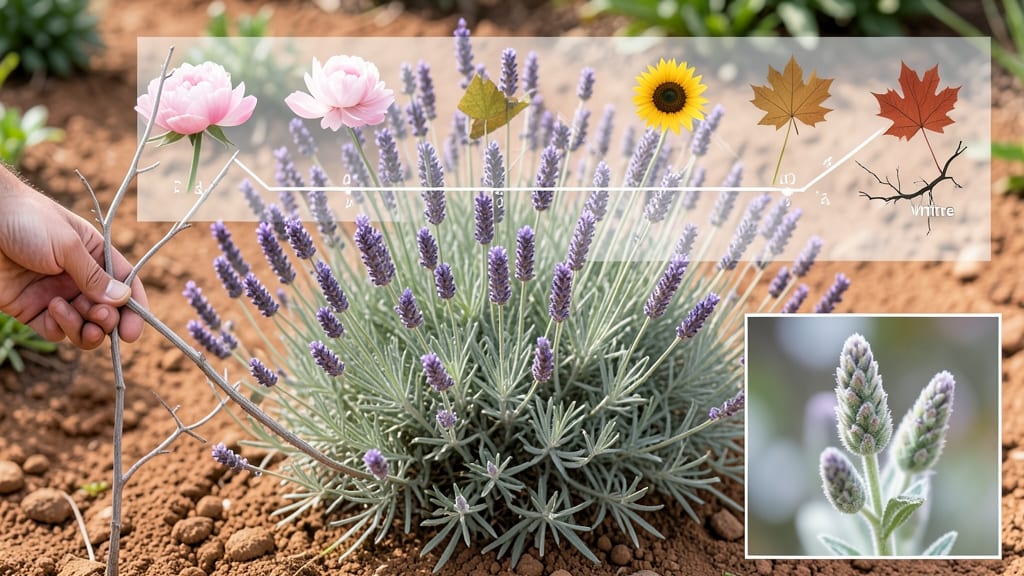
Lavender doesn't bloom all year: its flowering cycles depend on climate and variety, typically peaking in late spring to summer, with some reblooming in fall under ideal conditions. Cold winters or improper care can halt blooms entirely.
Lavender's blooming schedule is all about timing—it thrives when days are long and temperatures are moderate, usually between 50°F and 75°F. 🌸 The plant enters dormancy during harsh winters or extreme heat, which is why you'll rarely see flowers in winter unless you're in a mild climate zone.
Even then, proper care like consistent watering and well-draining soil can help extend its blooming window by a few weeks in fall.
What's interesting is how different lavender types respond: English lavender often blooms later in summer, while Spanish lavender may produce smaller flowers but more frequently.
I've found that deadheading spent blooms (cutting them back after flowering) encourages new growth, sometimes triggering a second flush of flowers in late summer or early fall.
💡 In This Article
- Lavender Flowering Seasons by Climate Zone
- Tips to Encourage Extended Lavender Blooms
Lavender flowering seasons by climate Zone
The science behind lavender's seasonal blooms lies in its response to daylight and temperature. Lavender is a short-day plant, meaning it flowers when daylight hours shorten—typically in late spring to early summer when days reach 14-16 hours of light.
This photoperiod sensitivity is triggered by a hormone called florigen, which signals the plant to produce flowers when conditions are optimal. In cooler climates (USDA zones 5-7), blooming peaks in June-July, while warmer zones (8-10) may see flowers stretch into August-September.
Temperature plays a critical role too: lavender needs consistent warmth between 50°F-75°F to thrive. Below 40°F, growth slows dramatically, and above 85°F, buds may drop off before opening.
Varieties like English lavender (Lavandula angustifolia) bloom later in summer (July-August) because they prefer slightly cooler temperatures, while Spanish lavender (Lavandula stoechas) often flowers earlier (May-June) due to its heat tolerance.
The French lavender (Lavandula dentata) variety is the exception—it blooms in winter (December-February) in Mediterranean climates, where mild winters prevent dormancy.
Daylight hours matter more than absolute temperature. For example, in Zone 5 (like Minnesota), lavender may bloom for just 4-6 weeks in late June, while in Zone 9 (like Southern California), the same variety might flower for 8-10 weeks from May to July.
This is because longer daylight in summer triggers prolonged flowering. The key takeaway: lavender's blooming window is directly tied to your local photoperiod—shorter days = shorter bloom time, unless you're in a Mediterranean climate where winter blooms occur.
What most gardeners don't realize is how vernalization (cold exposure) affects reblooming. Some lavender varieties need 6-8 weeks of temperatures below 50°F in winter to reset their growth cycle for spring blooms.
Without this cold snap, they may skip flowering entirely. This is why lavender in Zone 10+ often blooms sporadically—it lacks the winter chill to trigger reliable flowering. 🌿
Climate also determines the intensity of blooms. In coastal regions (like the Pacific Northwest), lavender may produce smaller, more frequent blooms due to cooler summers, while inland deserts (like Arizona) yield larger, fewer blooms because of intense heat.
The humidity factor is often overlooked too: high humidity (above 70%) can cause fungal issues that stunt flower production. This is why lavender thrives in arid climates with well-draining soil—it mimics its natural Mediterranean habitat.
Here's a quick comparison of how different zones affect lavender blooming:
- Zones 5-7 (Cold Winters): June-July peak, 4-6 week bloom, needs winter chill
- Zones 8-9 (Mild Winters): May-August bloom, 8-10 week window, minimal winter dormancy
- Zone 10+ (No Frost): Irregular blooms, often smaller flowers, lacks vernalization trigger
- Mediterranean Climates: Winter blooms (Dec-Feb) for French lavender, year-round growth possible