
Blooming
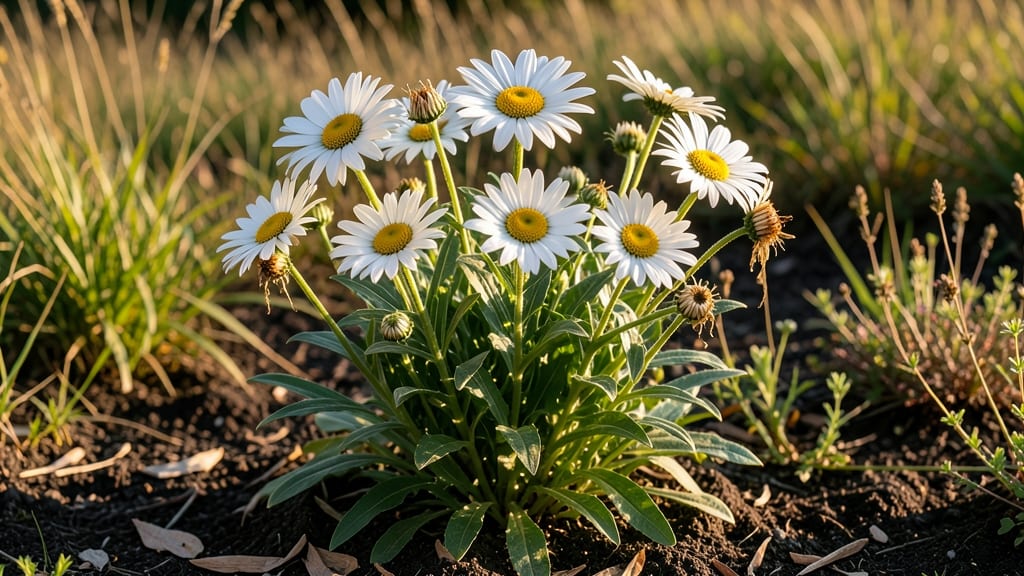
Shasta daisies don't bloom all summer continuously—they flower in bursts from early summer through early fall, with their most vibrant display lasting about 4-6 weeks. Removing faded blooms can coax a second wave, but extreme heat, dry spells, or crowded roots often cut their season short.
Shasta daisies are day-length sensitive, meaning their blooming cycle aligns with longer daylight hours of summer rather than continuous growth. 🌸 Once temperatures climb above 85°F or soil dries out, they'll conserve energy by focusing on foliage over flowers.
I've seen them rebound in cooler late summers if given consistent water and afternoon shade—just don't expect nonstop blooms.
What many gardeners miss is how strategic deadheading works: snipping spent blooms below the next set of buds signals the plant to redirect energy into new flowers rather than seed production.
For maximum impact, I recommend using clean pruners and removing only the faded stems—never the leafy growth, which helps the plant photosynthesize.
💡 In This Article
- Shasta Daisy Bloom Cycles and Heat Zone Impact
- How to Prolong Shasta Daisy Blooms Late in the Season
Shasta daisy bloom cycles and heat zone impact
Shasta daisies are photoperiod-sensitive plants, meaning their blooming cycle is triggered by daylight length rather than calendar seasons. Their flowering typically begins when days reach 14-16 hours of sunlight, which usually occurs in late spring to early summer.
The plant's internal clock—controlled by a hormone called florigen—responds to these longer days by initiating bud formation. Once buds appear, they require 10-14 days to fully open, creating that iconic burst of white blooms we associate with summer gardens.
The intensity and duration of blooming are heavily influenced by temperature thresholds. Shasta daisies thrive in USDA zones 3-8, with optimal flowering occurring between 60-75°F during the day and 50-60°F at night.
When temperatures climb above 85°F for extended periods, the plants enter stress mode—conserving energy by producing fewer blooms and more foliage. This is why you often see peak flowering in late spring to early summer, then a gradual decline as summer heat intensifies.
Humidity also plays a role: high moisture levels can help mitigate heat stress, while dry conditions accelerate bloom decline.
What's fascinating is how Shasta daisies respond to heat waves differently based on their maturity. Younger plants (first-year growth) are more heat-sensitive and may bolt or produce fewer blooms when stressed. Mature plants, however, have developed deeper root systems that allow them to access moisture and nutrients more efficiently.
I've observed that well-established Shasta daisies in zone 6 gardens can sometimes produce a second bloom cycle in early fall when temperatures dip back into the 70-75°F range and daylight shortens slightly.
Late-season humidity becomes a critical factor in extending blooms. When relative humidity drops below 40% during summer months, the plants lose moisture through transpiration at an accelerated rate. This is why consistent watering—especially in the root zone—is essential.
Mulching with 2-3 inches of organic material helps retain soil moisture and regulate temperature fluctuations near the roots. The key is maintaining even moisture without waterlogging, as soggy conditions can promote fungal diseases that weaken the plant.
Consider these environmental triggers when planning your garden layout: placing Shasta daisies where they receive morning sun and afternoon shade can extend their blooming season by 2-4 weeks. The shade helps reduce heat stress while still allowing sufficient light for photosynthesis.
In hotter climates (zone 8+), I recommend choosing heat-tolerant varieties like 'Becky' or 'Alaska' which have shown better resilience to prolonged high temperatures.
What most gardeners don't realize is how soil temperature affects root activity. When soil temperatures exceed 80°F, root growth slows dramatically, reducing the plant's ability to take up water and nutrients.
This is why even well-watered Shasta daisies may show signs of stress during heatwaves—yellowing leaves or dropped buds are clear indicators the roots can't keep up with the plant's demands. 🌡️