
Blooming
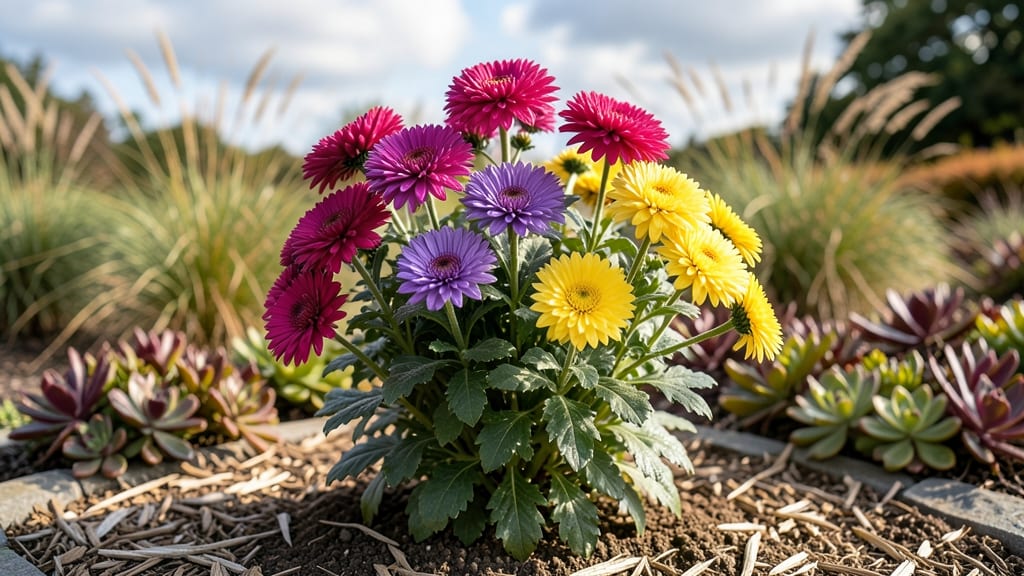
Mums (chrysanthemums) don't typically bloom in summer—they prefer late summer to fall blooming, since they thrive in cooler temperatures and often struggle with prolonged summer heat and direct sunlight.
Mums are cool-season plants that naturally enter dormancy when temperatures rise above 85°F. 🌸 Their blooming cycle is triggered by shorter daylight hours and cooler nights, which is why they shine brightest in September and October.
If you notice wilting or yellowing leaves during summer, it's your plant's way of saying, "I need a break!" Proper summer care—like providing afternoon shade and consistent watering—can help them recover for their fall display.
Many gardeners mistakenly assume mums bloom all summer, but their natural rhythm is tied to seasonal changes. Heat-tolerant varieties like 'Mega Bloom' or 'Bonanza' series can handle slightly warmer conditions, but even these benefit from strategic placement and care.
The key is understanding their seasonal needs rather than fighting their biology.
💡 In This Article
- Why Mums Prefer Fall Over Summer Blooming
- How to Extend Mum Blooms in Summer Heat
Why mums prefer fall over summer blooming
Mums (chrysanthemums) are cool-season plants with a biological clock that syncs to temperature and daylight changes. Their blooming cycle is triggered by photoperiodism—a response to decreasing daylight hours (shorter days) and cooler temperatures (60-75°F nighttime temps).
During summer, when days stretch past 14 hours of sunlight, mums receive a signal to conserve energy rather than flower, entering a semi-dormant state. This is why you'll rarely see vibrant blooms in June or July, even in ideal conditions.
The science gets even more interesting when you consider heat stress. Mums originate from East Asia, where they evolved in regions with distinct seasonal shifts. When exposed to prolonged temperatures above 85°F, their cellular processes slow dramatically.
The leaves may develop a yellowing or browning (chlorosis) due to disrupted chlorophyll production, while buds often fail to open or drop prematurely. Think of it like a plant version of heat exhaustion—your mum is essentially saying, "I need to conserve water and energy to survive this heatwave." 🌡️
Another critical factor is root zone temperature. Mums have shallow root systems that thrive when soil temps stay below 70°F. In summer, black asphalt or concrete radiates heat, baking the roots and signaling the plant to shut down flowering mechanisms.
This is why mums planted in full sun containers often struggle more than those in garden beds with better heat dissipation. The root zone acts like a thermostat—when it gets too hot, the plant prioritizes survival over reproduction.
Daylight length also plays a surprising role. Mums are short-day plants, meaning they need 10-12 hours of darkness each night to trigger flowering.
During summer solstice (June 21), days can exceed 15 hours of sunlight in many regions, leaving only 9 hours of darkness—far below the threshold needed for blooming. This explains why even well-cared-for mums may look lush but flowerless in peak summer.
The plant's internal clock simply isn't getting the right signals to produce flowers.
For those who've seen mums blooming in summer, there's usually a trick involved: artificial shading (like 30-50% shade cloth) or heat-tolerant cultivars bred to handle slightly warmer conditions. However, even these varieties will perform best when nighttime temperatures drop below 75°F.
The trade-off is that summer blooms often come at the cost of reduced vigor—the plant is working harder to maintain foliage than produce flowers, setting up potential struggles for the fall season.
What most gardeners don't realize is that this summer dormancy is actually beneficial. By conserving energy, mums build stronger root systems and store more nutrients for their biggest blooming period in fall.
This natural cycle explains why properly cared-for mums often put on their most spectacular displays in September and October—after they've had time to recover from summer's heat stress. 🌿