
Blooming
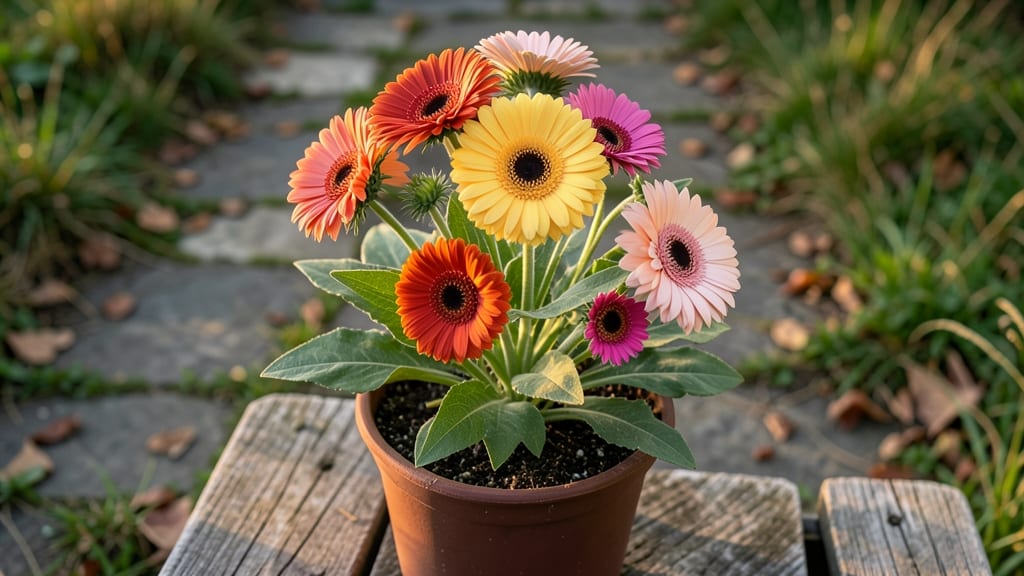
Gerbera daisies bloom all summer when given ideal conditions—typically May through September—but their flowering varies by variety, sunlight exposure, soil quality, and climate zone. Some types produce continuous blooms with proper care, while others show staggered bursts throughout the season.
Gerbera daisies thrive in warm weather, but their summer blooming isn't guaranteed without the right conditions. 🌞 The key factors are 6+ hours of direct sunlight daily and well-draining soil with a pH between 6.0 and 7.0.
In cooler climates (USDA zones 5-7), you might see fewer blooms or shorter seasons compared to warmer regions (zones 8-10). I've found that varieties like 'Teresa' often deliver the most reliable summer color, while others like 'Luna' may need extra attention to maintain continuous flowering.
What many gardeners don't realize is that these flowers actually need a short rest period after their initial bloom surge to recharge for the next wave. This is why you might see staggered bursts rather than nonstop color.
Proper watering—keeping soil consistently moist but not soggy—can extend the blooming window by up to 4-6 weeks in optimal conditions.
💡 In This Article
- Factors That Influence Gerbera Daisy Summer Blooms
- Top Gerbera Daisy Varieties for Long-Lasting Summer Color
Factors that influence gerbera daisy summer blooms
Sunlight is the single most critical factor for summer blooms—gerbera daisies need 6-8 hours of direct sunlight daily to trigger consistent flowering. Without enough light, they'll produce fewer blooms and may revert to leafy growth.
In my experience, varieties like 'Teresa' thrive with full sun exposure, while others like 'Luna' can tolerate 4-6 hours but with noticeably reduced blooming intensity.
The key is photosynthesis: these plants convert sunlight into energy that fuels both foliage growth and flower production, with peak efficiency at temperatures between 70-80°F. 🔥
Soil pH plays a surprising role too—gerberas prefer slightly acidic to neutral soil (pH 6.0-7.0). Outside this range, nutrient uptake suffers, particularly for phosphorus and potassium, which are essential for bloom development.
I've seen plants in pH 5.5 soil (too acidic) produce stunted flowers, while those in pH 7.5 soil (alkaline) developed weak stems. A simple soil test can reveal your garden's pH, and amendments like sulfur or lime can adjust it within 2-4 weeks of application.
Watering frequency creates another critical balance—too much moisture causes root rot, while drought stress halts blooming. The ideal approach is 1-1.5 inches of water per week, delivered at soil level rather than overhead.
I've found that mulching with 2-3 inches of organic matter helps maintain consistent moisture while preventing soil compaction. In hot climates (USDA zones 8-10), you may need daily watering during peak summer months, while cooler regions (zones 5-7) can often get by with every 3-4 days. 💫
Temperature fluctuations also impact blooming patterns—gerberas enter dormancy when nights drop below 50°F, which is why you'll see fewer blooms in early summer or late summer in cooler zones.
The plant's natural cycle includes a 4-6 week rest period after initial flowering to recharge, which explains why many gardeners observe staggered bloom bursts rather than continuous color.
In zone 9 climates, this typically happens around July-August, while zone 5 gardens may see it shift to June-July due to earlier warming.
One often-overlooked factor is humidity—gerberas prefer 40-60% relative humidity. In arid climates, you'll need to increase watering frequency or use shade cloth during peak afternoon heat to prevent bud drop.
I've noticed that varieties like 'Orange Queen' handle humidity better than 'Teresa', which may develop fungal issues in consistently damp conditions. The solution? Strategic placement—plant near shrubs that provide light shade during the hottest hours while maintaining airflow around the base. ✨