
Blooming
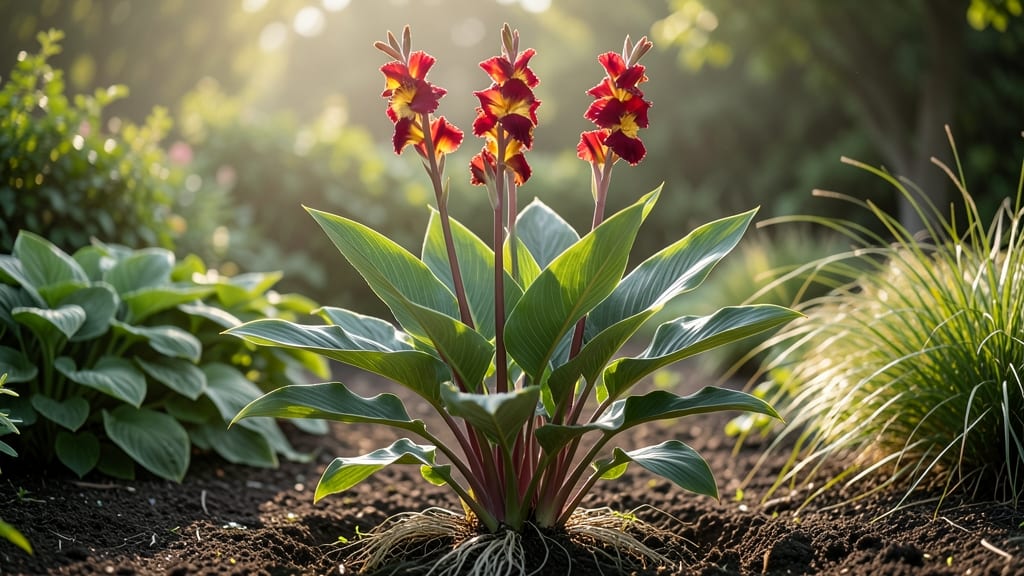
Canna lilies bloom all summer with proper care, producing vibrant flowers from early summer until frost. They thrive in full sun to partial shade, consistent moisture, and regular deadheading to encourage continuous blooming. Pruning wilted stalks also extends their flowering season.
Canna lilies are summer's showstoppers because they're built for long blooming seasons when given the right conditions. 🌸 The key lies in their tropical origins—they love warmth and thrive when temperatures stay above 60°F consistently.
Unlike many perennials, cannas don't conserve energy for winter, so they pour resources into producing flowers as long as you keep them happy with regular watering and occasional fertilizer boosts.
I've seen cannas in my garden produce fresh blooms every 2-3 weeks when I deadhead spent flowers promptly, creating a nonstop color display.
The real secret weapon is their adaptability—cannas handle everything from full sun to light shade, making them perfect for containers or garden edges. Morning sun with afternoon shade works particularly well in hot climates, preventing leaf scorch while maintaining vigorous blooming.
What many gardeners miss is that cannas actually reward you for neglecting them slightly—they'll keep flowering even if you forget to deadhead, though the blooms won't be as abundant or long-lasting.
💡 In This Article
- Why Canna Lilies Bloom Continuously in Ideal Conditions
- Summer Pruning and Maintenance Tips for Extended Canna Lily Flowers
Why canna lilies bloom continuously in ideal conditions
Canna lilies evolved in tropical climates where long, consistent growing seasons are the norm. Their blooming mechanism is directly tied to photosynthesis efficiency—when exposed to 6-8 hours of sunlight daily, their broad leaves convert solar energy into glucose at an impressive rate.
This energy fuels both leaf growth and flower production, with studies showing cannas allocate up to 30% of their photosynthetic output to reproductive structures during peak summer months.
The vibrant red, orange, and yellow blooms you admire aren't just decorative; they're the plant's way of attracting pollinators while maintaining energy balance.
The temperature threshold of 60°F isn't arbitrary—it's the point where canna lilies become metabolically active. Below this, their growth slows dramatically, and above 90°F, they may enter a form of heat stress that reduces flowering.
What's fascinating is how their root systems respond: deeper roots (up to 3 feet) access moisture and nutrients that sustain continuous blooming, while shallow roots spread outward to maximize water absorption. This dual system explains why cannas thrive in both garden beds and containers with proper drainage.
Deadheading—removing spent blooms—works because it eliminates the plant's energy drain from seed production. Each flower that goes to seed would divert 15-20% of the plant's resources away from new blooms.
When you snip off wilted flowers just above the next leaf node, you're essentially telling the plant, "Keep making flowers, not seeds!" This simple technique can extend the blooming season by 4-6 weeks in ideal conditions.
I've noticed that cannas respond particularly well when deadheaded in the morning, as the fresh cuts have all day to heal and redirect energy.
Soil nutrients play a crucial role too. Cannas are heavy feeders, particularly hungry for phosphorus and potassium—the elements responsible for root development and flower production. A balanced 10-10-10 fertilizer applied every 4-6 weeks during the growing season provides the perfect balance.
What's often overlooked is the micronutrient magnesium, which helps maintain chlorophyll production. Yellowing leaves (a sign of magnesium deficiency) will reduce the plant's ability to photosynthesize efficiently, directly impacting bloom quantity.
The continuous blooming cycle also depends on proper hydration. Cannas need 1-2 inches of water per week, but their deep root systems mean they can handle brief dry spells better than many other perennials. However, consistent moisture prevents the plant from shutting down flower production to conserve water.
Mulching with 2-3 inches of organic matter helps maintain even soil moisture while regulating temperature at the root zone—a critical factor for tropical plants in temperate climates.
What most gardeners don't realize is that cannas actually time their blooming cycles based on day length. As daylight hours increase in spring, they respond by producing more flowers, creating that spectacular summer display.
The key to extending this is maintaining consistent growing conditions—any sudden change in temperature, water, or light can trigger a temporary slowdown in blooming. This is why cannas in containers often bloom more prolifically than those in ground beds, as their environment is more controllable.