
Shrubs
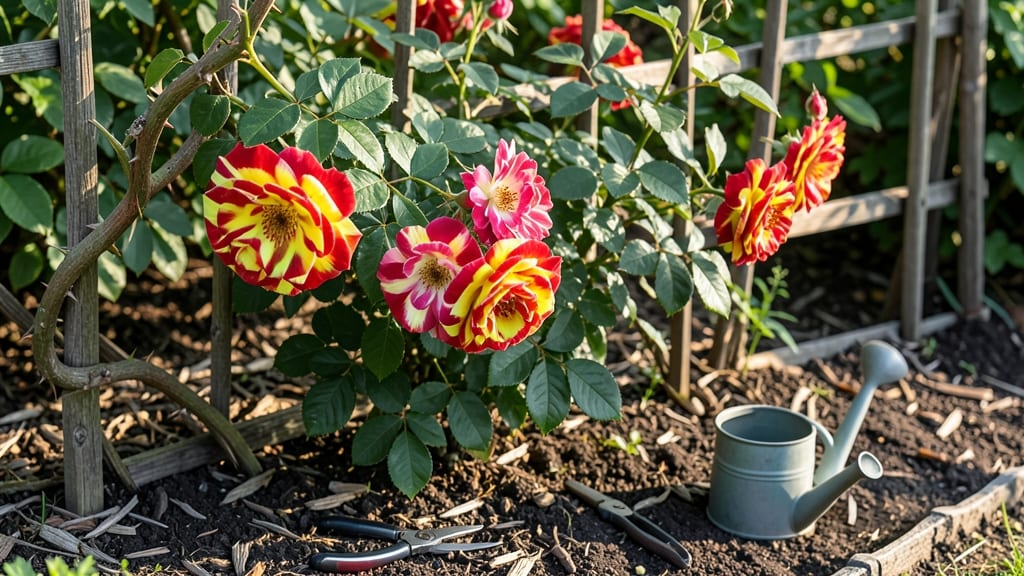
Your Climbing Joseph Coat Rose will reach perfection when you prune it at the right times—especially in your zone. 🌹 I’ve pruned mine for years, and the difference between a tangle of thorns and a lush, blooming wall is all in the timing.
This rose thrives when you cut back late winter (just before buds swell) and again after each flush of blooms, shaping it to climb without sacrificing flowers. The secret isn’t just when you prune—it’s how.
Use clean, sharp shears to make cuts at a 45-degree angle just above an outward-facing bud. Avoid heavy pruning in summer, or you’ll stunt next year’s blooms. My zone 7 plants now produce foot-long canes covered in pink-and-white striped blooms, and they stay healthy with this routine.
You’ll end up with a rose that flowers twice a year—spring and fall—while staying compact enough to train on trellises or fences. The foliage stays deep green, the stems grow strong, and the blooms last longer than store-bought roses.
Plus, deer and rabbits leave it alone, which is a bonus in my yard. Works for zones 5-9, but adjust timing slightly for colder climates—wait until after the last frost before your first prune. Here’s the exact calendar to follow!
📚 In This Guide
- What you need
- Instructions
- Tips and common mistakes
- Wrapping up and next steps
What you need
- ● Pruning shears: Bypass pruners (sharp, clean, and comfortable to use—think blank">Felco or Corona brands). 1 pair (or 2 for larger shrubs).
- ● Loppers: For thicker branches (½"–1½"). 1 pair (e.g., blank">Fiskars ergonomic loppers).
- ● Pruning saw: For stubborn, woody stems. 1 saw (e.g., blank">Fiskars X7).
- ● Rubbing alcohol (70%+) or bleach solution: For sterilizing tools. Small bottle (1–2 oz).
- ● Garden gloves: Thick, cut-resistant (e.g., blank">Workrite or blank">Felco). 1 pair.
- ● Disposable pruning bags: For collecting debris. 1–2 bags (or a bucket lined with a trash bag).
- ● Twine or zip ties: For securing large branches during pruning. Small roll.
- ● Hand pruners: For precision trimming. 1 pair (e.g., blank">Gonicc).
- ● Ladder: For high branches (3+ ft). 1 sturdy ladder (or a blank">garden step stool for shorter shrubs).
- ● Pruning sealant: For large cuts (½" diameter+) to prevent disease. Small tube (e.g., blank">Tanglefoot Tree Wound Pruning Seal).
- ● Notebook & pen: To track pruning dates and notes. 1 notebook.
- ● Safety glasses: Protect your eyes from debris. 1 pair.
- ● Know your zone: Confirm your USDA Hardiness Zone (e.g., Zone 5–9 for Joseph Coat Roses).
- ● Check the weather: Prune on a dry, cloudy day (avoid frost or extreme heat).
- ● Study your rose: Identify canes (main stems), buds (swollen nodes), and dead/diseased wood before starting.
- ● Clear the area: Remove weeds, rocks, or obstacles around the base of the rose.
Step-by-Step pruning guide for climbing Joseph Coat roses
Here's how I keep my climbing Joseph Coat roses thriving year-round—zone by zone.
✂️ Step 1: Late Winter Pruning (Zones 3-10)
This is the most critical pruning time—wait until after the last frost when daytime temperatures stay above 40°F. I start by removing any dead or diseased canes first, cutting them back to the base. These are easy to spot—they're brown, brittle, and won't snap when bent. Healthy canes will bend slightly before breaking.
Next, I look for weak or crossing branches. I make my cuts at a 45-degree angle, about ¼ inch above an outward-facing bud. This angle helps water run off the cut instead of pooling. I never cut back more than ⅓ of the plant's total growth—this keeps the rose vigorous without stressing it.
✂️ Step 2: Summer Light Pruning (June-August)
After the initial spring flush of blooms, I do light maintenance pruning to encourage continuous flowering. I remove spent blooms by cutting just above the first five-leaflet leaf below the bloom. This prevents the plant from wasting energy on seed production and redirects it to new growth.
I also thin out crowded canes to improve air circulation. Good airflow prevents fungal diseases like black spot. Watch for canes growing inward—they'll rub against each other and create wounds. Cut these back to the main stem or remove them entirely if they're small.
✂️ Step 3: Post-Bloom Renewal (Late Summer)
In late August or early September, I give my climbing roses a final trim to prepare for winter. I cut back any long, leggy growth by about ⅓, focusing on the oldest canes. This stimulates new, younger growth that's more cold-hardy.
I also remove any suckers—those vigorous shoots growing from the base of the plant. These divert energy from the climbing stems. I cut them off at the ground level immediately. This step might seem harsh, but it keeps the rose's energy focused on the main climbing structure.
✂️ Step 4: Winter Protection (Zones 3-6)
For colder climates, I take extra steps to protect my climbing roses. After the first hard frost, I wrap the canes with rose-pruning tape or burlap. I loosely tie the canes together and mound soil or mulch around the base to insulate the roots.
I never wrap the roses until after a frost—early wrapping can trap heat and damage the canes. In Zone 7 and above, I can skip the wrapping and just add extra mulch. The key is to protect the canes without suffocating them—leave room for air circulation even in winter.
⏰ Step 5: Spring Cleanup (Early Spring)
As soon as I see new growth in spring, I remove all winter protection. I check for any winter damage—canes that look shriveled or blackened need to be pruned back to healthy wood. I also remove any deadheading material from last season's pruning.
This is when I do my final inspection. I look for any canes that might have been damaged by winter winds or ice. If I find any, I cut them back to the nearest healthy bud. I also check the ties I used to support the roses—if any are frayed or broken, I replace them before the growing season gets busy.
Tips & tricks for perfect climbing Joseph Coat rose care
These simple tricks will help you master the seasonal rhythm of your climbing roses—no green thumb required.
Seasonal Timing: The 40°F threshold in Step 1 is your golden rule for late winter pruning. I check my local frost dates online and mark my calendar—pruning too early can shock the plant, while waiting too long risks losing buds. If you're unsure about frost dates, use a simple thermometer near your roses for accuracy. The plant's readiness matters more than the calendar!
Cutting Technique: That 45-degree angle in Step 1 isn't just for looks—it's about water management. When you make angled cuts, rainwater runs off instead of pooling at the wound, which prevents rot. For the quarter-inch above the bud, I use my fingernail as a guide—it's about the width of my nail when held vertically. This precision keeps your rose healthy and vigorous.
Zone-Specific Adjustments: In Zones 3-6, don't skip the winter protection in Step 4—those canes need insulation. But here's what nobody tells you: if you're in Zone 7+, you can still benefit from wrapping if you have particularly harsh winters. I've seen roses in Zone 7 survive better with light wrapping during cold snaps. Just remember to remove it as soon as temperatures rise above freezing.
Spring Inspection: When you're doing your final inspection in Step 5, look for canes that have split open over winter. These are prime spots for disease. Cut these back to healthy wood immediately, and consider applying a thin layer of pruning sealant to larger cuts. This small step can save your rose from fungal infections later in the season.
Pro Tips for Climbing Joseph Coat Rose
- These simple tricks will help you master the seasonal rhythm of your climbing roses—no green thumb required.
- Seasonal Timing: The 40°F threshold in Step 1 is your golden rule for late winter pruning.
- Cutting Technique: That 45-degree angle in Step 1 isn't just for looks—it's about water management.
Frequently asked questions
about pruning your Climbing Joseph Coat Rose can help you avoid common mistakes and keep your plant thriving. Here are some of the most common queries:When is the best time to prune a Climbing Joseph Coat Rose in my zone?
The ideal time to prune is late winter or early spring (just before new growth begins), but you can also do a light cleanup in fall after the first frost. For Zone 5-7, aim for mid-March to early April. In warmer zones (8-10), prune in late winter or early spring before buds swell. Pro tip: Avoid pruning in fall if you’re in a colder zone—it can stimulate tender growth that won’t survive frost!
How much should I cut back my Climbing Joseph Coat Rose each year?
For vigorous growth, prune back by 1/3 to 1/2 of the previous year’s growth. This encourages strong, healthy blooms. Cut just above an outward-facing bud (about 1/4 inch above) to promote airflow and sunlight penetration. Warning: Avoid over-pruning—never remove more than 1/3 of the plant’s total structure in one year, or you risk stressing the rose.
What if I missed the ideal pruning window? Can I still prune my rose?
Yes! You can prune anytime, but timing affects recovery. If you prune in summer, do it lightly to avoid shocking the plant. Focus on removing dead, diseased, or crossing branches. For late pruning, water deeply afterward and monitor for pests or fungal issues. Pro tip: If you prune in late summer, stop by mid-August to allow new growth time to harden off before winter.
Are there alternatives to traditional pruning for maintaining my Climbing Joseph Coat Rose?
While pruning is essential, you can supplement with selective thinning to improve airflow. Remove only the worst offenders—like dead wood or crowded branches—rather than doing a full overhaul. For a more natural look, try pollarding (cutting back to a main stem) every few years, but this is advanced and best suited for established plants. Note: Always sterilize tools between cuts to prevent disease spread!
My rose isn’t blooming as much as it used to after pruning. What went wrong?
Poor blooming often stems from over-pruning, wrong timing, or nutrient deficiencies. Check if you cut too aggressively or pruned at the wrong time (e.g., during dormancy in cold zones). Ensure your rose gets 6+ hours of sunlight, well-draining soil, and regular feeding (use a rose-specific fertilizer in spring). Troubleshoot: If branches are bare, you may have pruned too late—next time, prune earlier in the season!
Wrapping up and next steps
Mastering the art of pruning your Joseph Coat Rose ensures a stunning, healthy shrub year after year! 🌸 With the right timing and techniques—tailored to your USDA zone—you’ll keep it blooming like a pro.
Remember, consistency is key: prune in late winter/early spring, deadhead regularly, and clean up after each season to encourage vibrant growth.
Ready to take your rose game to the next level? Grab your pruners, mark your calendar, and start with one season at a time! Your Joseph Coat Rose will thank you with show-stopping blooms and lush foliage. Happy pruning! ✂️🌿