
Blooming
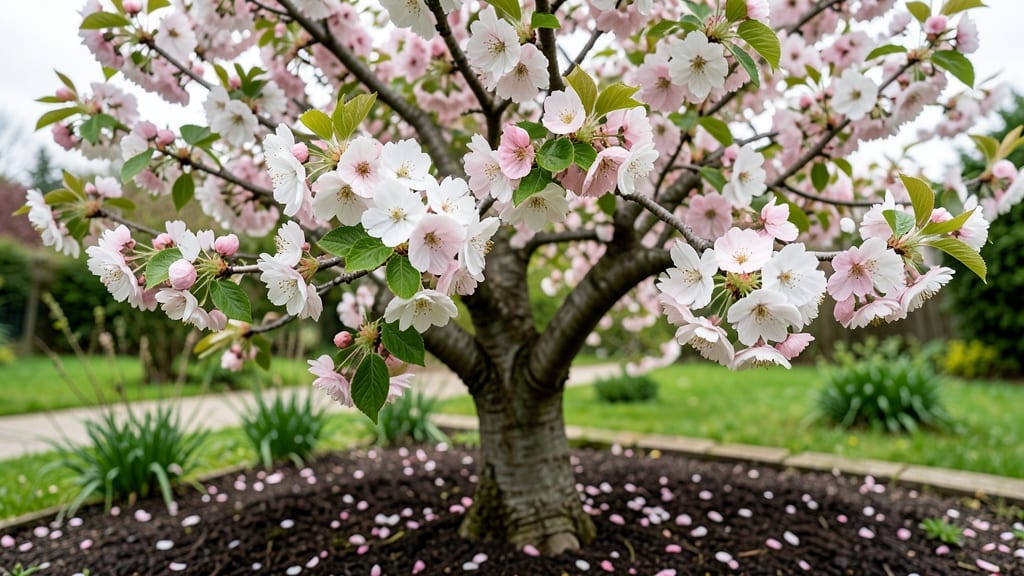
Your cherry tree’s bloom time depends on its variety, chill hours, and climate — and getting it right means stunning pink or white flowers that transform your yard every spring.
Picture this: You’ve waited all winter for those first delicate blossoms, only to find your tree sitting silent under a blanket of snow. That’s not laziness — it’s a science of dormancy most gardeners overlook.
Without the right mix of cold exposure and warm-up, even the hardiest cherry tree 🌸 can hold back its beauty.
But here’s the good news: You can influence bloom timing with simple adjustments to care, pruning, and soil. Whether you’re growing sweet cherries for pies, tart varieties for snacks, or ornamental types for show, understanding the triggers behind flowering will help you predict—and even speed up— those magical spring displays.
In this guide, I’ll break down the exact factors that control bloom schedules, share 5 proven tricks to encourage earlier flowers, and warn you about the mistakes that keep your tree playing hide-and-seek with its blossoms. Let’s get those branches blooming on your timeline!
Cherry tree bloom time: how climate and variety determine when flowers appear
If you’ve ever waited eagerly for your cherry tree to burst into bloom, only to be met with silence, you’re not alone. The bloom timing of cherry trees is one of the most fascinating—and frustrating—parts of growing them.
Unlike annuals that bloom on a predictable schedule, cherry trees follow a complex dance between chill hours, temperature fluctuations, and genetic variety. Understanding these factors can help you predict—and even influence—when those showy pink or white blossoms will appear.
The science behind cherry tree blooming starts with dormancy. After the growing season, trees enter a resting phase triggered by cool temperatures. For most varieties, this means accumulating 400-1,000 chill hours (temperatures between 32°F and 45°F).
Without enough chill hours, buds may fail to open, leaving you staring at a barren tree. Regional differences play a huge role here—trees in USDA Zone 5 might bloom weeks earlier than those in Zone 8, where warmer winters delay dormancy.
Here’s the kicker: not all cherry trees bloom at the same time. Sweet cherries like Bing or Rainier typically bloom in late April to early May, while tart cherries such as Montmorency often appear 1-2 weeks earlier.
Ornamental cherries, like the Yoshino or Autumn Brilliance, can bloom as early as March or as late as June, depending on the variety and location. Even within the same species, early bloomers and late bloomers exist, making bloom time a moving target.
🌸
Temperature isn’t the only player in this game—soil health and nutrient availability also influence bloom timing. Trees that receive balanced fertilization in early spring (like a 10-10-10 NPK blend) often produce more robust blooms. However, over-fertilizing with nitrogen can lead to leafy growth at the expense of flowers.
The key is to provide phosphorus and potassium, which encourage flowering. Think of it like giving your tree a bloom-boosting smoothie after its winter nap.
For gardeners in warmer climates, where chill hours are scarce, selecting low-chill varieties is critical. Varieties like Stella or Lapins are bred to thrive with as few as 300 chill hours, making them ideal for USDA Zone 8 and 9.
In contrast, traditional sweet cherries may struggle to bloom in these regions unless you use artificial chill treatments, like storing branches in a refrigerator for a few weeks during winter.
Even within the same climate, microclimates can shift bloom times. A tree planted in a sunny, sheltered spot might bloom 1-2 weeks earlier than one exposed to wind or late frosts.
If you’re in an area prone to late spring frosts, consider planting late-blooming varieties to avoid flower damage. For example, Rainier cherries often bloom later than Bing cherries, reducing frost risk in Zone 6 and 7.
🌿
One of the most common questions I hear is, "Why did my cherry tree bloom so late this year?" The answer often lies in unpredictable weather patterns.
A mild winter with few freeze events can delay dormancy, while an early spring heatwave might trick buds into opening too soon—only to be nipped by a late frost. To
5 Proven ways to speed up cherry tree blooming (without harming the tree)
If your cherry tree seems slow to bloom, don’t despair—there are safe, science-backed ways to encourage earlier or more vibrant flowers. The key lies in understanding your tree’s natural rhythms while making strategic adjustments.
Unlike forcing blooms with harsh chemicals, these methods focus on optimal growing conditions that won’t stress your tree. Let’s explore how to coax those pink or white blossoms into appearing sooner.
Many gardeners mistakenly believe that extra fertilizer or pruning at the wrong time will speed up blooming. In reality, cherry trees respond best to balanced care that aligns with their dormancy cycles and nutritional needs.
The good news? Small, thoughtful changes can make a noticeable difference without risking your tree’s health. Whether you’re dealing with a young sapling or a mature orchard tree, these techniques work for all varieties.
🌸 5 Proven Ways to Speed Up Blooming
- 🌡️ 1. Optimize Chill Hours – Ensure your tree gets 600-1,000 hours below 45°F during dormancy (winter). Use row covers in mild climates to extend cold exposure.
- ✂️ 2. Prune Strategically – Cut back dead or crossing branches in late winter (before buds swell) to redirect energy to flower production.
- 💧 3. Deep-Water in Dormancy – Soak the root zone every 2-3 weeks from fall to early spring to prevent drought stress.
- 🌱 4. Amend Soil with Compost – Mix well-aged compost into the soil in early spring to boost nutrient availability for blooms.
- ☀️ 5. Ensure Full Sun – Cherry trees need 6+ hours of sunlight daily. Trim nearby shade trees or relocate young trees if needed.
One of the most critical factors for cherry tree blooming is chill hours, which trigger the transition from dormancy to flowering. If you live in a warm-winter region, your tree might not get enough cold exposure.
To help, use lightweight row covers or shade cloths during winter to simulate cooler temperatures. This mimics the natural dormancy period and signals the tree to break dormancy sooner.
Pruning is another game-changer—but timing matters. Avoid heavy pruning in late spring or summer, as it can reduce next year’s blooms. Instead, focus on structural pruning in late winter to remove weak or diseased wood.
This redirects energy to flower buds, resulting in earlier and more abundant blooms. Always use sterilized tools to prevent bacterial infections.
Don’t overlook the power of deep watering, especially during dormancy. Many gardeners forget that water stress in winter can delay spring blooming. Aim for 1-2 deep waterings every 2-3 weeks from fall through early spring.
This ensures the root system stays hydrated and energized for the blooming season. Mulch around the base of the tree with 3-4 inches of organic mulch to retain moisture and regulate soil temperature.
Finally, soil health plays a pivotal role. Cherry trees thrive in slightly acidic to neutral soil (pH 6.0-7.0). Test your soil in early spring and amend it with compost or aged manure if needed.
Avoid high-nitrogen fertilizers, which promote leafy growth at the expense of flowering. Instead, use a balanced fertilizer (like 10-10-10) in early spring to support bloom development.
With these 5 proven techniques, you’ll give your cherry tree the best chance to bloom earlier and more vigorously—without risking its health. Remember, patience and consistency are key.
Over time, your tree will thank you with stunning spring blossoms that attract pollinators and set the stage for a bountiful fruit harvest. 🌸