
Blooming
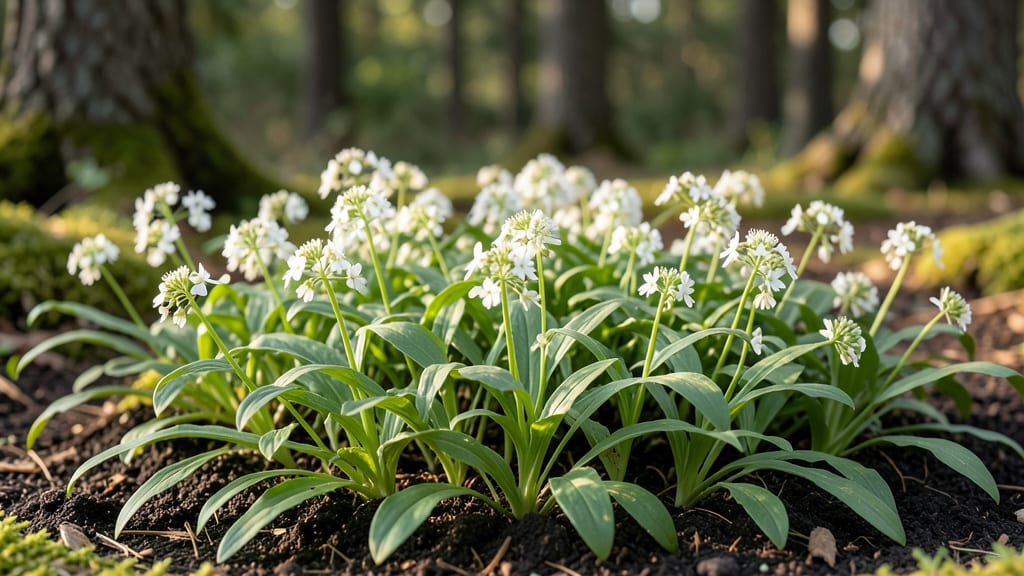
The sweet woodruff bloom time arrives in late spring to early summer, when its delicate white flowers and vanilla-scented foliage transform shaded gardens into fragrant havens.
If you’ve ever wondered why your sweet woodruff isn’t releasing its signature vanilla-scented fragrance after spring frost, timing is everything—and this delicate ground cover has specific bloom triggers most gardeners miss.
Native to temperate climates like USDA Zone 6a, sweet woodruff thrives in partial shade, where it spreads gently to create lush, aromatic ground cover. But its bloom window—typically May to June—depends on frost-free days and proper care.
Below, I’ll break down the exact months to expect blooms, how to encourage that sweet scent, and the 3 key mistakes that keep your sweet woodruff quiet when it should be fragrant.
Sweet woodruff bloom time: month-by-month growth and fragrance timeline
Sweet woodruff (Galium odoratum) is a charming ground cover that rewards patient gardeners with its signature vanilla-scented foliage and delicate white blooms. Unlike many plants, its fragrance actually intensifies after spring frost, creating a magical scent when crushed.
Understanding its month-by-month timeline helps you anticipate when to expect that signature aroma and vibrant flowers.
The key to sweet woodruff's fragrance lies in its post-frost growth cycle. After winter dormancy, it emerges in early spring (March-April) in USDA zones 3-8, with its peak fragrance typically appearing 2-3 weeks after the last frost.
This timing varies slightly by region, but the pattern remains consistent once you know what to look for.
In USDA zones 3-5, sweet woodruff typically blooms 2-3 weeks later than in warmer zones due to later frost dates. For example, in Zone 4, expect blooms around late May to early June, while Zone 7-8 gardeners see flowers as early as mid-April.
The key trigger is consistent soil temperatures above 50°F.
After the first frost in fall (October-November), sweet woodruff's foliage turns brown but remains fragrant until new growth emerges in spring. This post-frost fragrance is actually more concentrated because the plant produces coumarin compounds as a protective measure against cold.
Crush a few leaves after frost for an intoxicating vanilla aroma!
For northern climates (Zones 3-4), timing is critical. Plant sweet woodruff in early spring (March-April) to ensure it establishes before summer heat. In southern zones (6-8), you can plant as late as September for fall blooms, though fragrance will be milder.
Always choose a shady, moist location to maximize growth and scent production.
The white star-shaped flowers appear in late spring to early summer, but they're not the main attraction—the real magic happens in the fragrant foliage. When planted under trees or near pathways, the scent releases when walked upon, creating a sensory garden experience.
For best results, pair it with hostas or ferns
Why your sweet woodruff isn’t smelling sweet: common mistakes after frost
Sweet woodruff (Galium odoratum) releases its signature vanilla fragrance when conditions are just right after frost. But if your plants are looking healthy yet still scentless, you’re likely missing key triggers.
The most common culprits are overwatering, poor soil drainage, and inconsistent sunlight—all of which stress the plant and delay fragrance production.
After spring frost, sweet woodruff needs a balance of moisture and airflow to revive its scent glands. Too much water can drown its delicate roots, while too little causes the leaves to lose their aromatic oils. Even nutrient deficiencies or compacted soil can stifle that sweet aroma you love.
⚠️ Warning: Sweet Woodruff Bloom Time Pitfall
If your sweet woodruff isn’t fragrant by late May to early June, it’s likely due to post-frost stress. The plant’s scent peaks when blooms appear, but over-pruning or full sun exposure can delay this. Check for:
- Yellowing leaves = Overwatering or poor drainage
- No new growth = Lack of sunlight or nutrients
- Wilting stems = Root rot from soggy soil
Fix it: Prune back 1/3 of the plant in spring to encourage new, fragrant growth. Avoid cutting into woody stems.
One of the biggest mistakes gardeners make is assuming sweet woodruff thrives in full shade. While it tolerates shade, partial shade (4-6 hours of sunlight) is ideal for maximizing fragrance.
Without enough light, the plant diverts energy to survival instead of scent production. Test your spot by placing a reflective surface nearby to bounce light onto the foliage.
Another hidden issue is soil pH imbalance. Sweet woodruff prefers slightly acidic to neutral soil (pH 6.0-7.0). If your soil is too alkaline, the plant struggles to absorb nutrients, weakening its fragrance.
Grab a soil test kit and amend with compost or peat moss if needed. Even a thin layer of mulch helps regulate pH over time.
Pruning is your secret weapon for reviving scent. After frost, trim back dead or leggy stems to encourage bushier, more fragrant growth. Use clean, sharp bypass pruners and cut just above a leaf node. Avoid heavy pruning in fall, as this can stress the plant before winter dormancy.
Finally, don’t forget that sweet woodruff’s fragrance is tied to its bloom cycle. If you’ve been pruning too aggressively, the plant may skip flowering entirely. Let at least 20% of stems flower each season to maintain that signature vanilla scent.
With these adjustments, your sweet woodruff should be bursting with fragrance by summer.