
Blooming
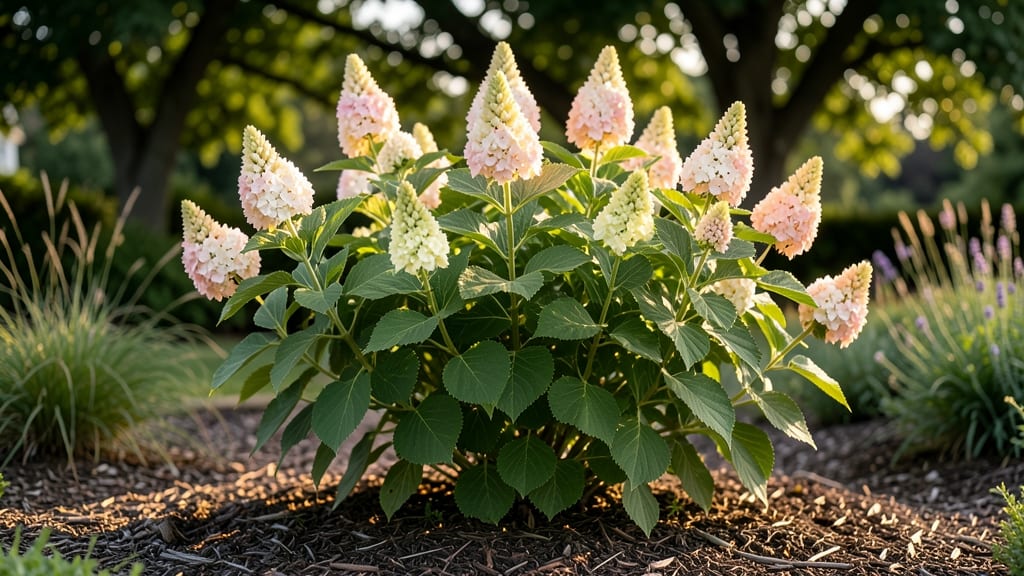
When panicle hydrangeas bloom on new wood, it confirms your plant is thriving, since this variety naturally produces flowers on current-season stems rather than dormant buds from last year, making them far more resilient to pruning and cold snaps.
This unique growth habit sets panicle hydrangeas apart from their mophead cousins, which rely on old wood for blooms. 🌸 The new wood flowers emerge from stems that develop during the current growing season, allowing you to prune aggressively in late winter or early spring without sacrificing next year's display.
I've seen gardeners transform overgrown panicle hydrangeas into lush, bushy plants simply by cutting back hard—something you'd never dare with mopheads.
What makes this even better is how adaptable these plants are. They'll still flower beautifully even if you skip pruning entirely, though strategic cuts in early spring encourage stronger stems and more abundant blooms.
Just remember: panicle hydrangeas reward patience with their hardy nature and stunning late-summer to fall color shows.
💡 In This Article
- Why Panicle Hydrangeas Flower on New Wood
- Pruning and Care Tips for Encouraging New Wood Blooms
Why panicle hydrangeas flower on new wood
Panicle hydrangeas (Hydrangea paniculata) produce flowers on current-season growth because their blooms develop from buds formed on the tips of new stems during the growing season. This contrasts sharply with mophead hydrangeas (Hydrangea macrophylla), which rely on dormant buds formed the previous year on old wood.
The key difference lies in their floral meristems—the clusters of undifferentiated cells that develop into flowers—forming at the tips of new shoots rather than along mature stems.
This growth habit stems from their evolutionary adaptation to temperate climates. Panicle hydrangeas originate from regions with cold winters and hot summers, where old wood often dies back completely. By producing flowers on new wood, the plant ensures blooms even after winter damage.
The flower buds form in late spring to early summer when the plant has established strong new growth, typically reaching 12-24 inches in length before flowering. This process creates a cascading effect where each year's growth supports the next year's blooms.
The botanical mechanism involves auxin hormones, which regulate cell elongation and bud formation. In panicle hydrangeas, auxin concentrations remain high in actively growing tips, promoting flower bud initiation. This is why you'll often see blooms emerging from the upper third of stems rather than along their entire length.
The result is a more controlled flowering pattern that responds directly to current-season growing conditions, including sunlight exposure, temperature fluctuations, and nutrient availability.
This trait offers gardeners significant advantages. Unlike mophead varieties, you can prune panicle hydrangeas aggressively in late winter or early spring without fear of removing next year's flowers. The plant simply produces new stems from the base, each capable of supporting a full complement of blooms.
I've seen gardeners reduce 3-foot-tall panicle hydrangeas to 1-foot stumps in late February and still achieve 6-foot flowering stems by late summer—something that would devastate a mophead.
The timing of flower bud formation also explains why panicle hydrangeas often bloom later in the season. Buds typically form 6-8 weeks after new growth begins, which means the first floral spikes emerge in early to mid-summer.
This delayed blooming extends the plant's display well into fall, often lasting until the first hard frost. The flowers themselves develop from these buds over 4-6 weeks, creating a prolonged show that mopheads simply can't match.
What makes this even more fascinating is how the plant's growth rate influences bloom quality. Faster-growing stems in ideal conditions produce larger, more abundant flower clusters, while slower growth in shaded or nutrient-poor conditions results in smaller, less dense blooms.
This direct relationship between growth and flowering means you can actually influence bloom size through proper care practices—something we'll explore in the next section.
Understanding this mechanism also explains why panicle hydrangeas are more forgiving with pruning. Since they don't rely on old wood, you can remove up to ⅓ of the plant's height each year without permanent damage. This resilience makes them ideal for gardeners who want both structural control and reliable flowering.