
Neem Oil
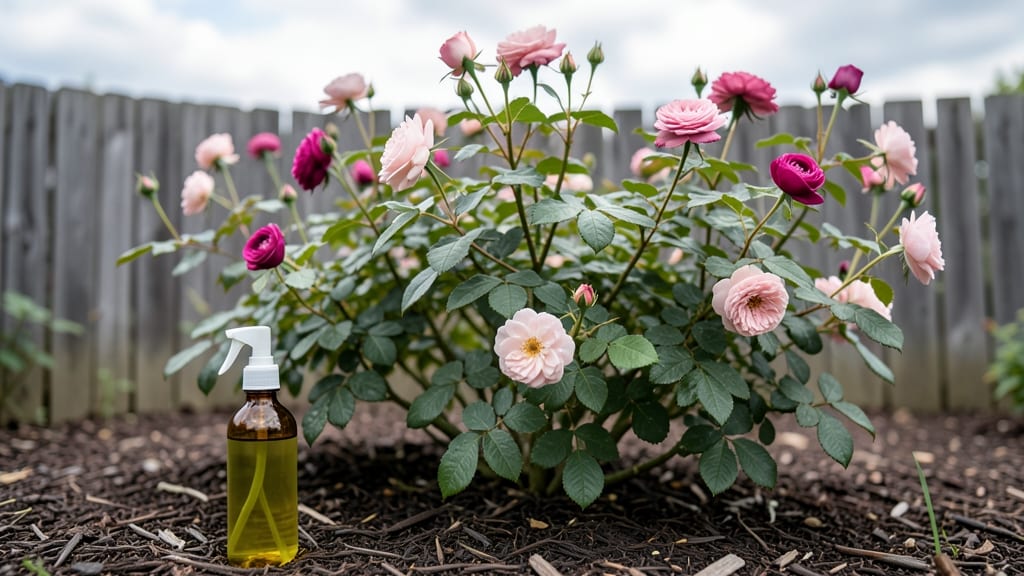
My roses were dying from black spot and aphids until I discovered neem oil. ✨ This natural wonder saved my bushes within weeks, and I’ve used it every season since—no harsh chemicals, just healthy plants that keep blooming all summer.
Neem oil works by smothering pests and fungi on contact, so you don’t need fancy equipment—just a spray bottle, water, and a few drops of oil.
The key is applying it at the right time: early morning or late afternoon when the sun isn’t blazing, and after a light watering so the leaves stay moist for absorption. It’s safe for roses, pets, and even kids once it dries.
By the second application, you’ll notice fewer aphids crawling on new leaves and no more dark spots on the foliage. The roses grow stronger, with fewer diseases returning year after year. Plus, the earthy scent fades quickly, leaving no residue behind.
For extra protection, mix neem oil with a little dish soap (½ teaspoon per quart) to help it stick better. Always test a small leaf first to check for sensitivity. This method works for container roses, garden beds, and even potted plants on balconies.
📚 In This Guide
- What you need
- Instructions
- Tips and common mistakes
- Wrapping up and next steps
What you need
- ● Neem oil (100% pure, cold-pressed): 1–2 tablespoons (30–60 mL) per gallon of water
- ● Water: 1 gallon (3.8 liters) for mixing
- ● Spray bottle or pump sprayer: 1–2 quart (0.9–1.9 L) capacity, with a fine mist nozzle
- ● Gardening gloves: 1 pair (nitrile or rubber for protection)
- ● Stirring stick or spoon: 1 (wooden or plastic to avoid metal contamination)
- ○ Funnel (optional but helpful): 1 for easy pouring into the sprayer
- ● Dish soap (mild, like Castile soap): ½ teaspoon (2–3 mL) per gallon (acts as an emulsifier)
- ● Horticultural oil or vegetable oil (1 tsp per gallon): Enhances adherence to leaves
- ● Spray shield or tarp: To protect nearby plants from overspray
- ● Label or marker: To tag your spray bottle with the date and mixture
- ● Pruning shears: For trimming severely infected rose leaves or stems
Step-by-step instructions for treating roses with neem oil
Here's my go-to method for protecting roses from pests and disease—tested in my garden for years.
🌿 Step 1: Choose the Right Time and Conditions
Apply neem oil when roses are free of dew—early morning or late afternoon works best. Avoid spraying when temperatures are above 90°F or below 50°F, as extreme heat or cold can stress the plants and reduce effectiveness. I always check the forecast first to avoid rain within 24 hours—wet conditions wash off the treatment.
Pick a calm day so the oil doesn't drift onto desirable plants or nearby surfaces. If you're treating for fungal issues like black spot, apply when the leaves are completely dry—moisture encourages fungal growth, and neem oil works best on clean surfaces. I like to spray in the late afternoon so the oil has time to dry before evening dew forms.
💧 Step 2: Mix and Apply the Neem Oil Solution
Combine 1 teaspoon of neem oil with 1 teaspoon of mild liquid soap (like castile soap) in a 1-quart spray bottle. Add 1 quart of water and shake well—neem oil doesn’t mix naturally, so you’ll need to agitate it thoroughly before each use. I like to fill the bottle halfway, shake for 30 seconds, then top off with water to avoid spills.
Shake the bottle again right before spraying to ensure the oil is evenly dispersed. Hold the sprayer 12-18 inches away from the roses and apply until the leaves and stems are thoroughly wet, but avoid oversaturating the soil. Focus on the undersides of leaves—that’s where pests and fungal spores often hide. I do a quick test spray on one leaf first to check coverage.
✂️ Step 3: Reapply Preventively and Treat Actively
For preventive care, apply neem oil every 7-14 days during active growing seasons (spring through fall). If you notice aphids, spider mites, or whiteflies, treat immediately—these pests multiply fast, and neem oil works best as a preemptive strike. I set a reminder in my phone for every two weeks to keep up with this routine.
For active fungal issues like black spot or powdery mildew, apply neem oil every 5-7 days until the problem clears. You’ll know it’s working when new growth appears free of spots and existing leaves stop developing new infections. If the issue persists after three applications, consider adding a copper fungicide for stubborn cases.
☀️ Step 4: Monitor and Adjust Your Approach
Watch for signs of stress—if roses develop yellowing leaves or stunted growth, you might be overapplying. Neem oil is generally safe, but too much can harm beneficial insects or disrupt the plant’s natural defenses. I always check for honeydew residue (a sticky substance) on leaves, which signals overuse.
Rotate treatments if pests or diseases return—some organisms build resistance to neem oil over time. I alternate with horticultural oil or insecticidal soap every few weeks to keep things effective. Keep records of when and how often you spray to track patterns and adjust your schedule as needed.
Tips & tricks for perfect neem oil applications on roses
Here's what nobody tells you about making neem oil work like a pro—straight from my garden to yours.
Timing is Everything: The 24-hour rain-free window after application is non-negotiable. I've learned this the hard way—after wasting three batches when unexpected showers washed away my efforts. Always check the weather forecast twice: once when mixing and again right before spraying. If rain is predicted within 24 hours, wait for a clearer day. Even light mist can dilute the oil's effectiveness by up to 40%.
Mixing Technique: That 30-second shake before topping off with water is crucial—neem oil and water don't blend naturally. I use a spray bottle with a tight seal and shake vigorously until the mixture looks uniformly cloudy. For stubborn separation, add the soap first, then the oil, then water. The soap acts as an emulsifier, helping suspend the oil particles. Pro tip: Use a funnel when transferring the mixture to avoid spills on your plants.
Application Precision: The undersides of leaves are ground zero for fungal spores and pests—don't skip them! I hold the sprayer at a consistent 12-18 inches and use a gentle misting motion, working in concentric circles. For large rose bushes, I start at the bottom and work my way up to ensure complete coverage. A quick test spray on a single leaf helps you gauge the pressure—you want a fine mist, not droplets.
Monitoring Success: After three applications, you should see visible improvement in fungal issues. If not, it's time to rotate treatments. I keep a simple logbook near my garden tools, noting which roses received treatment, the date, and any visible changes. This helps me track patterns and adjust my approach. Look for new growth without spots as your best indicator of success—old spots won't disappear overnight, but new ones should stop appearing.
Pro Tips for Neem Oil On Roses
- Here's what nobody tells you about making neem oil work like a pro—straight from my garden to yours.
- Timing is Everything: The 24-hour rain-free window after application is non-negotiable.
- Mixing Technique: That 30-second shake before topping off with water is crucial—neem oil and water don't blend naturally.
Frequently asked questions
Got questions about using neem oil on your roses?
Here are some of the most common ones—plus straightforward answers to help you keep your blooms thriving naturally!
How often should I apply neem oil to my roses?
For preventive care, apply neem oil every 2–4 weeks during growing seasons (spring to fall). If treating an active infestation (like fungal blight or aphids), reapply every 7–10 days until the problem clears. Always use it at dusk to avoid harming bees!
How long does neem oil take to work on roses?
Neem oil works gradually. You’ll see results in 7–14 days for pests, but fungal issues (like black spot) may take 2–3 weeks to fully resolve. Consistency is key—don’t skip applications! For fast-acting relief, combine it with baking soda spray (1 tsp baking soda + 1 quart water).
Can I use neem oil on roses if rain is forecasted?
Yes, but time it right! Apply neem oil at least 4–6 hours before rain to let it bind to leaves. If a heavy storm hits within 24 hours, reapply after 2–3 days. Rain washes off the oil, reducing its effectiveness—but it’s not harmful to your plants.
What’s a good alternative if I don’t have neem oil?
Try these natural rose protectors:
- Garlic spray: Blend 10 garlic cloves + 1 tsp cayenne pepper in 1 gallon water. Strain and spray—repels pests and deters fungi!
- Horticultural oil: Works similarly to neem but is less fragrant (great for indoor rose gardens).
- Milk spray: Mix 1 part milk to 9 parts water + a drop of dish soap. Spray leaves weekly to prevent powdery mildew.
Why did my roses turn yellow after using neem oil?
Yellowing can happen if:
- You used too much oil (stick to 1–2 tsp per gallon of water).
- Your roses were already stressed (underwatering, poor soil, or root issues).
- The oil wasn’t diluted properly (always mix with water + a drop of soap for adhesion).
Flush the soil with water and reduce future applications. If yellowing persists, check for nutrient deficiencies (roses love iron and magnesium).
Wrapping up and next steps
Neem oil is a game-changer for keeping your roses thriving—naturally! 🌿 With its antifungal and pest-repelling properties, it’s a simple, eco-friendly solution to combat fungal blight and unwanted critters. Just a few sprays can make a world of difference in your garden’s health.
Ready to give your roses the care they deserve? Start with a small test patch to ensure your plants respond well, then gradually expand your treatment. Your blooms—and your green thumb—will thank you! 🌸