
Fertilization
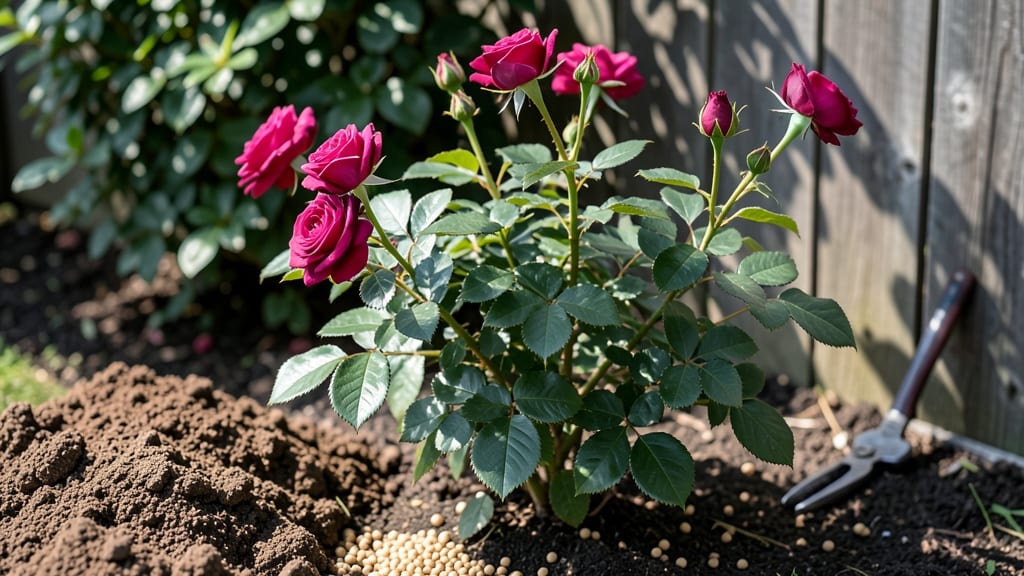
Feeding rose bushes at the right time—spring and fall—is the key to blooms so lush you’ll think you’re in a botanical garden 🌹.
Struggling to get your rose bushes to bloom as beautifully as they should? The secret often lies in timing—feeding them at the wrong time can waste nutrients and even harm your plants.
Most gardeners know spring is the time to feed, but the real magic happens in fall too, when a light application of fertilizer strengthens roots for next year’s growth.
In this guide, I’ll break down the exact schedule for spring and fall feeding, including organic vs. synthetic options and how to adjust for your local climate.

Best times to feed rose bushes for optimal growth and blooms
Feeding your rose bushes at the right time is like giving them a perfectly timed energy boost—too early or too late, and you’ll waste nutrients or even stress the plant. The ideal feeding windows align with your roses' natural growth cycles, ensuring lush foliage and show-stopping blooms.
Most gardeners focus on two key seasons: spring and fall, with occasional light feeding in summer. Understanding why these seasons matter helps you avoid common mistakes that lead to weak growth or poor flowering.
In spring, roses wake from dormancy and need nutrients to fuel new shoots and buds. This is when you’ll see the most dramatic response to feeding. Meanwhile, fall feeding might seem counterintuitive, but it’s all about strengthening roots for next year’s growth.
Skipping these critical windows can leave your roses looking tired or producing fewer blooms. Let’s break down the science behind these timings and how to apply them to your garden for maximum impact.
🌹 Why Timing Matters: Roses are perennial plants with distinct growth phases. Feeding during active growth (spring and summer) supports foliage and flowers, while fall feeding focuses on root development. Misaligned feeding—like fertilizing in winter or late summer—can lead to overgrowth that struggles in cold weather or nutrient burn from excess salts in the soil.
| Season | Feeding Window | Primary Goal | Recommended Fertilizer | Key Action |
|---|---|---|---|---|
| Spring | Early April - May | Stimulate new growth and buds | Balanced 10-10-10 or 5-10-5 | Apply after pruning, before buds swell |
| June (post-bloom) | Encourage second flush of blooms | High-phosphorus 5-10-5 or 3-4-6 | Light feeding after first bloom cycle | |
| Summer | July (if needed) | Maintain blooms without overgrowth | Slow-release organic fertilizer | Feed lightly to avoid late-season stress |
| August (late summer) | Strengthen roots for fall | Low-nitrogen (e.g., 5-10-10) | Transition to fall prep with light feeding | |
| Fall | September - October | Build root reserves for winter | Slow-release (e.g., 10-0-0 or compost) | Apply 4-6 weeks before first frost |
| Winter | November - March | No feeding (dormant phase) | None | Focus on mulching and soil protection |
Spring feeding kicks off the growing season by providing the nitrogen roses need for leafy growth and the phosphorus that encourages strong root systems. I always start feeding after pruning—once the canes have healed (about 2-3 weeks post-cut)—to avoid stressing fresh wounds.
For most climates, this lands in early April or right after your last frost date. Use a balanced fertilizer like 10-10-10 to support overall health, then switch to a high-phosphorus blend (like 5-10-5) when buds form to boost flowering.
Summer feeding is trickier because roses are already in full growth mode. Over-fertilizing now can lead to soft, weak growth that’s prone to disease or struggles in cooler fall temperatures. Instead, opt for light, frequent feedings with a slow-release fertilizer every 6-8 weeks.
If your roses are flowering heavily, a high-phosphorus feed after the first bloom cycle can encourage a second flush—but stop by mid-August to give plants time to harden off before winter.
Fall feeding might seem unnecessary, but it’s one of the most underutilized strategies for next year’s success. By late summer, roses begin storing nutrients in their roots for spring growth. A low-nitrogen fertilizer (or even compost) applied in September helps build these reserves.
I’ve seen roses that receive fall feeding produce 20-30% more blooms the following season because their root systems are stronger and better equipped to handle early spring growth. Just avoid feeding too close to winter—stop at least 4-6 weeks before the first frost.
Winter is strictly a rest period for roses. Feeding during dormancy can lead to nutrient burn or encourage weak, frost-sensitive growth. Instead, focus on mulching with 3-4 inches of organic matter (like straw or shredded leaves) to insulate roots.
This protects them from freezing temperatures and retains moisture for early spring. Think of winter as your roses’ recovery phase—they’re not growing, but they’re preparing for the big comeback in spring.
One common mistake I see is over-feeding in summer, especially with high-nitrogen fertilizers. This leads to lush foliage but fewer blooms because the plant prioritizes leaf growth over flowers. Another pitfall is ignoring soil pH. Roses thrive in slightly acidic soil (6.0-6.5).
If your soil is too alkaline, nutrients like iron and manganese become unavailable, even if you’re feeding regularly. Test your soil in early spring and amend with sulfur or peat moss if needed.
For organic gardeners, options like compost tea
Spring feeding schedule: step-by-step guide for healthy roses
Spring is the perfect time to give your rose bushes the nutrients they need to produce stunning blooms all season. The key is feeding at the right time—too early and you risk burning tender new growth, but too late and you miss the pre-bloom growth phase.
Most gardeners make the mistake of feeding as soon as the frost lifts, but roses need to be actively growing before absorbing nutrients efficiently.
Start by checking your local frost dates—typically mid-April in most regions. Once the soil warms to at least 50°F (10°C) and you see new leaf buds forming, it's time to begin.
This usually aligns with late April or early May, depending on your climate zone. The goal is to feed when roses are ready to burst into growth, not before.
After your initial spring feeding, roses typically need monthly feedings during the growing season. However, be cautious in late summer—feeding too close to fall can encourage tender new growth that won't survive winter. Stop fertilizing by mid-August in most climates to allow roses to harden off for dormancy.
One common mistake is over-fertilizing, which leads to excessive leafy growth at the expense of blooms. Always follow package instructions and reduce amounts for container-grown roses, which have less root space. For organic gardeners, consider a compost tea application every 3-4 weeks instead of synthetic fertilizers.
Pro tip: Pair feeding with deep watering (1-2 inches per week) to help nutrients reach the roots. Mulch with 2-3 inches of organic mulch like shredded bark to retain moisture and regulate soil temperature—this creates the perfect environment for your roses to thrive all season long. 🌹