
Pruning
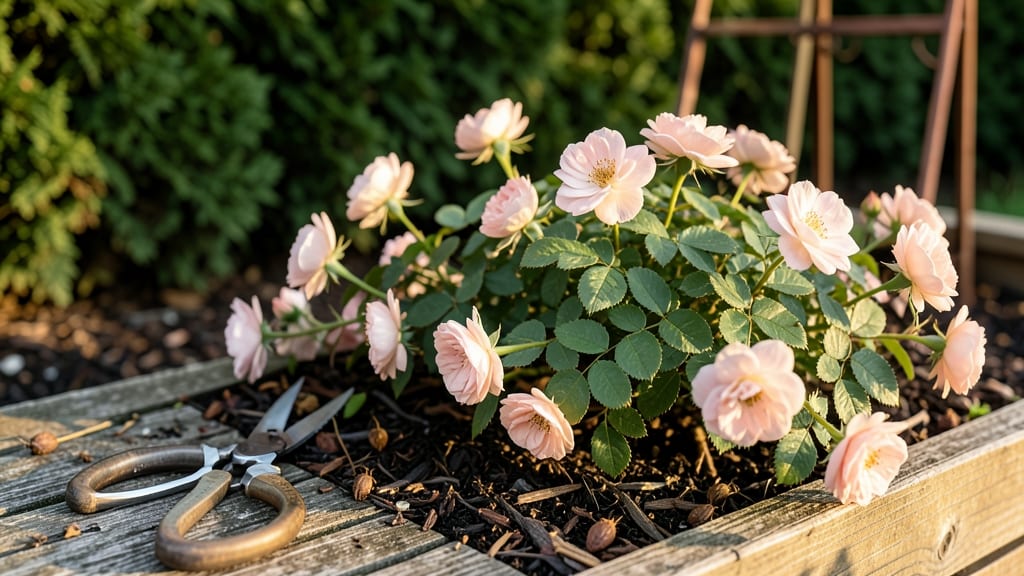
Deadheading drift roses isn't just pruning—it's the secret to four extra weeks of blooms this season. ✂️ I learned the hard way that skipping this step means fewer flowers and leggy stems. The right cut at the right time transforms your bushes from occasional bloomers into nonstop showstoppers.
You only need sharp pruners and a clear morning to work—no fancy tools required. The goal is to remove spent blooms cleanly, just above a leaf node where new growth can sprout. This signals the plant to redirect energy into fresh flowers instead of seed production.
Most gardeners overcomplicate it, but drift roses are forgiving once you know the simple rule: cut at a 45-degree angle.
After deadheading, your roses will respond within 2-3 weeks with new buds that stay vibrant longer. The foliage stays denser, too, because the plant focuses on growth rather than setting seeds.
Just avoid cutting into old wood (the brown, woody stems) or you'll stunt future blooms. A quick glance at the stem color tells you exactly where to stop.
This method works for all drift rose varieties, from 'Knock Out' to 'Drift' series roses, and even saves you money by extending your season without buying new plants.
The best part? You'll notice the difference immediately—your bushes will look fuller and keep flowering until frost. Ready to give it a try?
📚 In This Guide
- What you need
- Instructions
- Tips and common mistakes
- Wrapping up and next steps
What you need
- ● Pruning shears or bypass pruners – Choose sharp, sterilized ones (bypass blades are gentler on stems). A 5-inch pair works best for most Drift Rose varieties.
- ● Gloves – Wear gardening gloves (nitrile or leather) to protect against thorns and dirt.
- ● Disinfectant (70% isopropyl alcohol or bleach solution) – Wipe blades before and after pruning to prevent disease spread.
- ● Trash bag or bucket – For collecting spent blooms and debris (a 5-gallon bucket is ideal).
- ○ Water spray bottle (optional) – Helps rinse off blades and refresh wilted stems if needed.
- ● Hand pruners (smaller, 3-4 inch) – For tight spots where shears won’t fit.
- ● Knee pad or stool – If your roses are tall or ground-level pruning is tough.
- ● Compost bin – Repurpose spent blooms into nutrient-rich compost!
- ● Plant food or fertilizer (balanced, 10-10-10) – Feed roses 2-4 weeks after deadheading for a post-pruning boost.
Step-by-step instructions for deadheading drift roses
Here's the simple technique I use to keep my drift roses blooming lushly all season.
✂️ Step 1: Identify the Right Time to Deadhead
Wait until at least 50% of each flower cluster has fully opened—this ensures you're not cutting off buds that could become new blooms. Drift roses bloom in waves, so timing matters. I look for clusters where half the blooms are open and half still in bud form.
Never deadhead when flowers are fully spent and turning brown—that's a sign you've missed the window. The best time is late morning after the dew has dried, when the stems are firm and less likely to tear. This also gives you a chance to spot any pests hiding in the spent blooms.
✂️ Step 2: Make the Perfect Cut
Use clean, sharp pruners to cut just above a set of five-leaf clusters (these are called "leaf nodes" or "leaf axils"). You'll see them where stems branch out. This encourages new growth from strong, established points rather than weak new shoots.
Make your cut at a 45-degree angle, about ¼ inch above the leaf node. This angled cut helps water run off the stem instead of pooling and rotting the growth point. Avoid cutting too close to the node—you want to leave enough stem for new buds to form without exposing the tender growth.
✂️ Step 3: Remove Only the Spent Blooms
Don't cut back the entire stem—just the spent flower cluster. The rest of the stem still supports new buds that will bloom later. I like to hold the stem with one hand and make the cut with the other, keeping my fingers clear of the blade. This prevents accidental nicks on the main stem.
After cutting, I drop the spent blooms into a bucket of water—I use this later as compost tea. The stems make great natural mulch for the base of the plant. Never pull blooms off by hand; this can damage the stem and invite disease through open wounds.
☀️ Step 4: Maintain Aftercare for Continuous Blooms
After deadheading, give your drift roses a light watering at the base—not overhead—to encourage root growth. I water early in the morning so the foliage has all day to dry before evening. Wet leaves at night invite fungal diseases like black spot.
Watch for new buds forming at the leaf nodes within 7-10 days. These will develop into your next wave of blooms. If you notice any yellowing leaves or black spots after deadheading, treat with a fungicide immediately—prevention is easier than recovery.
⏰ Step 5: Repeat the Process Weekly
Drift roses respond best to weekly deadheading during peak bloom season. Set a reminder for every 7 days—this keeps the plant focused on producing new flowers instead of seeding. I mark my calendar with the phases of the moon for extra accuracy.
By mid-summer, you'll see fewer new buds forming naturally. That's your cue to stop deadheading and let the plant prepare for winter. The remaining blooms will develop into hips, which provide food for wildlife and protect the plant through dormancy.
Tips & tricks for perfect rose deadheading
These simple but game-changing tips will help you extend your drift roses' bloom time and keep them looking their absolute best.
Timing Secret: The 50% rule is non-negotiable—when exactly half the blooms in a cluster are open, that's your cue. I've learned the hard way that cutting too early can stunt new growth, while waiting too long means you're removing potential blooms. Use a small mirror to check clusters on the underside of the plant where you might miss them.
Tool Technique: Your pruners should be sharper than a chef's knife. Dull blades crush stems instead of making clean cuts, which invites disease. I keep a small file in my gardening toolbox to sharpen blades between seasons. For thick stems, make two cuts: one to weaken the stem, then another to complete the cut cleanly.
Post-Cut Care: That light watering after deadheading isn't optional—it's what triggers root growth. I've seen roses skip their next bloom cycle when this step was missed. Water at the base only, and use a rain gauge to measure about 1 inch of water per week during dry spells. The morning timing prevents fungal issues that plague evening watering.
Seasonal Wisdom: Mid-summer slowdown is normal—don't panic when new buds stop appearing. This is your plant's way of preparing for winter. I mark my calendar when I stop deadheading to remember when to start fertilizing again in early fall. The hips that form will feed wildlife through winter, so leave them unless you have a major pest issue.
Pro Tips for Deadhead Drift Roses
- These simple but game-changing tips will help you extend your drift roses' bloom time and keep them looking their absolute best.
- Timing Secret: The 50% rule is non-negotiable—when exactly half the blooms in a cluster are open, that's your cue.
- Tool Technique: Your pruners should be sharper than a chef's knife.
Frequently asked questions
Got questions about deadheading drift roses?
Here are some of the most common ones—plus quick, expert-backed answers to keep your blooms thriving all season.
When is the best time to deadhead drift roses?
Deadhead after the flower fades but before it forms seed pods—typically in the morning when blooms are dry. For drift roses (like Knock Out®), aim for late spring through early fall (until frost). Avoid deadheading in winter or during extreme heat to prevent stress.
Do I need special tools to deadhead drift roses?
Nope! While sharp pruners or shears make the job easier, you can use clean, sharp scissors or even your fingers for small stems. Just sanitize your tools with rubbing alcohol first to prevent disease. Pro tip: A pair of bypass pruners (like Felco #2) is ideal for larger clusters.
What if I miss deadheading? Will my drift roses still bloom?
Drift roses are forgiving! If you skip a cycle, they’ll still produce blooms—but fewer and later in the season. Deadheading redirects energy to new growth, so consistency maximizes blooms. Think of it like trimming your hair: occasional neglect won’t ruin it, but regular care keeps it lush.
Can I use the cut flowers from deadheading?
Drift roses make stunning cut flowers—just snip stems at a 45° angle and place them in water immediately. Remove lower leaves to prevent bacteria buildup. For longest vase life, recut stems every 2–3 days. Bonus: Their hardiness means they’ll last 7–10 days in water!
What if my drift roses look leggy after deadheading?
Leggy growth happens when roses prioritize height over blooms. To fix it, prune back 1/3 of the longest stems to encourage bushier growth. Fertilize lightly with a balanced rose food (10-10-10) and ensure they get 6+ hours of sunlight daily. Over time, your plant will rebound with fuller foliage and more blooms.
Wrapping up and next steps
Deadheading your drift roses is a simple yet powerful way to keep them blooming longer and more vibrant—no fancy tools or gardening degree required! With just a pair of clean pruners and a little regular care, you can enjoy those cheerful blooms for weeks beyond the norm. 🌸
Ready to take your rose game to the next level? Try deadheading just one cluster this week and watch the difference in just days. Happy pruning—and happy gardening! 🌿