
Tools
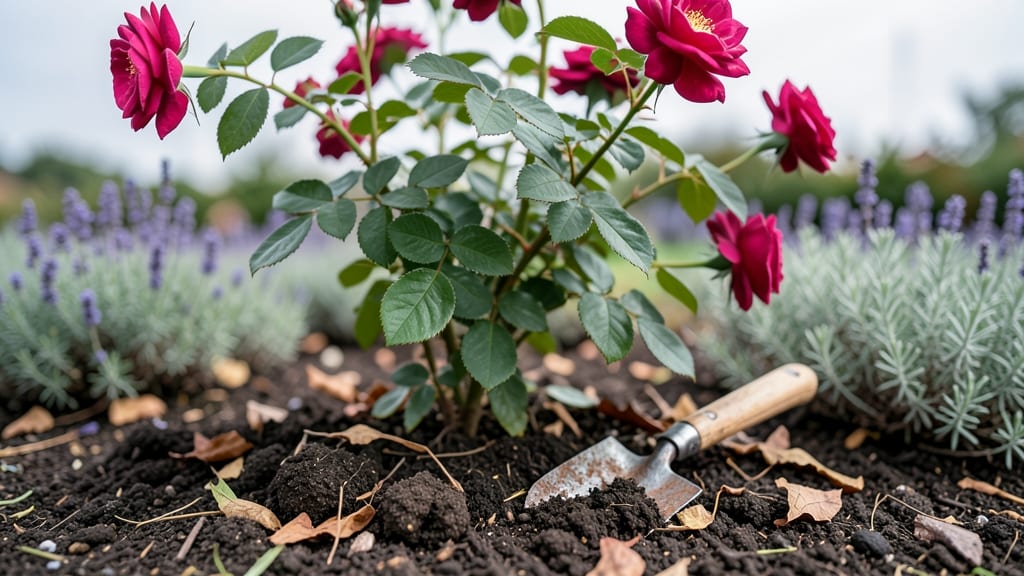
Creating ideal garden soil for roses means blending a well-draining, slightly acidic medium with a pH of 6.0 to 6.5, enriched with organic matter like compost, and fortified with phosphorus for roots and potassium for vibrant blooms. Avoid compacted clay or purely sandy soils that hinder growth.
Roses thrive when their roots access both air and moisture efficiently, which is why organic-rich soil with proper structure is non-negotiable. 🌹 The ideal mix should crumble easily when dry but retain moisture without becoming waterlogged—a balance achieved by combining garden soil with 30-40% compost and 10-20% perlite or coarse sand.
This structure prevents root rot while delivering the micronutrients roses crave, like magnesium for chlorophyll production and calcium for cell wall strength.
For existing gardens with heavy clay or sandy soil, I recommend amending in layers: spread 2-3 inches of compost over the planting area, then mix it into the top 12 inches of soil.
If your local soil tests alkaline (above 7.0), add elemental sulfur gradually to lower the pH—roses simply refuse to flourish in alkaline conditions. The payoff? Healthier roots, more abundant blooms, and fewer pests targeting stressed plants.
💡 In This Article
- Why pH and Soil Composition Matter for Rose Growth
- DIY Organic Rose Soil Mix Recipe with Step-by-Step Guide
Why pH and soil composition matter for rose growth
Roses have evolved to thrive in slightly acidic conditions because their root systems are highly sensitive to nutrient availability. At a pH of 6.0-6.5, essential minerals like iron, manganese, and zinc remain soluble and accessible—critical for photosynthesis and energy production.
In alkaline soil (pH 7.0+), these nutrients precipitate into insoluble forms, causing iron chlorosis, where leaves turn yellow between veins while stems stay green. This deficiency stunts growth and weakens plants, making them vulnerable to disease. 🔥
The ideal soil structure for roses mimics a loose, well-aerated sponge that holds moisture without suffocating roots. Organic matter like compost (30-40% of the mix) provides this structure by improving water retention (holding 2-3x its weight in moisture) while also enhancing drainage through its fibrous network.
Think of it like a high-end aeration system for roots—compost creates tiny air pockets that prevent anaerobic conditions where roots suffocate. Without this balance, roses develop shallow root systems that struggle to support heavy blooms.
Micronutrients play equally vital roles in rose health. Magnesium (found in Epsom salt) activates enzymes for chlorophyll production, while calcium strengthens cell walls to prevent blossom end rot.
Potassium, often overlooked, is the bloom booster—it regulates water movement and disease resistance, which is why roses with potassium deficiencies produce fewer, weaker flowers. The science here is straightforward: roses can't access these nutrients efficiently unless the soil's pH and structure are optimized. 💫
Heavy clay soil, common in many gardens, creates another challenge: compaction. When wet, clay particles pack tightly, reducing pore space by up to 70% compared to loamy soil. This limits oxygen flow to roots, triggering stress responses that manifest as stunted growth or leaf drop.
The solution? Amending with perlite or coarse sand (10-20%) creates larger pores (1-2mm diameter) that improve aeration while maintaining moisture. This structural adjustment is why roses planted in amended soil often bloom 30-50% more abundantly than those in unamended clay.
Seasonal variations also influence soil performance. In summer, organic matter breaks down faster, increasing nitrogen availability but reducing structure. To counteract this, top-dress with fresh compost every 4-6 weeks during the growing season.
In winter, microbial activity slows, so mulch with 2-3 inches of straw or shredded leaves to insulate roots and preserve soil structure. This seasonal care prevents the soil from becoming either too dense (from winter compaction) or too loose (from summer decomposition).
For visual learners, imagine a rose root system as a network of fine hairs (rootlets) that absorb nutrients. In ideal soil, these hairs spread freely through a matrix of air, water, and organic particles. In poor soil, they become tangled in compacted clay or starved for oxygen in waterlogged conditions.
The difference? One scenario supports 10+ feet of root growth per season; the other leaves roots struggling in the top 6 inches of soil. 🌱
Here's the practical takeaway: Test your soil's pH and texture before planting. If your garden soil is sandy, add 20% compost and 10% peat moss to improve moisture retention. If it's clay-heavy, blend in 30% compost and 15% perlite for better aeration.
Roses reward this attention with stronger stems, larger blooms, and resistance to common diseases like black spot—all because their roots finally get the ideal growing environment they crave.