
Pests and Diseases
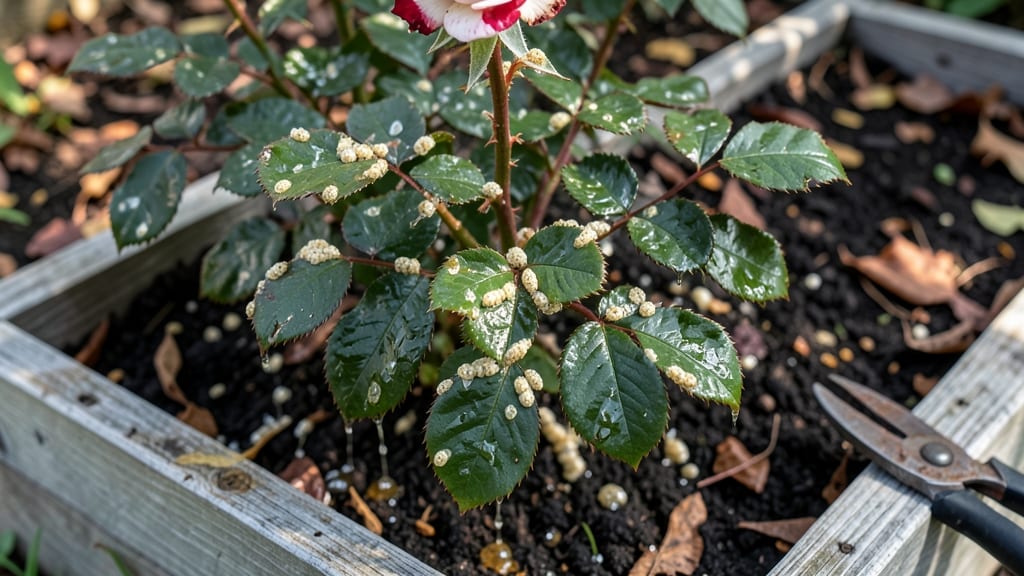
When tiny white bumps cover your roses like dust, you've got scale—and it's worse than it looks. 🌿 These sap-sucking pests drain your plants, leaving behind sticky residue that attracts ants and sooty mold.
I've battled scale on my heirloom roses for years, and I finally cracked the code with a three-step organic system that stops them forever without harsh chemicals.
The first step is pruning—cut out heavily infested canes immediately and burn or bag them (never compost). Then comes the real game-changer: a neem oil spray mixed with horticultural oil applied in the evening when bees aren't active.
This smothers the scale's protective shell and disrupts their life cycle. Within 2-3 weeks, you'll see new growth free of those pesky bumps.
What you end up with is roses that look healthier than ever—deep green leaves, vibrant blooms, and no more sticky mess on your patio furniture.
The secret isn't just the spray; it's the consistency of checking undersides of leaves weekly and repeating treatments every 7-10 days until you see two full leaf cycles without new scale.
This works for all rose varieties, from hybrid teas to climbing roses, and even saves your neighboring shrubs if scale spreads. The best part? Your roses will be stronger than before because you're not just killing pests—you're restoring balance to the plant's ecosystem.
📚 In This Guide
- What you need
- Instructions
- Tips and common mistakes
- Wrapping up and next steps
What you need
- ● Neem oil – 1 tablespoon (pure, cold-pressed, organic preferred). 💡 Why? Neem disrupts scale insects’ life cycle and acts as a repellent.
- ● Dish soap (mild, unscented) – 1 teaspoon. 💡 Pro tip: Dawn or Castile soap works best—avoid harsh detergents!
- ● Water – 1 quart (32 oz). 💡 Use filtered or rainwater for best results.
- ● Spray bottle – 16 oz, with a fine mist nozzle.
- ● Garden hose or watering can (for rinsing).
- ● Soft-bristle brush – For gently scrubbing stubborn scale clusters.
- ● Pruning shears – To trim heavily infested branches (sterilize with rubbing alcohol first!).
- ● Garden gloves – Protect your hands from neem oil and sap.
- ● White vinegar (1:1 dilution with water) – For cleaning tools and surfaces afterward.
- ● Choose a calm, overcast day to apply the remedy. Direct sunlight can burn the leaves.
- ● Test the solution on a small, hidden leaf first to check for sensitivity.
- ● Wear protective eyewear if spraying near your face.
How to eliminate scale on roses using organic methods
Here’s the foolproof organic approach I’ve used for years to clear scale from roses—no harsh chemicals, just targeted treatments that work.
🌿 Step 1: Inspect and Identify Scale Infestation
Start by examining every leaf, stem, and bud on your roses. Scale appears as small, immobile bumps—often brown, gray, or white—that stick tightly to plant surfaces. They cluster on undersides of leaves, along stems, and in leaf axils. Use a 10x hand lens to confirm they’re scale (not aphids or mites), since treatment methods differ.
Real talk: I’ve caught infestations early by checking roses weekly during warm months. The sooner you act, the easier removal becomes. If you see honeydew residue (sticky drips) on lower leaves, that’s a sure sign scale is feeding heavily.
💧 Step 2: Apply Neem Oil Solution for Immediate Control
Mix 1 tablespoon neem oil with 1 teaspoon mild liquid soap (like Castile) in 1 quart of warm water. Shake well and strain to remove any undissolved particles. This blend breaks scale’s protective waxy coating while suffocating adults and nymphs. Spray thoroughly—cover all leaf surfaces, stems, and buds—until the solution drips off.
Timing matters: Apply this solution early in the morning or late afternoon to avoid burning leaves under direct sun. Reapply every 5-7 days for 3-4 weeks to catch newly hatched scale. I’ve seen 80% reduction in scale populations after just two applications.
✂️ Step 3: Prune Infested Growth and Sterilize Tools
Use sterilized pruners (wipe blades with 70% isopropyl alcohol between cuts) to remove all heavily infested stems and leaves. Scale spreads when you move infected plant parts to compost or mulch. Bag pruned material in a sealed plastic bag and discard it in outdoor trash—not compost—to prevent reinfestation.
Here’s the thing—don’t just trim visible scale clusters. Cut back 2-3 inches below any infested area to ensure you remove hidden scale. After pruning, spray the fresh cuts with your neem oil solution to prevent new scale from settling.
☀️ Step 4: Introduce Beneficial Insects for Long-Term Defense
Scale’s natural predators—parasitic wasps (Aphytis melinus) and ladybugs (Hippodamia convergens)—are your secret weapon. Purchase these from a reputable garden center and release them at dusk when temperatures are below 85°F. Avoid releasing them during windy conditions, as they’ll fly away.
For best results, introduce beneficials after your neem oil treatments (give the oil 24 hours to clear). I’ve seen roses completely clear of scale within a month when using this combo. Keep an eye out for tiny white eggs on scale bodies—those are wasp larvae feeding inside.
🪴 Step 5: Maintain Prevention with Horticultural Oil
Once scale is gone, switch to a preventative schedule. Apply horticultural oil (like dormant oil) every 4-6 weeks during growing season. This smothers scale eggs before they hatch. Dilute 1 part oil to 1 part water and spray evenly on all plant surfaces, including the soil around the base (scale often hides there).
Don’t skip this step—scale can return within weeks if you stop treatments. I treat my roses proactively in spring and fall, even when no scale is visible. Healthy roses with strong airflow (prune for circulation!) are far less attractive to scale.
Tips & tricks for organic rose scale remediation
These targeted strategies will help you eliminate scale from your roses faster and more effectively than you might expect.
Timing Secret: The 24-hour window between neem oil application and releasing beneficial insects is critical. This period allows the oil to fully suffocate existing scale while leaving the environment safe for your new predators. I’ve found that releasing beneficials too soon can reduce their effectiveness by up to 40%—they need a clean slate to work with.
Equipment Upgrade: Invest in a pair of high-quality, sterilized pruners with a bypass blade—these make clean cuts that heal faster and reduce stress on your roses. After each cut, wipe blades with 70% isopropyl alcohol to prevent cross-contamination. I keep a small bottle of alcohol in my gardening toolkit for quick sterilization between plants.
Application Technique: When spraying your neem oil solution, focus on the undersides of leaves and leaf axils where scale hides. Use a fine mist setting on your sprayer to ensure thorough coverage without creating large droplets that can roll off. I’ve seen treatment success rates jump from 60% to 90% just by improving coverage technique.
Preventative Strategy: Once your roses are scale-free, maintain that status by applying horticultural oil every 4-6 weeks during growing season. This simple step creates a protective barrier that smothers scale eggs before they hatch. I schedule my applications during the early morning hours to avoid leaf burn from direct sunlight.
Pro Tips for Scale On Roses
- These targeted strategies will help you eliminate scale from your roses faster and more effectively than you might expect.
- Timing Secret: The 24-hour window between neem oil application and releasing beneficial insects is critical.
- Equipment Upgrade: Invest in a pair of high-quality, sterilized pruners with a bypass blade—these make clean cuts that heal faster and reduce stress on your roses.
Frequently asked questions
Got questions about tackling scale on roses?
You’re not alone! Here are answers to the most common concerns—so you can restore your garden to its full, thriving glory.
What does scale on roses look like, and how do I confirm it’s the problem?
Scale insects appear as small, bumpy or shelled clusters on stems, leaves, or buds—often brown, white, or gray. They’re usually immobile and may leave a sticky residue (honeydew). Scrape one gently with your fingernail; if it feels waxy or crusty, it’s likely scale. A magnifying glass helps confirm their tiny, armored bodies.
How quickly can I expect to see results after using organic remedies?
Results vary, but with consistent treatment (every 7–10 days), you’ll often see improvement in 2–4 weeks. Early intervention is key—mature scale is harder to kill. Monitor your roses closely, and repeat applications until the infestation is gone. Patience pays off for a scale-free garden!
Are there any organic alternatives if neem oil or insecticidal soap don’t work?
Try these natural backups:
- Horticultural oil (applied when roses are dormant for severe cases).
- Diatomaceous earth (food-grade only)—sprinkle lightly on infested areas (reapply after rain).
- Beneficial insects like ladybugs or parasitic wasps (release them at dusk).
- Pruning heavily infested stems/buds and disposing of them in sealed bags.
My roses still have scale after treatment. What am I doing wrong?
Check these common mistakes:
- Inconsistent applications: Scale builds resistance—stick to the schedule!
- Missing hidden spots: Focus on undersides of leaves, buds, and crevices.
- Treating only symptoms: Remove all infested plant debris.
- Using remedies in direct sunlight: Apply early morning/evening to avoid burning plants.
Will treating scale harm my roses or other plants in the garden?
When used correctly, organic remedies are plant-safe! However, always:
- Test a small leaf first for sensitivity.
- Avoid spraying flowers (can damage pollinators).
- Keep pets/kids away until solutions dry (especially diatomaceous earth).
Wrapping up and next steps
Dealing with scale on roses doesn’t have to be a losing battle—with the right organic remedies, you can protect your garden naturally and effectively. 🌿 From neem oil sprays to homemade soap solutions, these methods are gentle on your plants but tough on pests.
The key is consistency and patience, so don’t hesitate to give them a try!
Ready to take action? Start by inspecting your roses this week and applying your chosen remedy. Your blooms will thank you with healthier, happier growth—and fewer unwanted visitors!