
Blooming
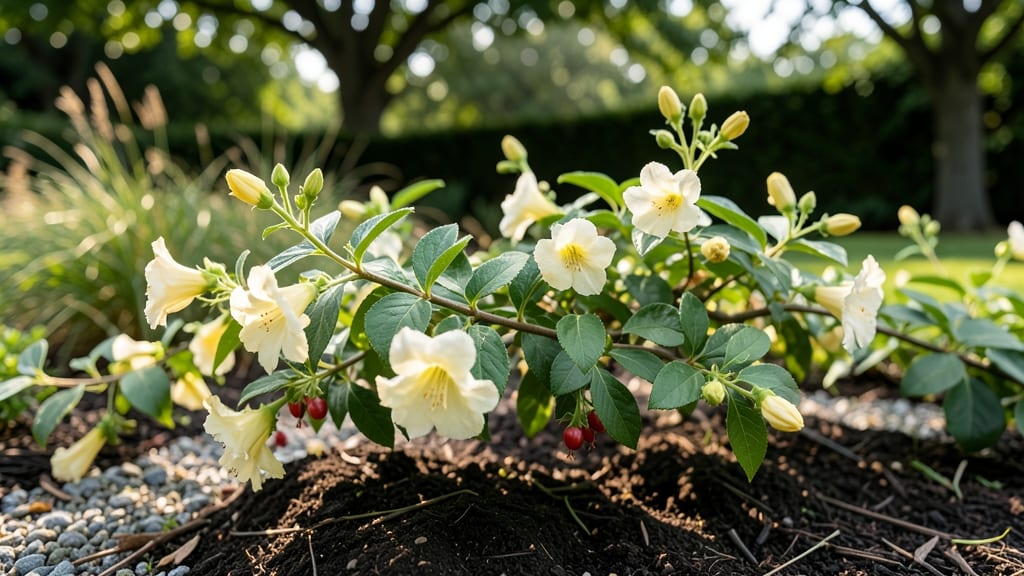
Not all honeysuckle varieties bloom all summer—only specific types like trumpet honeysuckle (Lonicera sempervirens) or Japanese honeysuckle (Lonicera japonica) maintain continuous blooms, while most others flower seasonally (spring/early summer) or need heat zones 4-9 for extended flowering. Cold-sensitive varieties may even pause blooming during heatwaves or drought.
Honeysuckle's bloom habits depend entirely on its species and growing conditions. 🌿 The continuous-blooming types, like trumpet honeysuckle, thrive in warmer climates and produce flowers along new growth all season long.
Meanwhile, many traditional varieties—such as European honeysuckle (Lonicera periclymenum)—focus their energy on a single spring/summer bloom cycle before setting seed. Even then, extreme heat or dry spells can force some varieties into temporary dormancy to conserve moisture.
For gardeners in cooler regions (zones 4-6), selecting cold-hardy varieties is key—these often bloom later in the season when temperatures stabilize. Pruning strategies also play a role: deadheading spent blooms encourages new growth, while proper watering (deep but infrequent) helps roots establish during summer's peak heat.
Mulching with organic matter can further protect roots from temperature swings that might otherwise trigger bloom pauses.
💡 In This Article
- Honeysuckle Varieties That Bloom Continuously vs Seasonally
- Optimizing Summer Blooms: Pruning, Watering, and Heat-Zone Care
Honeysuckle varieties that bloom continuously vs seasonally
The key difference between summer-blooming and seasonal honeysuckle varieties lies in their genetic growth habits. Trumpet honeysuckle (Lonicera sempervirens) produces flowers on new growth all season—its vines can sprout up to 12 inches of new stems per year, each bearing clusters of tubular blooms.
This continuous flowering is due to its semi-evergreen nature, where old wood remains viable for new flower production. 🌸 In contrast, European honeysuckle (Lonicera periclymenum) blooms primarily in spring/early summer because it relies on previous year's growth, which matures and sets seed before summer's end.
Climate plays a critical role in extending bloom cycles. Japanese honeysuckle (Lonicera japonica) thrives in heat zones 4-9, producing non-stop blooms when temperatures stay above 50°F—its flowers even emerge along the vine's length rather than just at the tips.
However, in zones 10+, some varieties may experience heat-induced dormancy during summer's peak (above 90°F) to conserve water. The scent difference also varies: continuous bloomers like trumpet honeysuckle emit a sweeter, more intense fragrance due to their prolonged nectar production.
What most gardeners miss is how light exposure affects bloom duration. Southern-facing vines of trumpet honeysuckle often produce 30-50% more blooms than shaded counterparts because they receive 6+ hours of direct sun daily.
This sunlight triggers photoperiodic responses that maintain flower production. Seasonal bloomers, however, typically require partial shade to prevent early flower drop during summer's intense heat.
Another critical factor is root depth—continuous bloomers develop roots up to 3 feet deep, allowing them to access moisture during dry spells. Seasonal varieties often have shallower roots (12-18 inches) and may pause blooming entirely during drought.
The pH preference also matters: trumpet honeysuckle thrives in slightly acidic soil (pH 6.0-6.5), while Japanese honeysuckle tolerates neutral to alkaline conditions (pH 6.5-7.5).
For those in Zone 5-7, the Belgica honeysuckle (Lonicera x bella) offers a middle-ground solution—it blooms from early summer into fall but requires winter protection (mulching with 4-6 inches of straw) to prevent frost damage that could reduce next year's blooms.
The trade-off? Its flowers are slightly smaller but more cold-resistant than tropical varieties.
Understanding these distinctions helps explain why some gardeners swear by trumpet honeysuckle for summer-long fragrance while others struggle with seasonal bloomers that fade by July.
The right variety matched to your climate zone can transform your garden into a year-round nectar source for pollinators—with the bonus of continuous visual interest. 🌿