
Pruning
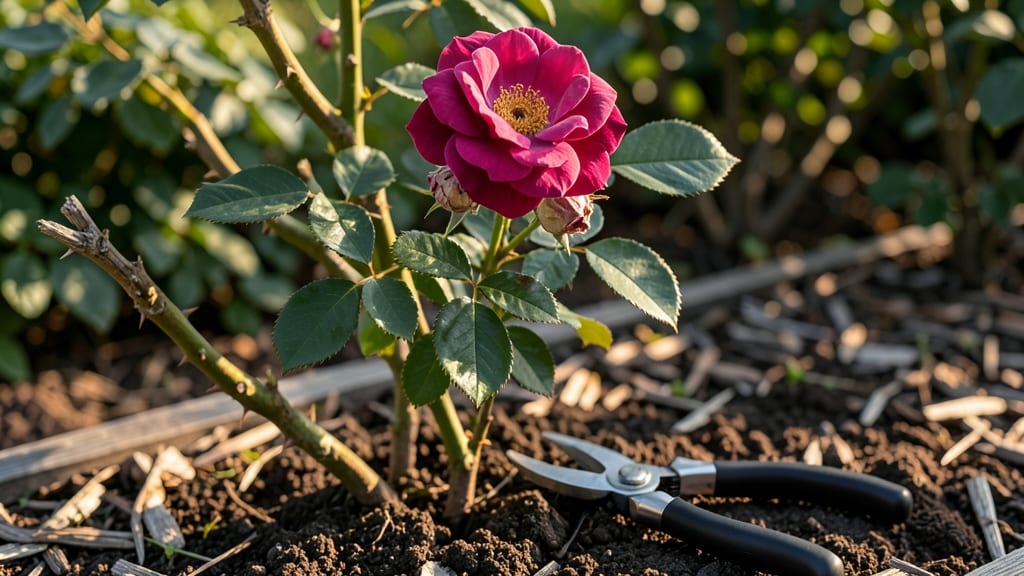
You should deadhead roses after they bloom to stimulate new flower growth by eliminating faded blooms and preventing seed development, though the best approach varies by rose variety and seasonal conditions. Always cut just above a five-leaflet stem.
Deadheading works because roses naturally shift energy toward seed production after blooming. By removing spent flowers, you signal the plant to focus on developing side buds instead. 🌸 This technique is especially effective for hybrid teas and floribundas, which bloom repeatedly throughout the season.
However, climbers and shrub roses often respond differently—some varieties benefit from selective deadheading, while others thrive with minimal trimming.
Timing matters too: morning deadheading prevents evening moisture from lingering on cuts, reducing disease risk. Use clean, sharp pruners and always cut at a 45-degree angle about ¼-inch above a leaf node.
Avoid over-pruning—never remove more than ⅓ of the plant's height—as this stresses the rose and can limit future blooms.
💡 In This Article
- Why Deadheading Roses Promotes Continuous Flowering
- Step-by-Step Deadheading Guide for Rose Bushes
Why deadheading roses promotes continuous flowering
When a rose bloom fades, the plant naturally shifts its energy toward seed production—a survival mechanism that ensures the next generation. By removing spent blooms through deadheading, you interrupt this cycle and send a signal to the rose bush: "Keep flowering!"
This triggers a hormonal response where the plant redirects nutrients and growth hormones (like auxin) from the dying bloom to nearby lateral buds, stimulating new flower formation. 🌿 For hybrid teas, this process can produce up to 30-50% more blooms over a season compared to unpruned bushes.
The key difference lies in how various rose types store energy. Hybrid teas and floribundas are "repeat bloomers," meaning they produce flowers on new wood (current season's growth). Cutting just above a five-leaflet stem (where new shoots emerge) ensures the plant has enough energy to develop these new blooms.
In contrast, climbers and shrub roses often bloom on old wood (last year's growth), so deadheading them too aggressively can actually reduce next year's flowers. The science shows that shrub roses like 'Knock Out' varieties respond better to selective deadheading—removing only the most spent blooms rather than aggressive pruning.
What you might not realize is that deadheading also improves air circulation within the bush. Dense foliage traps moisture, creating ideal conditions for fungal diseases like black spot. By removing spent blooms, you open up the plant's structure, allowing sunlight to penetrate deeper and reducing humidity levels.
This dual benefit—more flowers plus better plant health—is why professional rose growers treat deadheading as a year-round maintenance task rather than a seasonal chore. 🌸 The right technique can extend the blooming season by 4-6 weeks in optimal conditions.
Seasonal timing plays a crucial role in this process. In spring, deadheading encourages the first flush of blooms, while summer deadheading maintains continuous flowering. However, autumn deadheading should be approached with caution—stopping completely in late summer allows the plant to harden off for winter.
The hormonal shifts triggered by deadheading are most effective when the plant has 6-8 hours of sunlight daily and consistent moisture, which is why morning deadheading (when dew is present) is ideal—it prevents evening moisture from lingering on cuts and inviting disease.
Consider this comparison: A hybrid tea rose left unpruned after its first bloom might produce 12-15 flowers over the season, while one that's properly deadheaded could yield 30-40 flowers. The difference comes down to energy allocation—what would have gone into seed production is instead funneled into new growth.
This is why professional rose breeders and gardeners treat deadheading as both an art and a science, balancing immediate aesthetic benefits with long-term plant health. 🌺
For those concerned about over-pruning, remember that roses are remarkably resilient. The general rule is to never remove more than ⅓ of the plant's height in a single session, and always make cuts at a 45-degree angle just above an outward-facing bud.
This angled cut prevents water from pooling on the stem, which could lead to rot. The outward-facing bud ensures the new growth will develop away from the center of the plant, improving air flow and light penetration.