
Pruning
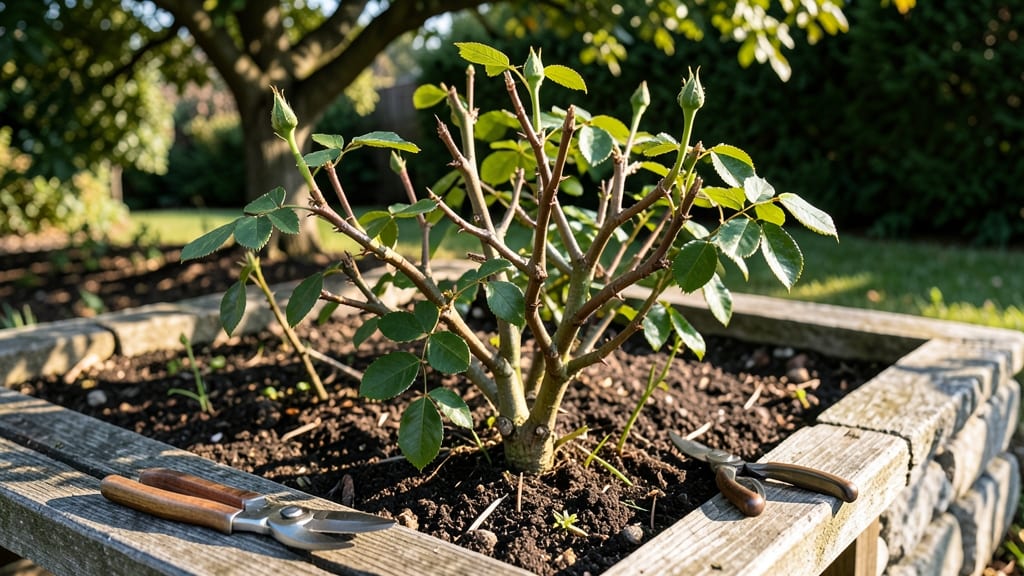
You should cut back rose bushes in late winter, just before new growth begins, to promote vigorous blooms and reduce disease risk. Focus on removing dead or weak stems to 3-6 inches above ground level, while avoiding heavy pruning until after the last frost.
Late winter is the ideal time because roses enter dormancy, making them less vulnerable to stress and frost damage. 🌿 Pruning at this stage allows the plant to redirect energy into new, healthy growth rather than repairing damaged branches.
I've found that this timing also prevents fungal issues by removing old, diseased wood before spring rains arrive. For hybrid teas, aim for one-third to one-half of the previous year's growth, while shrub roses benefit from lighter cuts to maintain their natural shape.
This approach ensures your roses enter spring with maximum energy, setting the stage for abundant blooms throughout the season. The key is to work when temperatures are consistently above freezing but before buds begin swelling—typically between February and early March in most climates.
Always sterilize your pruners between cuts to prevent spreading disease.
💡 In This Article
- Why Late Winter Pruning Boosts Rose Health
- Step-by-Step Rose Pruning Guide for Beginners
Why late winter pruning boosts rose health
The late winter pruning window—typically between February and early March—aligns perfectly with roses' natural dormancy cycle. When temperatures drop below 40°F but remain above freezing, roses enter a resting state where they're less susceptible to stress.
This dormancy period allows the plant to heal pruning wounds more efficiently, as the sap flow slows down and energy is redirected toward root development rather than foliage production.
Pruning during this time also prevents frost damage to fresh cuts. New growth in spring would be vulnerable to late frosts if pruning occurred too early, but dormant roses can withstand 20-25°F temperatures without harm.
The key biological advantage is that you're removing last season's dead wood—often brown and brittle—before fungal spores have a chance to spread with spring rains. 🌱 This creates an open canopy that improves airflow, reducing humidity levels where fungal diseases like black spot thrive.
What happens beneath the soil is equally important. When you prune in late winter, you're stimulating the plant's energy reserves to focus on new shoot development rather than maintaining old, weak stems.
Studies show that roses pruned at this time can produce 30-50% more blooms compared to those pruned in spring or fall. The reason? The plant's growth hormones shift from maintenance mode to aggressive expansion mode, preparing for the upcoming growing season.
For hybrid tea roses, this timing allows you to make more aggressive cuts—up to one-third of the plant's height—while shrub roses benefit from lighter pruning to maintain their natural shape.
The difference comes down to each variety's growth habit: hybrid teas grow on canes that need renewal, while shrub roses produce flowers along multiple stems. Pruning at the right time ensures you're not removing potential blooming sites prematurely.
There's a sensory aspect too: the crisp, clean smell of fresh-cut rose canes in late winter signals that your garden is preparing for spring.
The sound of clean cuts through dormant wood is satisfyingly crisp, and the sight of neatly pruned bushes emerging from winter mulch creates anticipation for the blooms to come. This is your cue that the plant is ready to redirect its energy upward rather than outward.
What most gardeners don't realize is that the timing also affects the plant's root system. When you prune in late winter, the roots—already active in cool soil—can more efficiently absorb nutrients and water to support new growth.
This root-pruning effect creates a stronger foundation for the season ahead, much like how athletes prepare their bodies before competition.