
Blooming
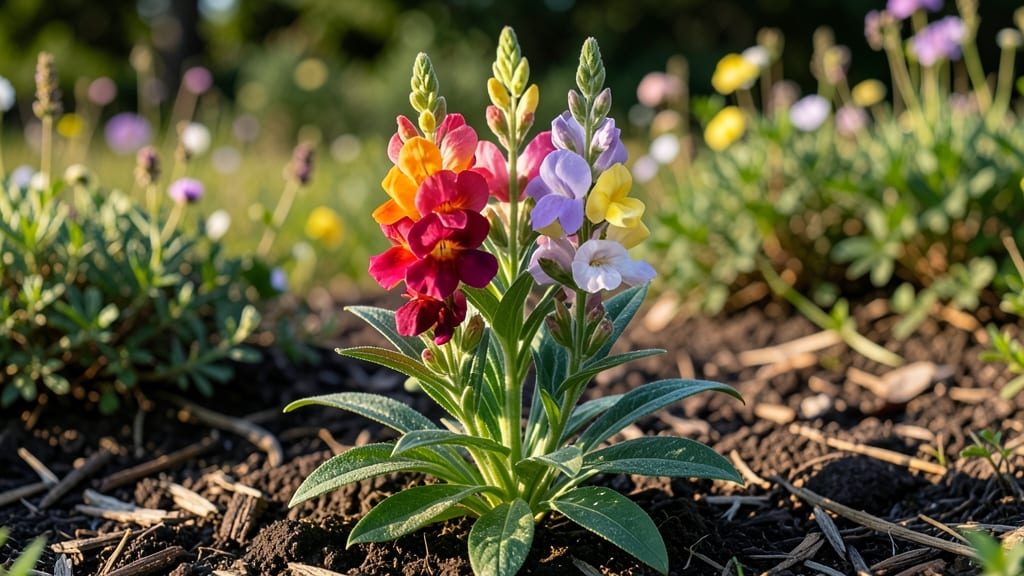
Snapdragons typically don't bloom all summer continuously; most varieties focus their flowering in spring and fall, with summer heat often causing dormancy unless you maintain consistent deadheading and proper care. Heat-tolerant types like 'Rocket Series' can extend blooms longer with extra water and afternoon shade.
Snapdragons are cool-season plants at heart, which means they naturally slow down production when temperatures climb above 80°F. 🔥 The stress from heat causes buds to drop before opening, and the plants may even go dormant to conserve energy.
That said, some modern hybrids—like the 'Matrix' series—are bred to handle warmer conditions better than traditional varieties, often producing flowers in summer if you give them afternoon shade and keep the soil evenly moist.
What makes this tricky is that snapdragons don't just react to temperature—they also respond to light cycles. Longer daylight hours in summer can trigger a different growth pattern, shifting energy toward foliage instead of flowers.
That's why deadheading (removing spent blooms) is critical: it signals the plant to redirect its focus back to producing new flowers rather than setting seed.
💡 In This Article
- Why Snapdragons Struggle in Summer Heat
- Best Snapdragon Varieties for Extended Summer Blooms
Why snapdragons struggle in summer heat
Snapdragons are cool-season annuals, meaning their natural blooming cycles sync with spring and fall temperatures. When daytime highs exceed 85°F, the plant's metabolic processes shift into survival mode. Heat stress triggers the production of ethylene gas—a plant hormone that accelerates bud drop and flower abortion.
This is why you'll often see buds forming but never opening during summer's peak. The plant essentially "gives up" on flowering to focus on root and foliage growth instead.
The science gets even more interesting when you consider photoperiodism—the plant's response to daylight length. Snapdragons are day-neutral, meaning they bloom regardless of light duration, but extreme heat disrupts their internal clocks.
Studies show that temperatures above 80°F for prolonged periods can shorten the plant's vegetative stage by up to 30%, reducing overall bloom time.
Humidity plays a role too: in dry, hot conditions, snapdragons may conserve water by dropping buds before they open, a survival tactic that feels frustrating for gardeners.
What most people don't realize is that snapdragons also experience a physiological phenomenon called "thermo-inhibition." This occurs when high temperatures interfere with the plant's ability to convert sugars into flower buds. The energy that would normally fuel blooms instead gets redirected to cooling mechanisms like increased transpiration.
That's why even heat-tolerant varieties like 'Rocket Series' may produce smaller, less vibrant flowers during summer months compared to their spring performance.
Soil moisture becomes critical during these heat waves. When roots struggle to absorb water due to dry soil, the plant's entire system slows down. Snapdragons native to Mediterranean climates (their origin) evolved to handle mild heat but not the prolonged, intense conditions of North American summers.
This mismatch explains why even well-watered snapdragons may go dormant mid-summer—a survival strategy that feels like failure to gardeners expecting continuous blooms.
Here's what's actually happening at the cellular level: Heat stress causes chlorophyll breakdown in leaves, reducing the plant's ability to photosynthesize efficiently. This energy deficit forces snapdragons to prioritize root growth over flower production.
The result? Fewer blooms and a shift in growth patterns that can last until temperatures drop in late summer or early fall.
Interestingly, snapdragons also respond to wind patterns during heat waves. Strong winds increase water loss through transpiration, compounding the stress. That's why afternoon shade isn't just about temperature—it also reduces wind exposure and maintains more stable growing conditions.
The combination of heat, wind, and light intensity creates what botanists call a "triple stress syndrome" that consistently derails summer blooming.