
Blooming
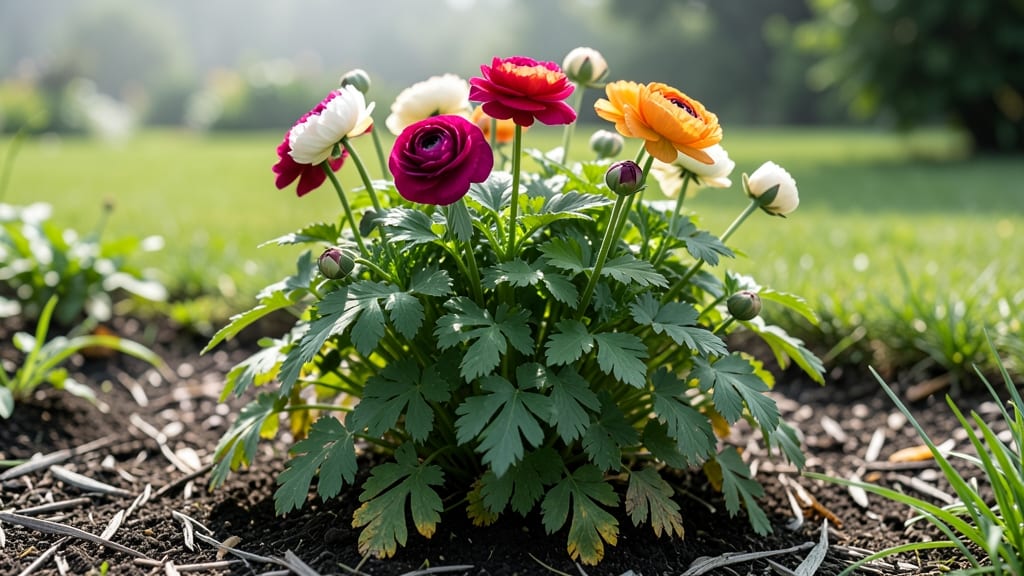
Ranunculus blooms do not last all summer—they're cool-season flowers that peak in spring and gradually decline as temperatures consistently exceed 75°F (24°C), though some late varieties may linger into early June with careful shade and moisture management.
These delicate blooms are essentially spring ephemerals, meaning they've evolved to take advantage of cooler temperatures and shorter daylight hours. 🌸 The heat stress causes their metabolic processes to slow dramatically, while high humidity often triggers fungal issues that further shorten their lifespan.
I've found that even with the best care, most ranunculus varieties will be spent by mid-summer unless you're in particularly cool microclimates or high-altitude regions where summer temperatures stay mild.
What's interesting is how different varieties respond—some hardy types might produce a few late blooms in early summer, while others will simply drop their buds before opening. The key is understanding your specific cultivar's heat tolerance and planning your garden accordingly.
💡 In This Article
- Why Ranunculus Fade in Summer Heat
- Extending Ranunculus Blooms: Cool-Season Gardening Tips
Why ranunculus fade in summer heat
Ranunculus plants are cool-season annuals that evolved to thrive during spring's mild temperatures, typically between 50-65°F (10-18°C). When daytime temperatures consistently exceed 75°F (24°C), their metabolic processes slow dramatically—particularly photosynthesis and nutrient uptake.
The delicate petals, which can number over 20 layers in some varieties, become prone to wilting because their water-transporting xylem vessels struggle to keep up with evaporative demand. This is why you'll often see ranunculus buds drop before opening when summer heat arrives.
The real culprit is ethylene gas production, which spikes in heat-stressed plants.
This plant hormone accelerates senescence—the natural aging process—causing flowers to yellow and drop within 3-5 days of exposure to prolonged temperatures above 80°F (27°C). 🌡️ Some varieties like 'Buttercup Mix' or 'White Queen' may show slightly better heat tolerance (up to 82°F/28°C for brief periods), but even these will decline faster than their spring counterparts.
The difference lies in their native habitats—most ranunculus species originate from Mediterranean climates where summers are dry and hot, but they still require cooler nights to recover.
Humidity plays an equally critical role in their decline. High moisture levels create perfect conditions for powdery mildew and botrytis blight, two fungal diseases that thrive in the 75-85% humidity range typical of summer afternoons.
These pathogens attack the petals first, causing brown spots that spread rapidly—often within 24-48 hours—and completely ruining the flower's appearance. The combination of heat stress and fungal pressure is what typically causes ranunculus to "give up" by early summer, even in well-maintained gardens.
There's also a physiological dormancy trigger at work. Ranunculus plants detect increasing daylight hours (photoperiod) as summer approaches, which signals their internal clocks to shift from flowering to seed production.
This is why you'll notice a sharp decline in new blooms even before the heat becomes extreme—it's not just the temperature, but the plant's biological response to changing seasons.
Some gardeners report seeing a final flush of blooms in late May if planted in partial shade, but this is more the exception than the rule.
Interestingly, the most heat-tolerant varieties often come from breeding programs focused on late-spring blooming rather than summer endurance.
For example, 'Pink Charm' and 'Red Velvet' might produce a few late flowers in Zone 5-6 gardens where summer highs reach only 80°F (27°C), but they'll still decline faster than early-season types.
The trade-off is that these late varieties often have slightly thicker petals and more robust stems, which gives them a 3-5 day advantage in hotter conditions compared to standard ranunculus.
What most gardeners don't realize is that even the hardiest ranunculus varieties will show signs of heat stress before they completely stop blooming.
Look for these early warning signs: buds that fail to open, petals that curl at the edges, or leaves that develop a grayish cast—these indicate the plant is already struggling to maintain its normal functions.
At this stage, even optimal care (like daily watering and afternoon shade) can only delay the inevitable by 1-2 weeks rather than prevent it entirely.