
Blooming
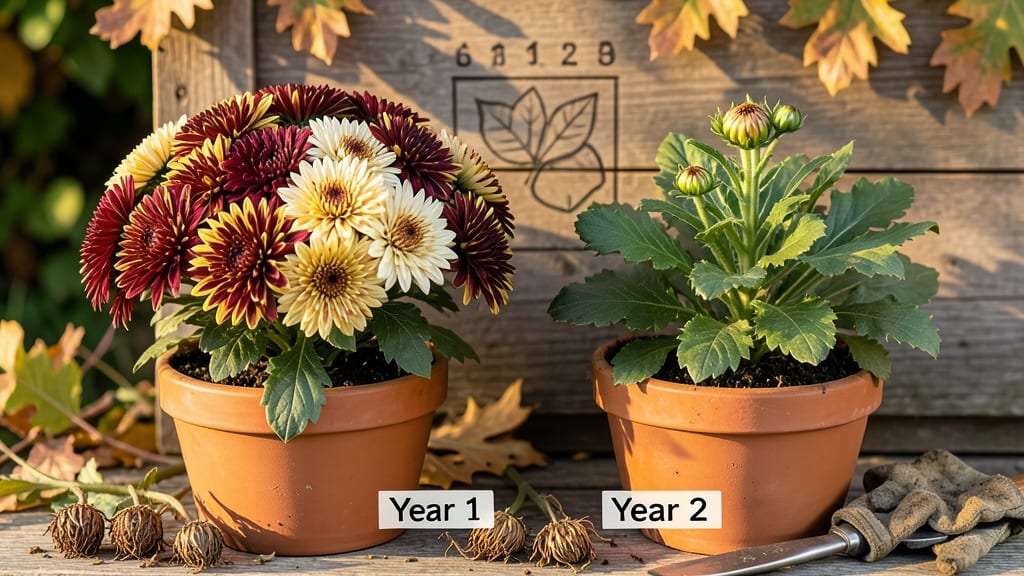
Mums (chrysanthemums) bloom every year in ideal conditions, but their annual flowering depends on variety, frost exposure, and proper care—hardy types often rebloom after winter dormancy if protected from harsh freezes.
Whether your mums return to bloom annually hinges on their type and winter care. 🌸 Garden mums, often grown as perennials, enter dormancy in cold climates but can rebloom the following season if their roots survive freezing temperatures.
Disbud mums, bred for long-lasting single blooms, typically don’t rebloom naturally after their first flush. The key is protecting them from extreme cold—mulching with straw or leaves and choosing hardy varieties like 'Bonanza' or 'Dynasity' gives them the best chance to return year after year.
Even with proper care, some mums may skip blooming if they don’t get enough sunlight or nutrients. I’ve found that dividing overcrowded clumps every 3-4 years also encourages stronger, more reliable flowering. The trade-off? A little extra effort in late fall can mean vibrant blooms come spring.
💡 In This Article
- Why Some Mums Bloom Annually While Others Don’t
- Extending Mum Blooms: Frost Protection and Care Tips
Why some mums bloom annually while others don’t
Mums (chrysanthemums) follow a natural dormancy cycle triggered by shortening daylight hours and dropping temperatures. When days grow shorter in late summer, these plants detect the change through a process called photoperiodism, which signals their buds to form.
Hardy varieties like 'Dynasity' or 'Bonanza' store energy in their roots during dormancy—acting like a biological battery—to fuel next year's blooms. This is why they often rebloom annually when protected from extreme cold (-15°F or lower). 🌿
The key difference lies in their breeding: garden mums (perennials) are bred to survive winter and rebloom, while disbud mums (often sold as annuals) focus on producing one long-lasting bloom rather than multiple cycles.
Disbud varieties, like those with single, large flowers, prioritize flower size over energy storage for reblooming. Even garden mums may skip blooming if they don’t receive 6-8 hours of sunlight daily or if their roots become overcrowded after 3-4 years.
Cold temperatures actually help mums prepare for reblooming. When exposed to 40-50°F nights for 4-6 weeks, they undergo a process called vernalization, which breaks dormancy and primes buds for spring growth. However, sudden freezes (below 20°F) can damage roots and stems, preventing reblooming.
This is why mulching with 4-6 inches of straw or leaves acts like a thermal blanket, insulating roots and preserving their energy reserves. 🌡️
Another critical factor is nutrient availability. Mums deplete soil nutrients during their first bloom, so replenishing with balanced fertilizer (10-10-10) in early spring gives them the boost needed for reblooming.
I’ve noticed that mums grown in well-draining soil with compost consistently outperform those in nutrient-poor ground. The trade-off? Over-fertilizing with high-nitrogen mixes can lead to lush foliage but fewer blooms.
Variety also plays a role in reblooming behavior. Autumn Joy mums, for example, naturally produce multiple bloom cycles, while pompom varieties often focus on one flush. Even within garden mums, some types like 'Purple Bush' are more reliable rebloomers than 'Coca-Cola', which may need deadheading to encourage secondary blooms.
Understanding these differences helps gardeners choose varieties that align with their climate and care goals. 🌸