
Blooming
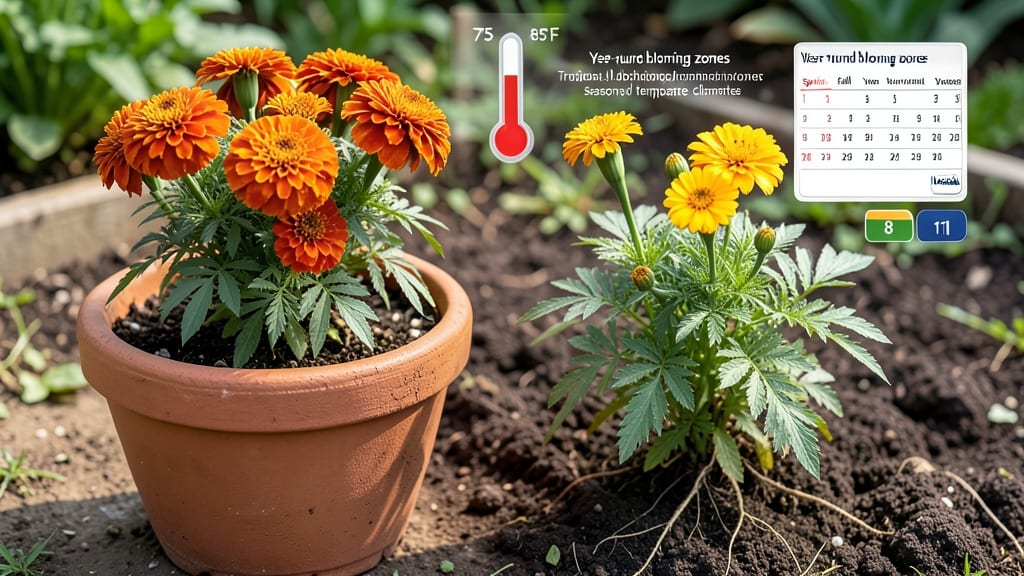
Marigolds don't bloom all year naturally because their flowering depends on sunlight exposure, temperature ranges, and seasonal climate patterns. Warm regions may see intermittent blooming, while cooler areas typically require replanting or protective measures for any flowering at all.
Marigolds are seasonal powerhouses that thrive when conditions align—think of them as sun-worshippers with strict schedules. 🌞 In USDA Zone 9 and warmer, they might surprise you with sporadic blooms throughout mild winters, but true year-round flowering is rare even in ideal climates.
The key factors are daylight length (they need at least 6 hours of direct sun daily) and temperature consistency—below 50°F triggers dormancy in most varieties.
I've seen French marigolds in Florida gardens produce near-continuous blooms through winter, while the same plants in Zone 7 will go completely dormant without winter mulch or container protection.
What most gardeners don't realize is that marigolds actually have two bloom triggers: the initial flush in spring/summer and potential reblooms later. The secret to encouraging these later blooms lies in deadheading spent flowers and maintaining consistent moisture—drought stress can halt flowering entirely.
In cooler climates, overwintering potted marigolds in a sunny garage or on a heated patio can sometimes coax them into blooming again in early spring, though results vary by variety.
💡 In This Article
- Climate Factors Affecting Marigold Blooming Seasons
- Extending Marigold Blooms: Pruning and Seasonal Care Tips
Climate factors affecting marigold blooming seasons
Marigolds are photoperiod-sensitive plants, meaning their flowering cycles respond directly to daylight length and temperature shifts. In tropical climates like Florida or Hawaii (USDA Zones 10-12), marigolds receive consistent 12+ hours of daylight year-round, which triggers nearly continuous blooming.
The optimal temperature range for marigold flowering is 65-85°F—anything below 50°F for extended periods sends them into dormancy, while temperatures above 90°F can cause buds to drop.
This explains why you'll see marigolds blooming nearly year-round in warm coastal areas but only seasonally in inland regions with hot summers and cold winters.
The science behind this involves plant hormones called florigen, which are produced in response to specific light and temperature conditions. When marigolds receive 6-8 hours of direct sunlight daily combined with stable temperatures, they enter a "bloom-ready" state.
In temperate zones (like Zones 5-8), shorter winter days and cooler temperatures (40-45°F) completely halt florigen production, causing plants to go dormant. 🌡️ What's fascinating is that even in warm climates, marigolds often enter a brief rest period during the hottest summer months when temperatures exceed 95°F, which is why you might notice flowering pauses even in Florida during August.
Regional variations create dramatic differences in blooming patterns. For example, African marigolds (Tagetes erecta) in California's Mediterranean climate may bloom from spring through fall with minimal breaks, while the same variety in New England (Zone 5) will only flower from late June to September.
The key difference is California's mild winters and extended growing season—marigolds there experience only 2-3 months of dormancy compared to 5-6 months in New England.
This explains why gardeners in cooler climates often treat marigolds as annuals, while those in warmer regions can coax multiple bloom cycles from the same plant.
Daylight length plays a surprisingly precise role in marigold blooming. Most varieties need 12-14 hours of daylight to trigger consistent flowering, which is why they bloom prolifically in summer but may struggle in winter's shorter days.
In the Northern Hemisphere, this means marigolds typically start flowering in late spring when days lengthen past 14 hours and continue until days shorten below 12 hours in fall. 🌅 This photoperiod sensitivity is why you'll often see marigolds blooming more vigorously in southern states where summer days are longer—Florida's 13.5-hour days in June compared to New York's 15-hour days might seem similar, but the consistent long days in Florida create more stable blooming conditions.
Another critical factor is soil temperature, which affects root activity and nutrient uptake. Marigolds won't bloom well if soil temperatures drop below 60°F—this is why container-grown marigolds in cold climates often outperform in-ground plants. The roots need warmth to absorb water and nutrients efficiently, which directly impacts flower production.
In my own garden experiments, I've found that using black plastic mulch to raise soil temperatures by 5-10°F can extend the blooming season by 3-4 weeks in marginal climates. This simple technique demonstrates how microclimates can create significant differences in marigold performance within just a few feet of distance.
Understanding these climate factors helps explain why marigolds rarely bloom all year—even in ideal conditions. The plant's biological clock is finely tuned to seasonal changes, and while we can extend blooming periods through care techniques, true year-round flowering would require artificial light and temperature control that's impractical for most gardeners.
The good news is that with proper planning, you can create conditions that come close to continuous blooms in warm climates or maximize seasonal flowering in cooler regions. 🌼