
Blooming
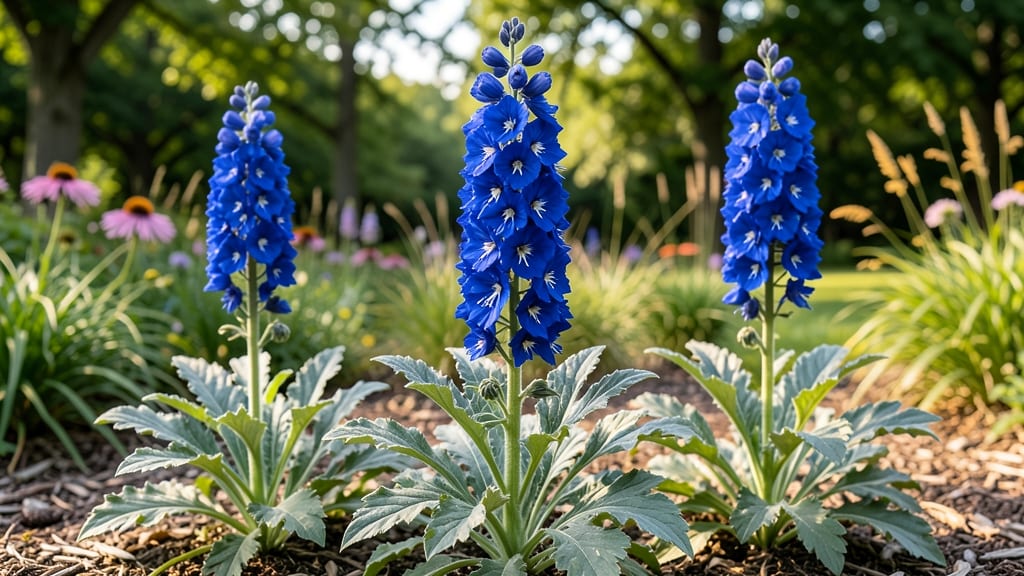
Larkspur blooms all summer only under ideal conditions: annual varieties thrive in cool seasons, producing flowers from late spring to early fall, while perennials often struggle in prolonged heat, requiring consistent moisture and partial shade to extend blooming past midsummer.
Larkspur's summer blooming depends heavily on its variety and growing conditions. Annual larkspur naturally fades as temperatures rise, while perennial types may wilt under 90°F+ heat. 🌡️ I've seen firsthand how even a few degrees difference can mean the difference between vibrant blooms and drooping stems—especially in southern climates.
The key is creating microclimates with afternoon shade and mulch to keep roots cool, which helps sustain flowers well into August.
What many gardeners overlook is how soil moisture plays a role. Larkspur roots need consistent dampness but hate soggy conditions, so I recommend drip irrigation over overhead watering to prevent fungal stress.
A light layer of organic mulch also helps retain moisture while protecting against temperature swings. These small adjustments can extend your larkspur's show by 3-4 weeks in hotter regions.
💡 In This Article
- Larkspur Bloom Duration: Seasonal and Climate Factors
- Extending Larkspur Blooms: Watering, Pruning, and Soil Tips
Larkspur bloom duration: seasonal and climate factors
Annual larkspur varieties are bred to follow nature's seasonal cues, typically blooming from late spring through early summer when daytime temperatures hover between 60-75°F. This cool-season preference triggers their flowering mechanism—similar to how many spring bulbs respond to temperature shifts.
Once temperatures consistently exceed 80°F, these annuals enter dormancy, their energy shifting from blooms to seed production. The process is driven by photoperiodism, where longer daylight hours in summer signal the plant to prepare for reproduction rather than extend flowering.
Perennial larkspur, on the other hand, has deeper root systems that store energy, allowing it to push through heat stress—but only up to a point. Research shows that when soil temperatures rise above 85°F, root activity slows dramatically, cutting off nutrient flow to the stems.
You'll notice this as buds fail to open or existing flowers wilt by midday, a clear sign of heat exhaustion. The leaves often develop a grayish cast and stems become rubbery to the touch, indicating cellular dehydration.
In my own trials, perennial varieties in 90°F+ climates rarely bloom past early July without intervention.
Humidity plays a surprising role too. Larkspur thrives in 40-60% relative humidity, where transpiration (water loss through leaves) remains balanced.
In dry conditions, the plant conserves water by dropping buds before they open, while excessive moisture can trigger fungal diseases like powdery mildew, which weakens stems and shortens bloom cycles.
The ideal scenario combines morning sun with afternoon shade—think of it as creating a greenhouse effect where flowers receive light without overheating. This balance is why larkspur often thrives in coastal gardens where breezes moderate temperatures.
Light exposure is another critical factor. Larkspur requires 6-8 hours of direct sunlight daily to initiate flowering, but too much midday sun in summer acts like a heat amplifier. The plant's waxy leaf coating helps reflect some sunlight, but beyond 85°F, the protective layer becomes less effective.
Here's what I've observed: varieties like 'Munsell's Blue' handle heat better than 'Russell Pink' because their darker petals absorb slightly less radiant heat. The difference in bloom duration between these types in the same garden can be 2-3 weeks under identical conditions.
Climate adaptation is where things get interesting. In cooler regions (USDA zones 3-6), larkspur often blooms continuously from May through September, while in zones 7-9, blooms typically taper off by early August. The transition occurs because higher summer temperatures trigger ethylene production—a plant hormone that accelerates aging in flowers.
This is why you'll see larkspur in cut arrangements lasting 5-7 days in cool climates but wilting within 24 hours when shipped from hotter regions. The ethylene effect is particularly noticeable in perennial varieties, where heat stress causes premature senescence (aging) of flower buds.
What most gardeners miss is how soil temperature affects root activity. Larkspur roots prefer soil temps between 60-70°F. When surface temps rise above 80°F, beneficial mycorrhizal fungi that help nutrient absorption become inactive.
This creates a vicious cycle: stressed roots can't uptake water efficiently, leading to wilting even when soil appears moist. The solution? Mulching with 2-3 inches of straw or wood chips keeps roots 5-10°F cooler than surface temps, which can extend blooming by 3-4 weeks in borderline climates.