
Blooming
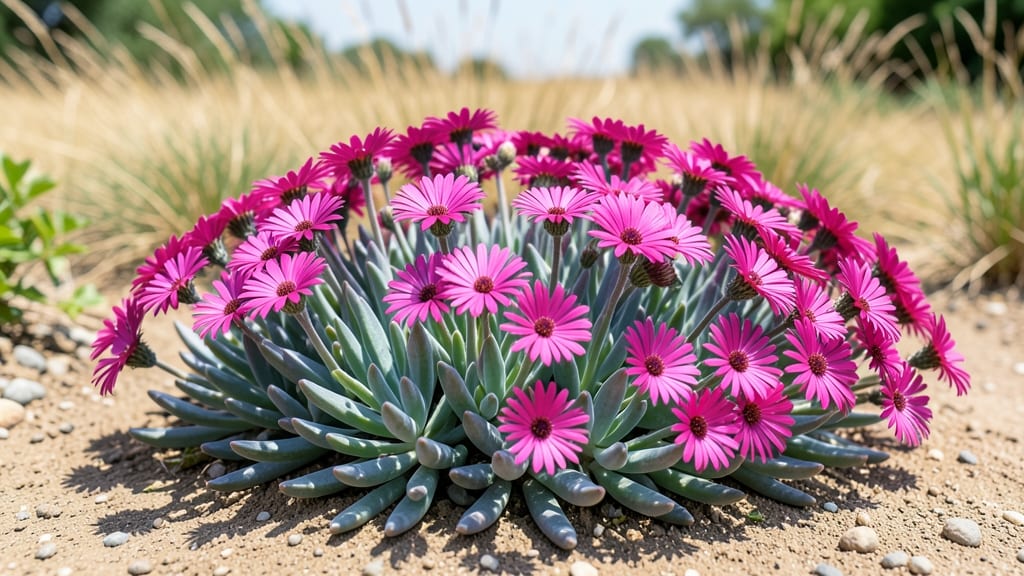
Ice plants bloom all summer in most varieties, producing vibrant flowers from late spring through fall, though some types may slow in extreme heat or drought without proper care and watering.
Ice plants (genus Delosperma and Lampranthus) are summer's workhorses, thriving in heat that would wilt many other succulents. 🌞 Their blooming cycles are triggered by warm days and long sunlight exposure—typically 6+ hours of direct sun daily—which is why they often peak in June through August.
What's fascinating is how some varieties actually bloom more prolifically when slightly stressed by dry conditions, though over-drought can backfire by forcing dormancy. For consistent summer color, I recommend Delosperma cooperi, which keeps producing bright magenta flowers even in 90°F+ temperatures if given well-draining soil.
These drought-tolerant beauties aren't just heat-resistant—they're also low-maintenance champions for sunny gardens. While they'll naturally slow in extreme drought or scorching heat (above 105°F), a simple deep watering every 2-3 weeks during peak summer can reignite blooming.
The key is balancing their succulent nature with just enough moisture to keep roots happy without encouraging rot. For gardeners in hot climates, mulching with gravel or coarse sand helps maintain that perfect moisture balance while preventing soil compaction.
💡 In This Article
- How Heat and Light Trigger Ice Plant Blooming Cycles
- Best Ice Plant Varieties for Nonstop Summer Blooms
How heat and light trigger ice plant blooming cycles
Ice plants (genus Delosperma and Lampranthus) are masters of photoperiodism—their blooming cycles are primarily triggered by day length and intensity of sunlight.
Unlike many plants that bloom in spring or fall, these succulents respond to the long, hot days of summer, typically requiring 6-8 hours of direct sunlight daily to stimulate flower production.
The key mechanism involves their leaves converting sunlight into energy through photosynthesis, which then signals the plant to shift resources toward flowering rather than vegetative growth. This process is particularly efficient in Delosperma varieties, which can continue blooming as long as temperatures stay between 70-95°F.
The plant's internal clock also plays a role—ice plants are day-neutral, meaning they don't rely on specific day lengths like short-day or long-day plants. Instead, they respond to temperature fluctuations between day and night.
A 10-15°F drop at night (common in summer evenings) can actually enhance blooming by mimicking natural seasonal cues. What's surprising is how drought stress can paradoxically trigger more flowers in some varieties.
When soil moisture drops to 30-40% of field capacity, the plant perceives this as a signal to reproduce quickly before conditions worsen, leading to a burst of blooms. However, this only works within limits—prolonged drought can force the plant into dormancy, halting flower production entirely.
For gardeners, this means understanding your local climate is crucial. In arid regions like the Southwest U.S., ice plants often bloom continuously from May through October with minimal intervention.
But in humid climates, where temperatures stay consistently high (above 90°F) without nighttime cooling, blooming may slow unless you provide afternoon shade during peak heat.
The secret to maximizing summer blooms lies in well-draining soil—a mix of 50% sand, 30% native soil, and 20% perlite ensures roots stay aerated while retaining just enough moisture to prevent stress. 🌡️
Color intensity also responds to light exposure. Ice plants grown in full sun develop brighter, more vibrant blooms compared to those in partial shade, where flowers may appear paler.
The pigments in their petals (often shades of pink, purple, or yellow) are actually anthocyanins, which deepen under high UV exposure.
This is why Delosperma 'Fire Spinner', with its fiery red flowers, thrives in direct afternoon sunlight—it's not just about heat, but the combination of heat and UV radiation that triggers peak pigment production.
One common misconception is that ice plants bloom only once per season. In reality, most varieties are repeat bloomers, producing new flowers every 2-4 weeks throughout summer if given proper care. The Lampranthus genus, for example, often blooms in waves, with each flush lasting 3-5 weeks.
To encourage this, I recommend deadheading spent blooms (removing faded flowers) to redirect the plant's energy toward new growth. This simple step can extend the blooming season by 4-6 weeks in optimal conditions.
For those in extreme heat zones (above 105°F), a light mulch of pebbles around the base helps regulate soil temperature while preventing moisture loss. The pebbles reflect sunlight away from the plant's crown, keeping it 5-10°F cooler than the surrounding air.
This technique works particularly well for Delosperma 'Ice Plant' varieties, which can continue blooming even when air temperatures reach 110°F, provided the roots stay cool. The result? A near-continuous display of color from early June through late September in most U.S. growing zones 7-11.
What most gardeners don't realize is that ice plants also adjust their blooming patterns based on rainfall. In dry summers, they may enter a semi-dormant state, producing smaller but more frequent blooms.
In contrast, wet summers can lead to lush foliage but fewer flowers, as the plant prioritizes leaf growth over reproduction. The solution? A targeted watering schedule—deep watering every 2-3 weeks during peak heat maintains blooming without encouraging leggy growth.
This balance is what turns ice plants into the ultimate low-maintenance summer performer. ✨