
Blooming
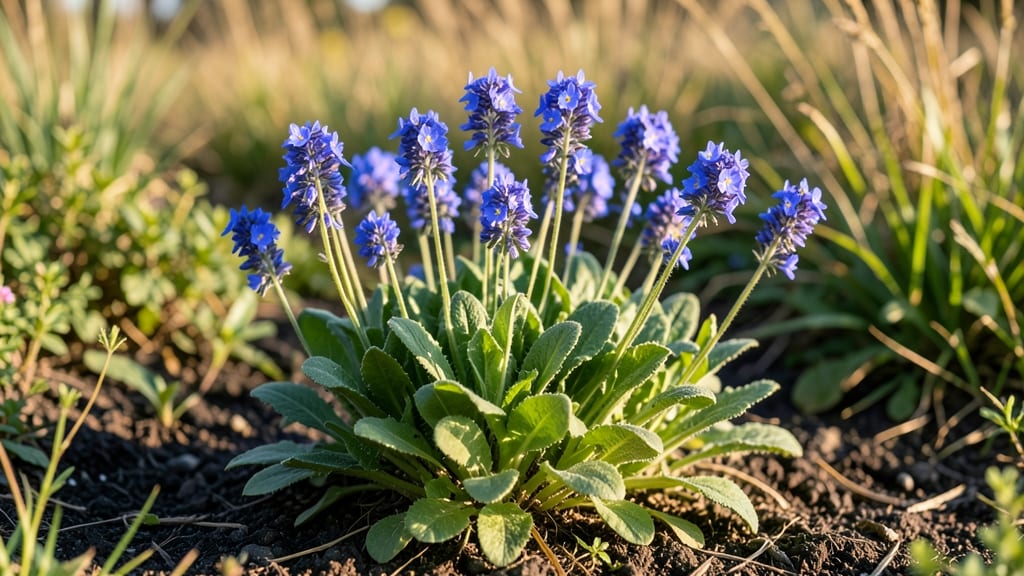
Forget-me-nots bloom all summer only in mild climates, but most varieties are cool-season plants that peak in spring and fall. Hardy types like Myosotis sylvatica may produce sporadic summer flowers with regular watering and partial shade, though extreme heat often causes them to go dormant.
Forget-me-nots are actually cool-season plants, which means they thrive when temperatures are moderate rather than scorching. 🌸 In regions with hot summers, these flowers often enter a dormant state to conserve energy, only reblooming when conditions become cooler.
The key to encouraging summer blooms lies in selecting the right varieties—like Myosotis alpestris—and providing consistent moisture to support their growth. I've found that partial shade helps protect them from the harshest afternoon sun, which can stress the plants and reduce flowering.
What many gardeners don't realize is that forget-me-nots have a natural rhythm tied to daylight hours. Longer summer days can actually signal these plants to pause flowering until conditions improve.
This is why some varieties may produce a few scattered blooms in summer but won't maintain the same abundant display as they do in spring or fall.
The secret to maximizing summer color lies in proper care—regular watering, light pruning to encourage new growth, and choosing the right location that balances sunlight with shade.
💡 In This Article
- Forget-Me-Not Growth Cycles and Seasonal Bloom Limits
- Best Forget-Me-Not Varieties for Extended Summer Blooms
Forget-me-not growth cycles and seasonal bloom limits
Forget-me-nots (Myosotis spp.) follow a distinct botanical lifecycle tied to temperature and daylight cues. Their native habitats in temperate regions—like meadows and woodlands—expose them to cooler springs and falls, which trigger their natural flowering cycles.
The plants produce flowers in response to decreasing temperatures and shorter days, a process regulated by the hormone florigen, which signals the transition from vegetative growth to flowering.
When summer heat peaks (typically above 85°F), most varieties enter a semi-dormant state to conserve energy, often shedding leaves and reducing blooms until conditions improve.
The key mechanism behind this behavior is a stress response called thermo-inhibition, where high temperatures disrupt the plant's photosynthetic efficiency and hormone balance.
Studies show that forget-me-nots experience reduced chlorophyll production and slowed root growth when exposed to prolonged 90°F+ conditions—this is why even cold-hardy types like Myosotis sylvatica may struggle in intense summer heat.
Interestingly, their deep blue flowers contain anthocyanin pigments, which actually help reflect excess sunlight during heatwaves, but this protective mechanism can't compensate for extreme conditions. 🌡️
Daylight length plays an equally critical role. Forget-me-nots are short-day plants, meaning they flower best when daylight hours shorten (typically 12-14 hours of light). During summer solstice, when days exceed 15 hours, many varieties suppress flowering entirely as a survival strategy.
This is why you'll often see them bloom sporadically in summer—they're responding to brief periods of cooler temperatures or partial shade that mimic their preferred conditions. For gardeners in hot climates, this explains why summer blooms are usually smaller and less frequent than spring displays.
Another fascinating aspect is how forget-me-nots prioritize energy allocation. When stressed by heat, they redirect resources from flower production to root and leaf development, storing nutrients for future growth.
This is why deadheading spent blooms in summer can sometimes encourage a second flush of flowers—by removing the energy drain of seed production, you give the plant a chance to focus on new growth.
However, this only works if temperatures stay below 80°F consistently, as higher heat will still trigger dormancy hormones.
The exceptions to this rule are specialized varieties like Myosotis alpestris, which evolved in alpine regions where summer temperatures are cooler. These types can tolerate up to 85°F with proper moisture, making them better candidates for extended summer blooms.
Their success comes from a genetic adaptation that allows them to maintain active growth during warmer periods, though they still prefer partial shade to avoid leaf scorch. For gardeners in Zone 5-7, this means selecting alpine varieties or providing afternoon shade can significantly extend the blooming season.
What most people overlook is how soil moisture interacts with these temperature triggers. Forget-me-nots have shallow root systems that dry out quickly in heat, which compounds their stress response.
Maintaining consistent soil moisture (about 1-1.5 inches of water per week) helps mitigate heat stress by keeping the roots cool and active. Mulching with 2-3 inches of organic matter can reduce soil temperature by 5-10°F, creating a microclimate that supports summer blooming.
This is particularly important in containers, where roots heat up faster.