
Blooming
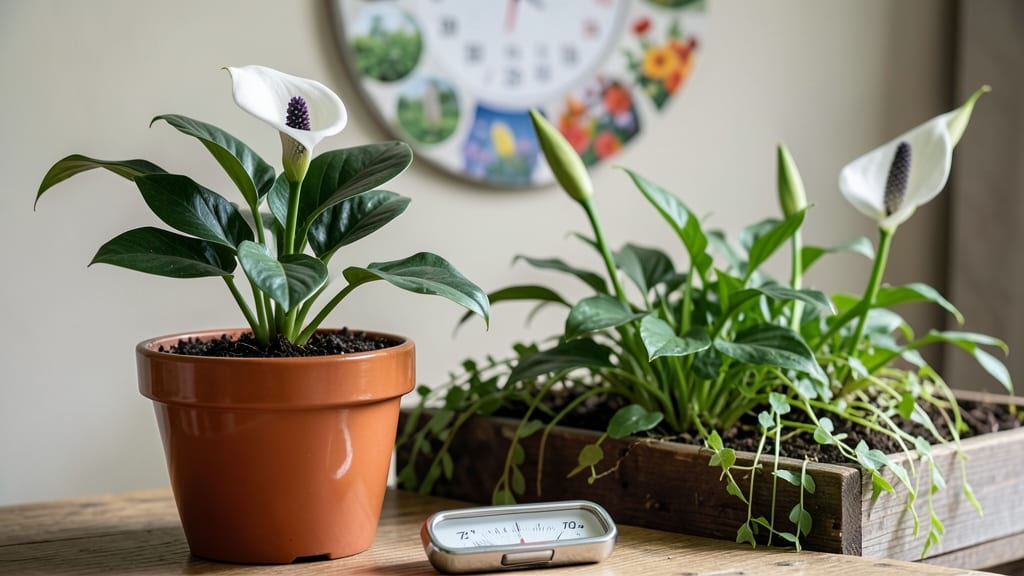
Calla lilies don't bloom all year—their flowering cycles are tightly linked to their type, local climate, and seasonal changes. Most varieties show seasonal blooms (spring through summer), while tropical types may produce occasional flowers in warm conditions, and cooler climates trigger natural dormancy periods.
Calla lilies follow natural biological rhythms that align with their native environments. Temperate varieties like the common white calla (Zantedeschia aethiopica) typically bloom from late spring to early summer, then enter dormancy until temperatures rise again. Tropical types, such as the vibrant orange Zantedeschia rehmannii, may produce flowers sporadically in warm climates but still respond to seasonal cues like daylight length. 🌿 The key to encouraging blooms is mimicking their natural conditions—providing consistent moisture, bright indirect light, and proper fertilization during their active growth phases.
For gardeners wanting extended blooms, understanding these patterns is crucial. Indoor cultivation can help maintain blooming cycles year-round by controlling light exposure and temperature, while outdoor plants will naturally follow seasonal rhythms unless you live in a frost-free zone.
The secret lies in observing your specific variety's habits and adjusting care routines accordingly—whether that means pruning spent blooms to encourage new growth or providing winter protection for temperate types.
💡 In This Article
- Calla Lily Flowering Seasons by Variety and Climate
- How to Extend Calla Lily Blooms with Proper Care
Calla lily flowering seasons by variety and climate
The flowering patterns of calla lilies are dictated by their evolutionary adaptations to specific climates. Temperate varieties like Zantedeschia aethiopica (the classic white calla) evolved to bloom during spring and summer when temperatures consistently stay above 50°F (10°C) and daylight exceeds 12 hours.
These plants trigger dormancy in cooler months, conserving energy until warmer conditions return. 🌸 This cycle mirrors their native South African habitats, where winter dormancy is essential for survival.
Conversely, tropical calla lilies such as Zantedeschia rehmannii (with its striking orange blooms) adapt differently. They thrive in consistent warmth (70-85°F / 21-29°C) and may produce flowers intermittently year-round in frost-free zones, though they still respond to seasonal cues like shorter winter days.
The key difference lies in their day-neutral flowering—they don't rely as heavily on daylight length, allowing more flexible blooming patterns in stable climates.
Climate plays a dramatic role in bloom timing. In USDA Zones 8-11, tropical varieties often flower continuously, while temperate types may bloom twice yearly if winters aren't severe. In Zones 5-7, most callas enter full dormancy, requiring winter protection (like mulch or indoor pots) to survive.
The critical temperature threshold for most callas is 40°F (4°C)
Light exposure further regulates flowering. Calla lilies need bright, indirect light (6-8 hours daily) to produce blooms, but direct midday sun can scorch leaves. Tropical types tolerate lower light better, while temperate varieties demand full sun exposure during their active growth phase (spring/summer). This light requirement explains why indoor callas often struggle to bloom—they rarely receive sufficient intensity for flower initiation. Daylength also triggers blooming. Most callas are short-day plants, meaning they need 10-12 hours of darkness to initiate flowers. Artificial lighting can disrupt this cycle, which is why indoor growers must maintain consistent light schedules. In nature, the gradual lengthening of days in spring signals callas to produce flowers, while shorter autumn days trigger dormancy in temperate varieties. 🌅 One fascinating exception is Zantedeschia elliottiana, which produces blooms year-round in its native tropical habitats but may show reduced flowering in winter when daylight drops below 10 hours. This variability highlights how even "tropical" callas aren't completely immune to seasonal cues—just less dependent on them than their temperate cousins.