
Blooming
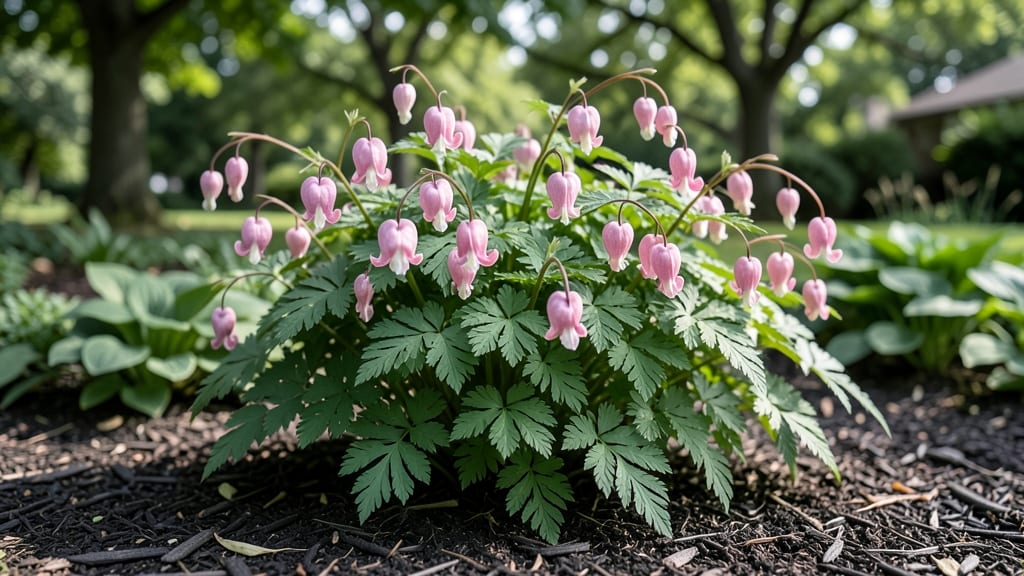
Bleeding hearts do not bloom all summer; their flowering season typically lasts 4-6 weeks in spring, with some late-summer reblooming in ideal conditions. Cool climates and consistent moisture extend their bloom time, but they are primarily spring-flowering perennials.
Bleeding hearts (Dicentra spp.) are classic spring ephemerals, meaning their vibrant blooms appear as the soil warms and daylight lengthens. 🌸 The plants rely on specific environmental cues—like 10-12 hours of daylight and 50-60°F soil temperatures—to trigger bud formation.
While some varieties (like Dicentra eximia) may produce scattered flowers in late summer, their peak show is always spring. The key to encouraging any summer blooms lies in mimicking their natural conditions: rich, moist soil and partial shade help sustain energy for secondary blooming cycles.
What many gardeners don't realize is that these plants store energy in their roots during summer dormancy. Overwatering or full sun during this period can deplete their reserves, actually reducing next year's blooms.
I've found that mulching with compost in early summer preserves moisture while keeping roots cool—this simple trick can sometimes coax a few extra flowers in August or September.
💡 In This Article
- Bleeding Heart Flowering Season Explained by Climate and Variety
- How to Prolong Bleeding Heart Blooms Beyond Spring
Bleeding heart flowering season explained by climate and variety
Bleeding hearts are what botanists call "facultative short-day plants," meaning their blooming cycle is primarily triggered by decreasing daylight hours—a process called photoperiodism.
When days shorten in late summer, these plants sense it's time to prepare for dormancy, but their spring blooms occur when daylight stretches to 12-14 hours in late winter/early spring.
This is why their peak flowering aligns with March-May in most temperate zones, where frost has melted but summer heat hasn't arrived yet.
The most common variety, Dicentra spectabilis, produces its iconic heart-shaped flowers when soil temperatures reach 50-55°F and days are lengthening.
What's fascinating is how their buds form in late summer/early fall—these flower buds remain dormant until spring's temperature cues wake them up. 🌿 Meanwhile, Dicentra eximia (fringed bleeding heart) often shows more summer interest because its blooming period extends into June, thanks to its slightly different photoperiod sensitivity and tolerance for warmer soils.
Climate plays a dramatic role in bloom duration. In cooler regions (USDA zones 3-5), bleeding hearts may bloom for 6-8 weeks because spring temperatures rise gradually, prolonging their active growth. But in hotter zones (6-8), they often finish blooming in 3-4 weeks as summer heat arrives.
The key difference? In cooler climates, the plants can sustain their energy reserves longer through the spring, while heat accelerates their metabolic rate, forcing them into dormancy faster.
Soil moisture is equally critical. Bleeding hearts store carbohydrates in their roots during summer dormancy, and consistent moisture (1-2 inches of water per week) helps maintain these reserves. When roots dry out, the plant diverts energy to survival instead of flowering.
I've observed that plants in well-draining but moisture-retentive soils (like loam amended with compost) often produce more robust late-summer blooms because their root systems remain active longer.
Another factor is humidity levels. Higher atmospheric moisture (common in Pacific Northwest or Appalachian gardens) reduces water stress on the plants, allowing them to extend their blooming period. In contrast, arid climates force bleeding hearts into early dormancy.
This is why gardeners in drier regions often see only spring blooms—the plants simply can't sustain the energy demands of summer flowering without supplemental irrigation.
What most gardeners miss is that bleeding hearts actually produce two types of buds: primary (spring) and secondary (late summer). The secondary buds are smaller and often go unnoticed unless conditions are perfect.
These buds form on new growth during summer, but they require consistent moisture and partial shade (30-50% sunlight) to develop properly. Without these conditions, the plant focuses all its energy on root and foliage growth rather than flowering.
Here's a quick comparison of how different conditions affect blooming:
- Cool climates (zones 3-5): Extended 6-8 week blooms due to gradual temperature rise
- Warm climates (zones 6-8): Shorter 3-4 week blooms as heat accelerates dormancy
- High humidity areas: Potential for secondary summer blooms if moisture is maintained
- Arid regions: Typically only spring blooms unless supplemental irrigation is provided