
Blooming
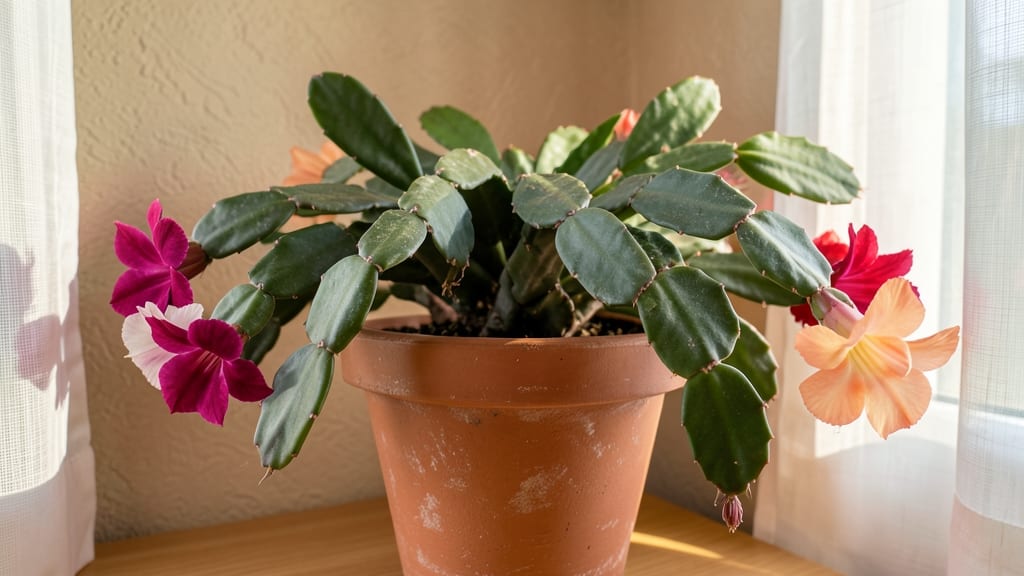
The colors of Christmas cactus blooms—vibrant pinks, deep reds, soft whites, oranges, and purples—are directly influenced by light exposure, particularly 12+ hours of darkness that trigger blooming. Temperature and humidity further enhance the intensity and longevity of these shades.
The magic behind these stunning hues lies in the plant’s natural photoperiodism—its response to light cycles. 🌙 When your Christmas cactus gets 12+ hours of darkness consistently, it signals the plant to bloom, and cooler temperatures (50–60°F) deepen the colors, especially magenta or salmon tones.
Bright, indirect light during the day helps maintain the plant’s health, while artificial grow lights can mimic natural conditions if sunlight is limited. What’s fascinating is how red and blue light wavelengths actually boost pigment production, making your blooms pop even brighter.
For the most vivid display, I recommend placing your plant near a north-facing window or using a timer for grow lights to simulate natural daylight. 💫 A light misting or pebble tray with water can also boost humidity, which keeps petals from drying out.
And here’s a pro tip: fertilize lightly in early fall with a balanced formula—this gives your plant the energy it needs to produce those show-stopping colors before the holidays.
💡 In This Article
- How Light Exposure Controls Christmas Cactus Flower Shades
- Best Practices for Coaxing Brighter Christmas Cactus Blooms
How light exposure controls Christmas cactus flower shades
The Christmas cactus's dazzling array of colors—from fiery reds to delicate whites—isn't just luck; it's a precise biological response to light called photoperiodism. When your plant receives 12+ hours of uninterrupted darkness nightly, it triggers the production of a hormone called florigen, which kickstarts the blooming process.
This isn't just about darkness—it's about the transition from light to dark that sends the signal. Think of it like a biological clock: the plant counts the hours of darkness to know when to bloom, typically in late fall or early winter.
Light wavelengths play an even more fascinating role. Red and blue light, specifically, are the superstars here. Red light (around 660 nm) boosts the production of anthocyanins, the pigments responsible for deep reds, magentas, and purples.
Meanwhile, blue light (around 450 nm) enhances the production of other pigments like carotenoids, which contribute to yellows and oranges. Without enough of these wavelengths, your blooms might appear duller or less vibrant.
For example, a plant getting only artificial white light (which lacks sufficient red/blue spectrum) might produce blooms that are 20-30% less intense in color compared to one receiving natural sunlight or full-spectrum grow lights.
Cooler nighttime temperatures—between 50–60°F70°F room might produce blooms that are 15% less saturated than one in a cooler environment. The key here is consistency: abrupt temperature swings can stress the plant and dilute the colors.
What most people don't realize is how light timing affects the blooming window. If you introduce even a few hours of light during the night (like leaving a lamp on), you can delay or even prevent blooming entirely.
This is why it's crucial to place your plant in a spot where it gets complete darkness for its required 12-hour rest period.
For indoor growers, using a light timer set to turn off at 6 PM and stay off until 8 AM can mimic natural conditions perfectly, ensuring those vibrant hues appear right on schedule.
Let’s talk about the science behind those stunning whites. Unlike colored blooms, white flowers contain all visible light wavelengths equally, reflecting them rather than absorbing specific colors.
However, even white blooms can take on a creamy or pale pink tint when grown under cooler conditions or with slightly less red light exposure. This subtle variation is why some white-blooming varieties might appear almost translucent in bright light versus slightly off-white in shaded conditions.
The contrast between deep magentas and pure whites is what makes Christmas cactus displays so breathtaking—it’s all about the balance of pigments and light management.
Here’s a pro tip: If you notice your blooms looking less vibrant than expected, try moving your plant to a spot with morning sunlight and afternoon shade.
This gives it the best of both worlds—enough red/blue light during the day to boost pigment production, but protection from the harsh midday sun that can fade colors.
And if you’re using grow lights, opt for full-spectrum LED bulbs designed for flowering plants; they’re engineered to replicate the natural light spectrum that triggers those stunning hues. 💫