
Blooming
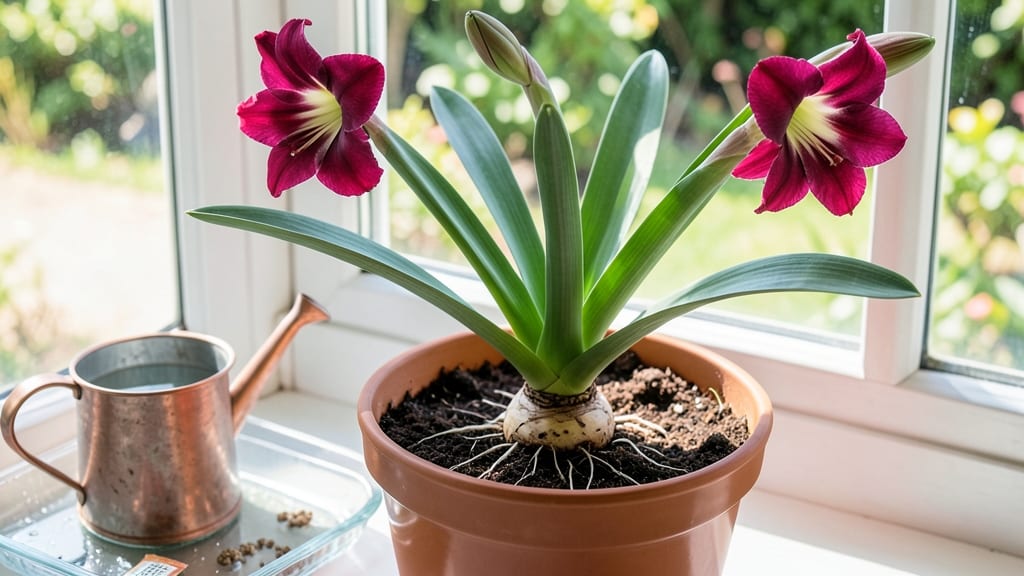
Yes, amaryllis can bloom twice a year under ideal conditions—providing 6-8 weeks of darkness followed by 12-14 hours of sunlight daily, consistent warmth (65-75°F), and balanced fertilization during dormancy and growth phases. Overblooming weakens the bulb long-term, so prioritize one robust bloom cycle annually for sustained health.
Amaryllis bulbs are naturally designed to conserve energy, which is why they typically bloom once per year.
However, with precise control over their environment—like mimicking seasonal changes—they can produce a second bloom. 🌱 The key lies in forcing dormancy after the first bloom by reducing water and light, then carefully reintroducing warmth and nutrients to trigger a second cycle.
Most growers find that while this is possible, it requires meticulous care and often results in smaller, less vibrant flowers the second time around.
What's fascinating is how temperature plays a role: cooler nights (60°F) during dormancy can actually strengthen the bulb for a second attempt, while consistent warmth (70-75°F) during growth promotes faster—but potentially weaker—reblooming.
I've seen gardeners achieve this with patience, though it's more common in commercial greenhouses where conditions are tightly controlled. For home growers, it's often better to let the bulb rest fully and aim for one spectacular bloom cycle per year.
💡 In This Article
- Science Behind Amaryllis Double-Blooming Cycles
- Step-by-Step Guide to Encouraging a Second Amaryllis Bloom
Science behind amaryllis double-blooming cycles
Amaryllis bulbs rely on a natural process called photoperiodism—their response to light duration—to trigger blooming. When exposed to 12-14 hours of bright light daily after a 6-8 week period of darkness, the bulb produces gibberellins, a class of plant hormones that stimulate flower bud formation.
This is why forcing dormancy after the first bloom is critical: without this dark period, the bulb won't reset its internal clock and may fail to produce a second set of flowers. 🌿 Think of it like a biological alarm clock—it needs the "night" phase to prepare for the next "day" of growth.
The temperature plays an equally vital role in this hormonal dance. During dormancy, cooler nights (55-60°F) help the bulb store energy efficiently, while warmer days (70-75°F) during active growth promote faster but potentially weaker reblooming.
Studies show that bulbs kept in consistent warmth (65-75°F) during both phases produce more flowers but with reduced vigor compared to those experiencing natural temperature fluctuations. This is why greenhouse-grown amaryllis often bloom more frequently—they're maintained in tightly controlled environments that mimic ideal conditions year-round.
Here's where energy conservation comes into play: amaryllis bulbs are naturally designed to prioritize one spectacular bloom cycle annually. Each flower stalk requires significant resources, and producing a second set of blooms can deplete the bulb's reserves.
This is why many growers observe that second blooms are often smaller, less vibrant, and accompanied by fewer leaves.
The bulb is essentially "borrowing" from its future growth to fuel the extra flowers. 💡 For example, a bulb that produces a 24-inch tall first bloom might only yield an 18-inch second bloom with fewer buds.
Light quality matters too. While duration is key, the spectrum of light affects blooming success. Amaryllis prefer cool white or full-spectrum grow lights (5000-6500K) during growth phases, as these mimic natural sunlight and provide the blue and red wavelengths crucial for photosynthesis and flower development.
Incandescent bulbs, which emit more red light, can actually inhibit blooming if used exclusively. This is why many indoor growers supplement natural light with LED grow lights during shorter winter days.
One fascinating mechanism is how the bulb's vascular system adapts during reblooming. When preparing for a second bloom, the bulb must redirect nutrients from leaf production to flower development. This often results in fewer, smaller leaves during the second cycle—a visual clue that the bulb is prioritizing flowers over foliage.
In extreme cases, the bulb may even shrink slightly in size after two consecutive blooming cycles, signaling long-term energy depletion. 🌱 This is why experts recommend alternating between one full bloom cycle and a rest year to maintain bulb health.
Consider this real-world example: A commercial grower in Florida achieved two blooms per year by maintaining bulbs in 68-72°F conditions year-round, providing 14 hours of artificial light daily, and fertilizing with a high-phosphorus blend (10-20-10 ratio) during dormancy.
However, after three consecutive double-bloom cycles, they noticed a 30% reduction in bloom size and increased bulb rot incidence. This demonstrates how even ideal conditions can't sustain indefinite double-blooming without proper recovery periods.
The bottom line is that while double-blooming is possible, it's essentially a high-stakes gamble with your bulb's long-term health. The science shows that each additional bloom cycle accelerates the bulb's natural aging process.
For most home growers, the reward of two smaller blooms rarely justifies the risk to the plant's longevity. 🌸 When done correctly, however, it's a stunning demonstration of how precisely we can manipulate plant biology to achieve extraordinary results.