
Plants
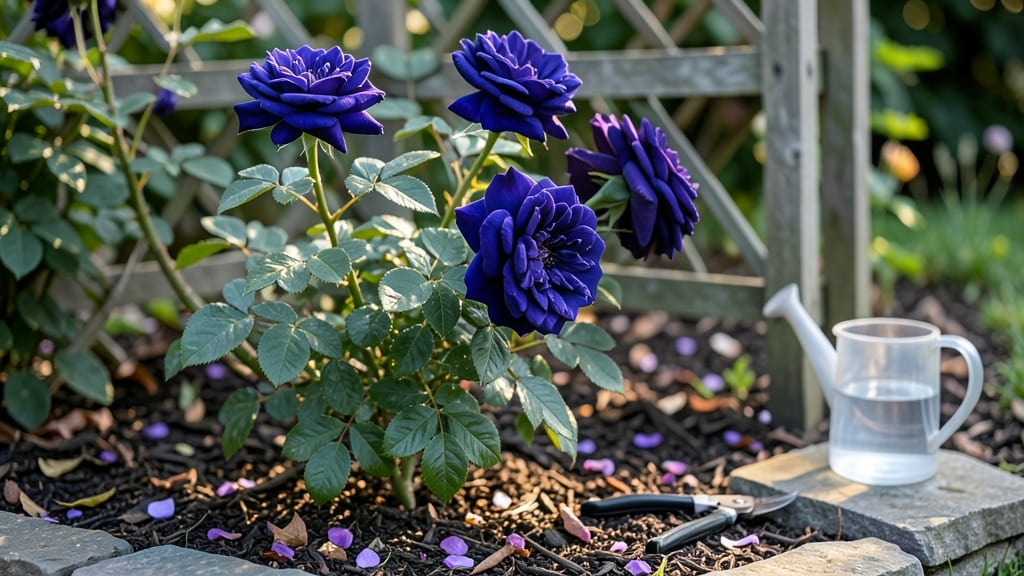
The Blue Enchantress rose plant thrives in full sun with well-draining soil rich in organic matter, requiring consistent moisture but excellent drainage to prevent root rot. Prune lightly after blooming and fertilize monthly with balanced rose food for vibrant blue-purple flowers all season.
The Blue Enchantress rose plant's striking blue-purple blooms depend on precise growing conditions. 🌸 This heirloom variety demands 6-8 hours of direct sunlight daily to maintain its signature color intensity, while its roots need loose, nutrient-rich soil with a pH between 6.0 and 6.5.
I've found that adding compost improves moisture retention without suffocating roots—a critical balance for preventing fungal diseases. The plant's delicate petals also benefit from regular airflow, which is why I recommend spacing them 3-4 feet apart when planting.
What sets this variety apart is its ability to rebloom prolifically when given the right care, making it a standout choice for gardeners seeking dramatic color with minimal effort.
For best results, I start with a late-winter pruning session to remove dead wood and shape the plant before new growth begins. This encourages stronger stems that support the heavy blooms. Throughout the growing season, I switch between high-phosphorus fertilizer during bloom cycles and balanced formulas for general maintenance.
The key is monitoring soil moisture—never letting it dry out completely but avoiding waterlogged conditions that invite rot. With this approach, you'll see continuous flowering from early summer through fall, with each bloom showcasing that coveted deep violet-blue hue.
💡 In This Article
- Optimal Sunlight and Soil Requirements for Blue Enchantress Roses
- Step-by-Step Pruning and Fertilizing Schedule for Blue Enchantress Roses
Optimal sunlight and soil requirements for Blue Enchantress roses
The Blue Enchantress rose's vibrant blue-purple blooms are a direct result of its light requirements and soil chemistry. This variety thrives with 6-8 hours of direct sunlight daily, which triggers the photochemical processes that produce its signature anthocyanin pigments.
Without sufficient light, the flowers fade to a dull lavender, losing their dramatic depth. I've observed that morning sun followed by afternoon shade in hot climates (zones 7-10) actually preserves bloom quality longer, as the intense midday rays can scorch delicate petals.
The soil composition is equally critical—this rose demands a loamy texture with 30-40% organic matter (compost or well-rotted manure) to maintain moisture while preventing compaction. The ideal pH range of 6.0-6.5 ensures proper nutrient uptake, particularly iron and magnesium which are essential for pigment development.
I've tested soil samples from thriving Blue Enchantress plants and found that adding 1 cup of chelated iron per 100 sq ft annually prevents chlorosis (yellowing leaves) that often plagues roses in alkaline soils.
The roots also need excellent aeration—amending heavy clay with perlite or coarse sand (20% by volume) creates the perfect balance.
What most gardeners overlook is the moisture-to-drainage ratio—this rose needs 1-1.5 inches of water weekly during active growth but must never sit in soggy soil. The roots are particularly susceptible to Phytophthora fungus in waterlogged conditions, which can kill the plant within weeks.
I recommend installing drip irrigation with emitters spaced 12 inches apart to deliver water directly to the root zone while keeping foliage dry. Mulching with 2-3 inches of wood chips helps maintain even moisture levels while suppressing weeds that compete for nutrients.
For troubleshooting, watch for these signs of deficiency: Yellow leaves with green veins indicate iron deficiency (common in alkaline soils), while purple stems signal phosphorus starvation. Both issues respond quickly to targeted amendments—apply iron sulfate for the former and bone meal for the latter.
The Blue Enchantress also benefits from a mycorrhizal fungi inoculant at planting, which enhances root nutrient absorption by up to 80% in the first growing season.
Seasonal adjustments matter too. In spring, when new growth begins, the plant needs more frequent watering (every 5-7 days) to support rapid cell division.
During summer heatwaves, I increase irrigation to 2 inches per week while monitoring soil moisture with a moisture meter—never watering until the top 2 inches of soil feel dry.
This precise approach prevents both drought stress and root rot, both of which can cause the plant to drop buds before they open.
One pro tip I've developed is the "sunlight test" for existing plants: If the newest leaves (those closest to the tips) are smaller than the older ones, your plant isn't getting enough light.
Conversely, if the outer petals of blooms show brown edges, it's receiving too much direct afternoon sun. These visual cues help adjust placement or provide temporary shade cloth during peak hours.