
Blooming
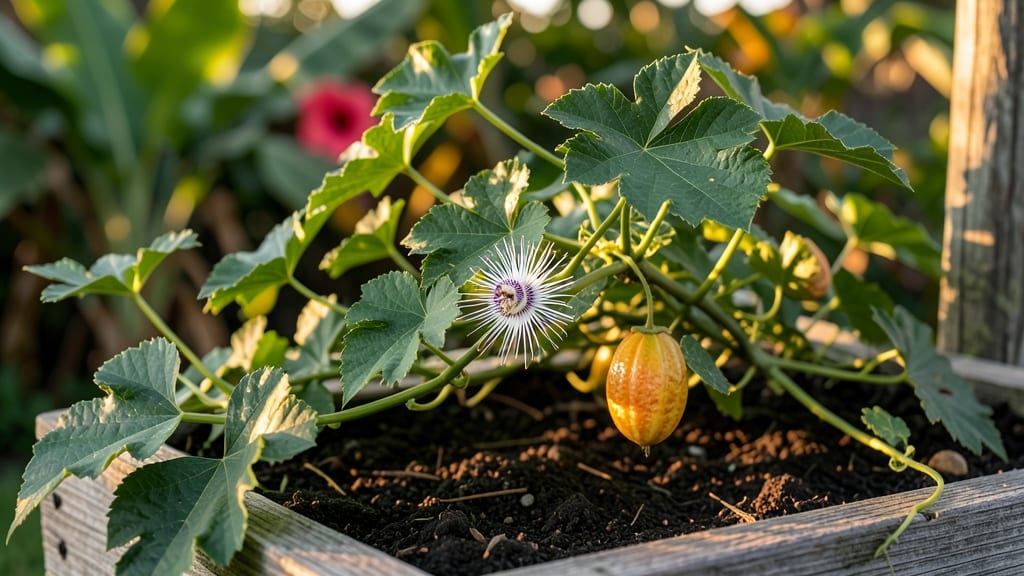
To bloom passion fruit plants, expect flowers to appear 6-12 weeks after planting, typically in late spring to early summer. For best results, provide full sun exposure, well-draining soil, and consistent moisture while avoiding excessive nitrogen, which can delay flowering.
Passion fruit plants are sensitive to environmental cues, and their blooming cycle depends heavily on daylight length and temperature. 🌸 When days grow longer in spring, the plant receives the signal to shift from vegetative growth to flowering.
Humidity also plays a role—too little can stress the plant, while too much may encourage fungal issues that weaken blooms. I’ve found that varieties like 'Purple Passion' tend to bloom more reliably than others, especially when given the right balance of care.
Once you understand the plant’s needs, you can create ideal conditions. For example, pruning old growth in late winter encourages new shoots that produce more flowers. Using a balanced fertilizer with higher phosphorus and potassium ratios (like a 5-10-10 blend) supports bloom development without overstimulating leafy growth.
Mulching around the base helps retain moisture and regulate soil temperature, both of which are critical for consistent flowering.
💡 In This Article
- Passion Fruit Flowering Stages and Environmental Triggers
- Organic Gardening Tips to Promote Passion Fruit Blooms
Passion fruit flowering stages and environmental triggers
The passion fruit's blooming process begins with a fascinating interplay of botanical signals. When the plant receives 12-14 hours of daylight (a threshold typically reached in late spring), it triggers photoperiodic flowering—the plant's internal clock shifts from producing leaves to developing flower buds.
This process is called "florigen" production, where the plant's stem tips signal the formation of floral meristems (the cells that will become flowers). 🌿 The most critical temperature range for this transition is 60-85°F—below 55°F or above 90°F can stall blooming entirely.
Humidity becomes equally important during this phase. Passion fruit flowers thrive in 50-70% humidity, as lower levels cause buds to dry out before opening, while higher humidity increases the risk of fungal infections like powdery mildew.
The flowers themselves are ephemeral, lasting just 24-48 hours—they open in the morning and must be pollinated by midday or they'll wither. This is where pollinators like bees and hummingbirds play a crucial role, transferring pollen from the male anthers to the female stigma at the flower's base.
Not all passion fruit varieties respond the same way to these triggers. For example, 'Purple Passion' (Passiflora edulis) typically blooms more reliably than 'Granadilla' (Passiflora ligularis) because it's better adapted to moderate climates.
The key difference lies in their genetic sensitivity to photoperiod—some varieties need slightly longer daylight hours or cooler nights to initiate flowering.
What most gardeners don't realize is that even within the same species, individual plants can vary by 2-3 weeks in their blooming timeline based on their specific genetic makeup.
One often-overlooked factor is soil temperature. Passion fruit roots prefer soil that stays between 65-75°F. If your soil heats up beyond 80°F (common in summer), the plant diverts energy toward root cooling rather than flower production.
This is why mulching with organic matter like straw or wood chips helps maintain consistent soil temperatures while also improving moisture retention—both critical for consistent blooming.
The flower itself is a marvel of botanical engineering. Its vibrant colors (purple, white, or blue) aren't just for show—they're specifically adapted to attract pollinators. The tubular shape guides bees and hummingbirds directly to the reproductive organs, while the intricate corona (the ring of filaments) provides landing platforms.
When pollination occurs, the flower begins its transformation into fruit within 7-10 days, a process that's just as sensitive to environmental conditions as the initial blooming.
For gardeners in cooler climates, understanding these triggers can mean the difference between abundant harvests and sparse yields. For instance, if you're in USDA Zone 8, you might need to provide afternoon shade during summer heatwaves to prevent flower drop.
The plant's ability to bloom consistently often comes down to creating microclimates that mimic its native tropical conditions as closely as possible. 🌺