
Pruning
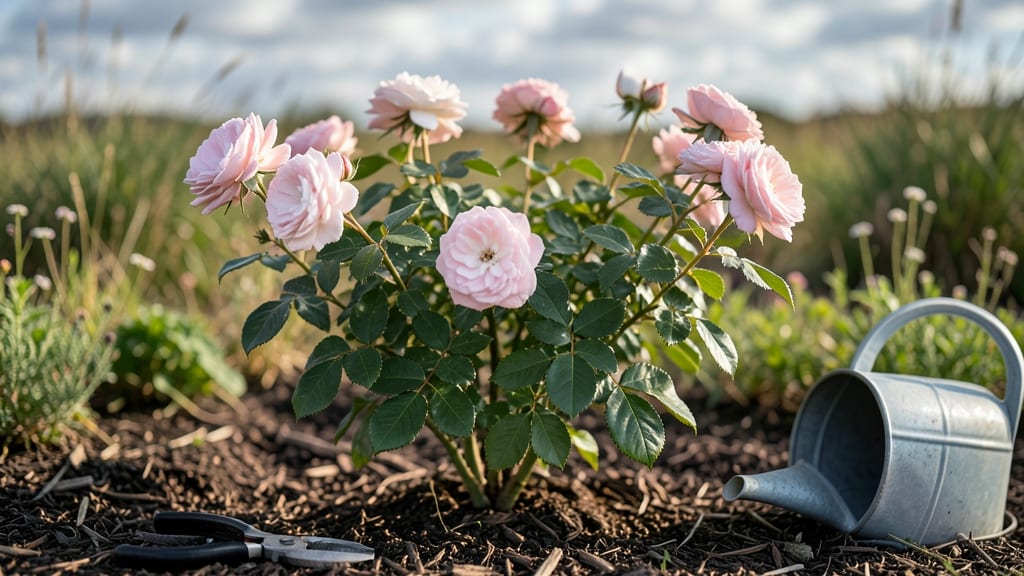
The Angel Face rose bush delivers clouds of delicate pink blooms that smell like heaven—if you prune it right. 🌸 I’ve grown this variety for three seasons, and the secret to its nonstop flowering isn’t complicated: two strategic trims a year (late winter and midsummer) keep it compact, healthy, and covered in petals from spring to frost.
Start with full sun and well-draining soil—this rose thrives where others struggle. Amend heavy clay with compost, and water deeply once a week (more in summer heat). The key?
Prune back dead wood in late winter, then trim again after the first flush of blooms to encourage that second wave of flowers. You’ll end up with a bush so lush it looks like a cloud of roses.
Common issues? Black spot fungus or aphids can crash the party, but neem oil and proper spacing keep them at bay. Pair it with lavender or catmint for pest control and a fragrant garden border.
With the right care, your Angel Face will reward you with blooms that last—and neighbors who ask for cuttings.
Works in zones 5-9, in both ground beds and containers. Here’s exactly how to make it happen without the guesswork.
📚 In This Guide
- What you need
- Instructions
- Tips and common mistakes
- Wrapping up and next steps
What you need
- ● Pruning shears or secateurs – Sharp, clean, and bypass-style (avoid anvil-type for roses). 1 pair (or 2 if you have a large bush).
- ● Loppers – For thicker branches (½”–1¼” diameter). 1 pair.
- ● Garden gloves – Heavy-duty, cut-resistant (thorns are no joke!). 1 pair.
- ● Disinfectant (rubbing alcohol or bleach solution) – 70% isopropyl alcohol or 1 part bleach to 9 parts water.
- ● Pruning saw – Only if dealing with very thick, woody stems. 1.
- ● Trash bags or bucket – For clippings and debris. 2–3.
- ● Hose or water source – To clean tools and rinse cuts.
- ● Hand pruners with ratcheting mechanism – For easier cutting on stubborn branches.
- ● Rag or paper towels – For wiping down tools between cuts.
- ● Garden twine or plant ties – To secure heavy blooms or support weak stems.
- ● Compost bin or mulch – To recycle pruned material.
- ● Sunscreen and hat – Because even roses love shade breaks! ☀️
Step-by-Step guide to pruning your Angel Face rose for year-round blooms
Here's how to keep your Angel Face rose bush thriving with just two simple seasonal trims.
✂️ Step 1: Late Winter Pruning for Structure
Start pruning your Angel Face rose bush in late February or early March, just as new growth begins to swell on the buds. This timing ensures you cut back before the plant wakes up fully from dormancy. Grab your clean, sharp pruners and remove any dead, diseased, or crossing branches first—these are easy to spot as they look brown, mushy, or tangled with others.
Next, shape the bush by cutting back last year's growth to an outward-facing bud. Look for buds that point away from the center of the plant—this encourages outward growth and better air circulation. For each cut, make a 45-degree angle just above the bud to prevent water from pooling on the wound. I like to step back every few cuts to check the overall shape—your goal is an open, vase-like structure that lets light and air reach the center.
☀️ Step 2: Mid-Season Trim to Encourage Continuous Blooms
About 6-8 weeks after the first flush of blooms, perform your second trim in late spring or early summer. This is where the magic happens for year-round blooms. Look for spent blooms and cut them back to the first five-leaflet leaf below the bloom. The Angel Face rose blooms continuously, so removing faded flowers redirects energy to new buds instead of seed production.
While you're at it, thin out any overly crowded canes by removing the thinnest ones at the base. This prevents overcrowding and helps the remaining canes grow stronger. I always check for any suckers—those unwanted shoots growing from the base or along the stem—and snip them off immediately. These energy vampires drain your rose bush without contributing to blooms.
⏰ Step 3: Light Maintenance Through Fall and Winter
As summer winds down, shift to light maintenance rather than heavy pruning. Deadhead any remaining spent blooms through early fall to encourage a final flush of flowers before winter. Stop pruning entirely once temperatures drop below 40°F—this gives your Angel Face rose time to harden off for dormancy.
In late fall, apply a 2-3 inch layer of mulch around the base (but not touching the stem) to protect roots from freezing temperatures. I also wrap the canes loosely with burlap if your winters are harsh—this prevents sunscald and wind damage. Leave the pruners in the shed until late winter, when you'll start the cycle again.
🌿 Step 4: Post-Pruning Care for Healthy Growth
After each pruning session, give your Angel Face rose a deep watering to help it recover. The roots need moisture to support new growth, especially after you've removed a significant portion of the plant. I like to water at the base in the morning so the foliage has time to dry before evening—this prevents fungal issues.
Apply a balanced rose fertilizer (10-10-10 ratio) 4-6 weeks after pruning to support the fresh growth. Follow the package instructions for dosage—over-fertilizing can burn roots and harm your plant. Keep an eye out for new buds forming along the canes; these are your signal that the pruning worked and your rose is ready for another round of blooms.
Tips & tricks for perfect Angel Face rose maintenance
Took me a while to figure these out, so here goes—these tricks will help your Angel Face rose bloom like crazy all year.
The Timing Secret: Those late February to early March windows for Step 1 are critical. If you prune too early, you risk damaging buds that haven't swollen yet. I've learned to check for the first tiny swell on buds—about the size of a pencil eraser—as my cue to start. This timing ensures you're cutting back just before the plant wakes up fully from dormancy, giving it the best chance to recover quickly.
Bud Direction Matters: When shaping in Step 1, I can't stress enough how important those outward-facing buds are. Look for buds pointing away from the center—they'll grow outward, creating that beautiful vase shape. If you're unsure, imagine drawing a line from the bud to the center of the plant. If the bud points toward the center, it's the wrong one to cut back to. This simple visual trick makes all the difference in air circulation and bloom visibility.
Mid-Season Bloom Strategy: For the 6-8 week timing in Step 2, I mark it on my calendar right after the first flush of blooms appears. The key is to catch those spent blooms just as they're fading—when petals start falling but the center still looks fresh. Cutting back to the first five-leaflet leaf (not just any leaf!) ensures you're leaving enough foliage to support new buds while removing enough to redirect energy. This consistent timing is what gives Angel Face roses their continuous bloom habit.
Winter Protection Wisdom: That 40°F cutoff in Step 3 is your signal to stop all pruning. I've seen too many gardeners prune too late in fall, only to have their roses suffer from winter stress. The mulch layer—2-3 inches—is your best friend here. It acts like a blanket for the roots, keeping them insulated while still allowing water to penetrate. And if you're in a particularly harsh climate, that burlap wrap can make all the difference in preventing sunscald on the canes.
Pro Tips for Angel Face Rose Bush
- Took me a while to figure these out, so here goes—these tricks will help your Angel Face rose bloom like crazy all year.
- The Timing Secret: Those late February to early March windows for Step 1 are critical.
- Bud Direction Matters: When shaping in Step 1, I can't stress enough how important those outward-facing buds are.
Frequently asked questions
Got questions about caring for your Angel Face rose bush? You’re not alone! This stunning variety thrives with the right attention, and we’ve got answers to the most common queries to keep those blooms coming year-round.
When is the best time to prune an Angel Face rose bush?
The ideal time is late winter or early spring (just before new growth starts) for a major pruning, and again in mid-summer to encourage a second flush of blooms. Avoid heavy pruning after early fall—it can stress the plant before winter. Light trimming to remove dead or crossing branches can happen anytime.
How much should I cut back during the first prune?
Aim to remove 1/3 to 1/2 of the plant’s height during the first prune. Focus on cutting just above an outward-facing bud (about 1/4 inch above) to promote air circulation and stronger growth. Avoid "topping" the bush—this can lead to weak, leggy stems. Pro tip: Use clean, sharp pruners to prevent tearing!
What if my Angel Face rose bush isn’t blooming as much as expected?
Check these common culprits: underpruning (needs more aggressive cuts), over-fertilizing with high nitrogen (promotes leaves over flowers), or poor sunlight (6+ hours of direct sun is ideal). Deadhead spent blooms regularly to encourage new flowers. If pests like aphids or black spot are present, treat with neem oil or fungicide.
Can I grow Angel Face roses in containers? If so, what size pot do I need?
Yes! Angel Face roses thrive in containers with at least 15–20 gallons of space (a 20-inch diameter pot works well). Use a high-quality potting mix with good drainage and add a slow-release fertilizer. Containers dry out faster, so water deeply 2–3 times a week in hot weather. Pro tip: Elevate pots to prevent root rot and move them to a sheltered spot in winter.
How do I protect my Angel Face rose bush in winter?
Mulch the base with 4–6 inches of organic mulch (like straw or shredded bark) to insulate roots. In colder zones (below Zone 6), wrap the bush with burlap or rose cones after the first hard frost. Avoid heavy snow buildup—gently brush it off to prevent branch breakage. Resume pruning in early spring once frost risk has passed.
Are there any alternatives to Angel Face roses with similar care needs?
If you love Angel Face’s disease resistance and repeat blooms, consider these hybrids: Knock Out roses (low-maintenance, thornless), David Austin English roses (fragrant, classic blooms), or Flower Carpet roses (compact, ground-cover varieties). All benefit from the same pruning and sunlight guidelines!
Wrapping up and next steps
The Angel Face rose bush is a stunning addition to any garden, offering year-round blooms with minimal effort—thanks to its two-season pruning routine. By mastering the art of spring and fall trims, you’ll encourage vibrant flowers, stronger growth, and a bush that stays lush and healthy.
Your garden will thank you with a showstopping display that keeps neighbors admiring your green thumb!
Ready to transform your outdoor space? Grab your pruners, mark your calendar for late winter/early spring and fall, and get ready to enjoy the rewards of your hard work—one beautiful bloom at a time! 🌸✨