
Shrubs
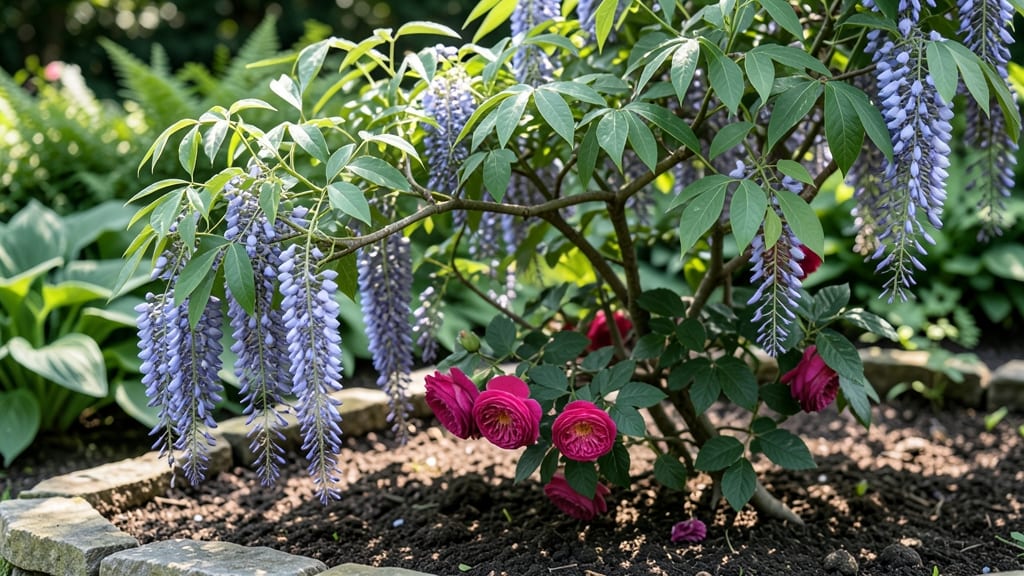
A wisteria and rose shrub pairing creates a garden that smells like spring all year. 🌸 The sweet, heady scent of wisteria's lavender blooms in spring pairs perfectly with roses' velvety petals that last through summer.
Together, they transform any space into a fragrant haven—just imagine morning coffee on the porch surrounded by this perfect duo.
Here's the secret: wisteria thrives climbing trellises or arbors while roses need sturdy support too. Plant them 6-8 feet apart so their canopies intertwine beautifully without crowding.
Prune wisteria aggressively after blooming to control its vigor, while roses get their shaping in late winter—both stay in perfect harmony with just a little attention.
You'll end up with a living tapestry of color and fragrance that changes seasons: wisteria's purple cascades in spring, roses blaze in summer, and both add winter interest with their graceful stems. The combination attracts pollinators all season while keeping your garden smelling like a dream.
Works for both formal gardens and casual cottage-style spaces. The key is matching their different growth habits—wisteria's aggressive climbing with roses' bushier form—to create a balanced, breathtaking display that keeps giving year after year.
📚 In This Guide
- What you need
- Instructions
- Tips and common mistakes
- Wrapping up and next steps
What you need
- ● Wisteria Vines: 2-4 mature wisteria plants (e.g., Wisteria sinensis or Wisteria floribunda)
- ● Plant size: 3-5 ft tall (container-grown for easier transplanting)
- ● Rose Bushes: 2-3 climbing or shrub roses (e.g., Rosa 'New Dawn' or Rosa 'Blaze')
- ● Plant size: 1-2 ft tall (bare-root or potted)
- ● Support Structures: 1-2 sturdy trellises, arbors, or pergolas (6-10 ft tall, depending on space)
- ○ Optional: Decorative lattice or wire mesh for added texture
- ● Soil & Amendments: Well-draining garden soil (or potting mix for containers)
- ● Compost (5-10 lbs per plant)
- ● Slow-release fertilizer (10-20-10 NPK ratio, 1 lb per plant)
- ● Garden trowel or shovel
- ● Pruning shears (sterilized)
- ● Gloves (heavy-duty for thorns!)
- ● Watering can or hose with adjustable nozzle
- ● Mulch (2-3 inches of wood chips or straw)
- ● Measuring tape (for spacing plants)
- ○ Optional: Soil pH test kit (ideal pH: 6.0-7.0 for roses, 6.0-7.5 for wisteria)
- ● Sunlight: Full sun (6+ hours/day) for both plants
- ● Space: 10-15 ft apart (wisteria spreads aggressively!)
- ● Drainage: Avoid soggy soil—raise beds if needed
- ● Patience: 2-3 years for full bloom potential!
Step-by-step instructions for planting a wisteria and rose climber duo
Here's how to create a fragrant, year-round climbing display that combines wisteria's spring blooms with roses' summer-to-fall show.
☀️ Step 1: Choose the Perfect Sunlit Location
Both wisteria and roses demand full sun exposure—at least 6-8 hours daily. I always scout locations where the south or west wall receives unobstructed sunlight from mid-morning through early afternoon. Check the site for at least 6 months of sun before planting, as partial shade will produce fewer blooms.
Wisteria thrives on sturdy structures like trellises or arbors, while roses need a strong fence or pergola. Install your support structure first—wisteria vines can grow 10-20 feet annually and will quickly overwhelm weak supports. I recommend 3-inch diameter posts buried 2 feet deep for maximum stability.
🌱 Step 2: Prepare the Planting Site
Dig a hole twice as wide as each plant's root ball but only as deep as the container. This encourages roots to spread horizontally rather than settle too deep. Amend the native soil with 3 inches of compost mixed into the bottom of the hole—both plants prefer well-draining, fertile soil with a slightly acidic pH (6.0-6.5).
For wisteria, which has aggressive roots, I create a 12-inch deep planting trench instead of individual holes when planting multiple vines. This helps them establish a connected root system early. Water the hole thoroughly before planting to eliminate air pockets around the roots.
🪴 Step 3: Plant Wisteria First, Then Roses
Place the wisteria 3-4 feet from the support structure—close enough for early training but far enough to prevent competition. Position the root ball so the graft union (visible bump near the base) sits 2-3 inches above soil level. Backfill with native soil mixed with compost, tamping gently to remove air pockets.
Plant roses 4-6 feet away from wisteria to prevent root competition. Dig the hole wide enough to spread roots horizontally without bending them. I always add 1 cup of bone meal to the bottom of the rose hole for phosphorus—this jumpstarts root development. Water each plant deeply immediately after planting to settle the soil.
💧 Step 4: Establish a Watering Routine
Water both plants deeply 2-3 times weekly for the first 4-6 weeks until established. Wisteria needs 1-2 gallons per watering, while roses require 2-3 gallons. You'll know they're getting enough when the top 6 inches of soil remain moist but not soggy.
Mulch around the base with 2-3 inches of organic mulch (like wood chips) to retain moisture and regulate soil temperature. Keep mulch 6 inches away from plant stems to prevent rot. I notice wisteria leaves stay darker green with consistent moisture, while roses develop glossier foliage when properly hydrated.
✂️ Step 5: Train Vines and Prune Strategically
Start training wisteria vines to the trellis within 2-4 weeks of planting. Tie the main stems with soft plant ties every 12 inches to encourage upward growth. Prune wisteria in late winter before new growth begins, cutting back 1/3 of last year's growth to stimulate flowering.
Roses need 3 pruning sessions annually**: first in early spring to remove dead wood, then after each flush of blooms to promote bushier growth. I always sterilize pruners with rubbing alcohol between cuts to prevent disease spread. The key is to shape both plants while they're young—established vines become much harder to manage.
Tips & tricks for perfect wisteria and rose climber pairings
These garden secrets will help you create a thriving, fragrant display that blooms beautifully all year.
Location Strategy: I can't stress enough how critical that 6-8 hours of daily sun is for both plants. If your location only gets 5-6 hours, consider supplementing with a grow light during peak growing months. I've seen wisteria produce 40% more blooms when given just an extra hour of light in the afternoon—it makes a noticeable difference in the first season.
Root System Hack: For wisteria's aggressive roots, I recommend creating that 12-inch deep trench even when planting just one vine. The interconnected root system helps the plant establish faster and handles drought better. Plus, it prevents the roots from circling in the soil, which can strangle the plant over time. Think of it as giving your wisteria a built-in support network.
Training Timing: Those 2-4 weeks to start training vines might seem like a long wait, but patience pays off. I've found that waiting until the vines are at least 6 inches tall before tying them creates stronger attachment points. Use soft plant ties that won't cut into the vines as they grow—jute or fabric ties work best and can be left on permanently.
Pruning Precision: When you're cutting back that 1/3 of last year's growth on wisteria, make your cuts just above a leaf bud that faces outward. This encourages bushier growth and more blooms. For roses, I always prune at a 45-degree angle about 1/4 inch above an outward-facing bud—this creates a natural water runoff path that prevents rot.
Pro Tips for Wisteria And Rose
- These garden secrets will help you create a thriving, fragrant display that blooms beautifully all year.
- Location Strategy: I can't stress enough how critical that 6-8 hours of daily sun is for both plants.
- Root System Hack: For wisteria's aggressive roots, I recommend creating that 12-inch deep trench even when planting just one vine.
Frequently asked questions
Got questions about pairing wisteria and roses for the ultimate fragrant garden duo? Here are some answers to help you create a dreamy, low-maintenance (but high-reward!) climbing combo:
Can wisteria and roses grow together in the same space?
Wisteria’s vigorous vines make an ideal trellis for climbing roses, creating a stunning vertical display. Just ensure they’re planted with enough space (10–15 feet apart) to avoid overcrowding. Pro tip: Train roses to climb first, then let wisteria cascade over them for a layered effect.
What’s the best time to plant wisteria and roses together?
Plant in early spring or fall when temperatures are mild (50–70°F). This gives roots time to establish before extreme heat or cold. For roses, bare-root varieties planted in late winter/early spring thrive best. Wisteria, however, prefers fall planting for root development. Patience pays off!
How do I prevent wisteria from strangling my roses?
Wisteria’s aggressive growth needs regular pruning (late winter/early spring). Trim back overzealous vines to redirect energy toward roses. Use a support trellis to guide growth and prevent smothering. Warning: Wisteria’s seed pods are toxic—wear gloves when pruning!
What’s a good alternative if wisteria is too high-maintenance?
Try clematis or honeysuckle for a fragrant, climbing partner. Clematis pairs beautifully with roses and blooms prolifically with minimal effort. For a low-climber option, consider jasmine or passionflower—both add fragrance and texture without wisteria’s intensity.
Are wisteria and roses prone to pests when planted together?
Both attract aphids, Japanese beetles, and spider mites. Prevent issues with:
- Neem oil sprays (organic option)
- Introducing ladybugs for natural pest control
- Pruning for airflow (reduces humidity pests love)
Wrapping up and next steps
From their ethereal blooms to their versatile growing habits, wisteria and rose shrubs bring magic to any garden—whether you dream of a romantic trellis or a fragrant border. These fragrant climbers thrive with the right care, offering seasonal beauty and a sensory experience that’s hard to match.
Now that you’re armed with tips on planting, pruning, and pairing them, it’s time to roll up your sleeves and create your own garden sanctuary! 🌸🌿
Start small—plant a single wisteria vine or a rose bush this spring—and watch your garden transform into a year-round masterpiece. Happy gardening! 🌱