
Pests and Diseases
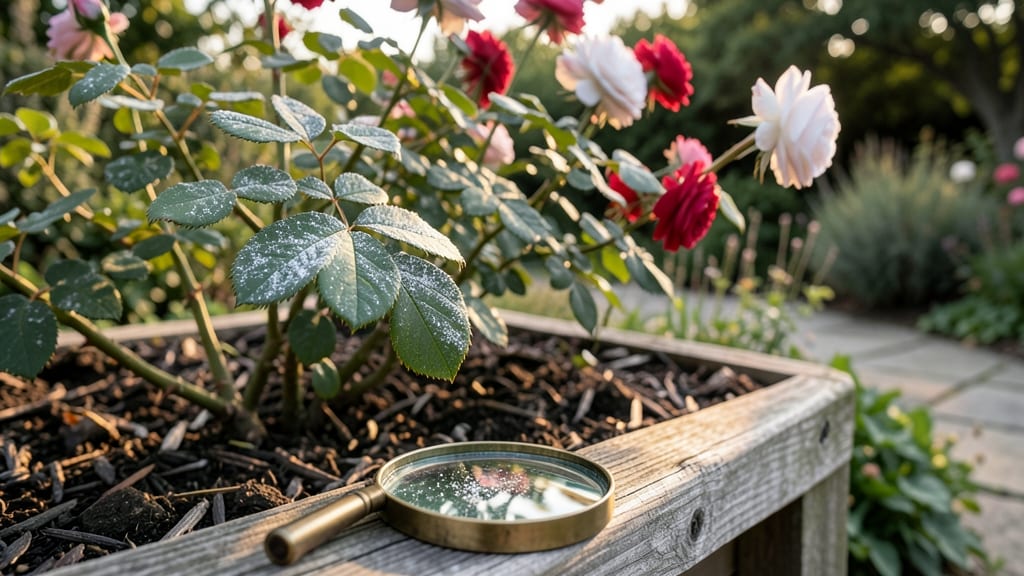
That white powder on your roses isn't dust—it's powdery mildew, and it spreads faster than you think. ✨ I've battled this stubborn fungus for years, and I know how frustrating it is to see those delicate blooms covered in chalky residue.
The good news? You can turn things around with the right approach, and I'm sharing exactly how—starting with why it shows up in the first place.
Powdery mildew thrives when roses get too crowded, with poor airflow letting humidity linger on leaves. I learned this the hard way after my once-vibrant bushes turned into powdery messes every summer.
The key is catching it early—before it moves to new growth—and giving your plants the space they need to breathe. Trust me, proper spacing and pruning make all the difference.
You can stop the spread with simple organic treatments like neem oil or baking soda spray, both of which I've used to clear up infections in just a few weeks. The secret is consistency: spray when the leaves are dry, and repeat every 7-10 days until the powder disappears.
Your roses will bounce back with stronger stems and healthier blooms—just like mine did after that first frustrating season.
This isn't just a quick fix—it's about long-term care that keeps your roses thriving year after year. Once you understand the patterns, you'll spot the early signs before they become a problem. Let's get those bushes back to their best, powder-free glory.
Root Causes of White Powder
Seeing that mysterious white powder on your roses can feel like a puzzling mystery—especially when it seems to appear overnight. 🌱✨ But don’t worry! This issue almost always stems from a few key culprits, each with a distinct trigger.
Understanding why it happens is the first step to stopping it in its tracks. Below, we break down the science behind the most common causes, so you can diagnose—and fix—the problem with confidence.
Fungal infections, like powdery mildew or downy mildew, are the #1 reason for white powder on roses. These fungi thrive in warm, humid environments and spread via microscopic spores floating in the air.
- How it works: Spores land on rose leaves, stems, or buds, then germinate when conditions are ideal—typically 70–85°F (21–29°C) with high humidity or prolonged leaf wetness (like morning dew or overhead watering).
- Visual clues: The powder is often light gray or white, fuzzy, and spreads on upper leaf surfaces (powdery mildew) or lower surfaces (downy mildew, which may also show yellow patches).
- Why it’s sneaky: Fungal spores can lie dormant in soil or plant debris for years, waiting for the perfect moment to strike. Poor air circulation (like crowded plants) or shaded areas accelerates their growth.
💡 Pro Tip: Check for fungal spores under a hand lens—they look like tiny, powdery dots on leaf surfaces. If you see them, act fast!
While pests like aphids, spider mites, or scale insects don’t directly cause white powder, their feeding weakens roses, making them more susceptible to fungal infections. Here’s how:
- How it works:
- Aphids excrete honeydew (a sticky sap), which attracts sooty mold—a black, powdery fungus that looks like white powder from a distance but is actually a different color.
- Spider mites create fine webbing and puncture plant cells, stressing the rose and reducing its ability to fight off diseases.
- Scale insects leave behind white, waxy residue that can mimic powder but is actually their protective coating.
- Visual clues:
- Look for sticky residue on leaves (honeydew) or tiny webs (mites).
- White powder from pests is often localized (e.g., only on certain stems or buds) rather than spread evenly.
🔥 Key Difference: Unlike fungal powder, pest-related "powder" usually wipes off with a damp cloth or disappears after treating the pests.
Roses under stress are like open doors for fungal invaders. Environmental factors like overwatering, poor drainage, or nutrient deficiencies create the perfect storm for white powder to take hold.
| Stressor | How It Helps Fungi | Signs to Watch For |
|---|---|---|
| Overwatering | Keeps leaves wet for long periods, giving spores a moist environment to germinate. | Yellowing leaves, mushy stems, or soil that stays soggy. |
| Poor Airflow | Traps humidity near leaves, preventing evaporation and speeding up spore growth. | Leaves stay damp even after watering, or plants are crowded. |
| Nitrogen Deficiency | Weakens plant cell walls, making them easier targets for fungi. | Pale green or yellowing leaves, stunted growth. |
| High Organic Matter in Soil | Can harbor fungal spores and attract pests that spread disease. | Soil smells musty or has visible debris buildup. |
🌡️ Temperature Matters: Fungi love warm nights (above 60°F/15°C) with cool days—this slow moisture evaporation, keeping leaves damp longer.
Not all white powder is biological! Sometimes, it’s a harmless (but annoying) side effect of water or soil chemistry.
- Hard Water Buildup:
- Water with high calcium or magnesium leaves white crusty deposits on leaves, especially in hot sun.
- Test: Wipe the powder with a damp cloth—if it smudges like chalk, it’s mineral residue.
- Fertilizer Burn:
- Over-fertilizing (especially with high-salt fertilizers) can cause white, powdery spots as salts crystallize on leaves.
- Signs: Leaf edges turn brown, and powder appears only on treated areas.
✨ Good News: Unlike fungal powder, mineral deposits won’t harm your roses—just rinse leaves with water to remove them!
Quick Fixes for Powdery Problems
Got that unsightly white powder ruining your roses? Don’t panic—most causes have simple, effective solutions. Below, we’ll break down how to treat and prevent the most common culprits, from fungal infections to environmental stressors. Follow these step-by-step fixes to restore your roses to their glorious, bloom-filled selves!
If the white powder resembles talcum powder or a fuzzy coating, you’re likely dealing with a fungal disease like powdery mildew, sooty mold, or even downy mildew. Here’s how to tackle it:
🔥 Step 1: Prune & Remove Infected Areas
- 🌿 Trim away heavily infected leaves, stems, or buds with sterilized pruners (wipe with rubbing alcohol between cuts).
- 🗑️ Dispose of infected plant debris in the trash (not compost)—fungi can survive and reinfect.
- ✂️ Thin out foliage to improve airflow, reducing humidity where fungi thrive.
🍳 Step 2: Apply Fungicidal Treatments
Choose one of these organic or chemical options, depending on severity:
| Treatment | How to Use | Best For |
|---|---|---|
| Neem Oil Spray | Mix 1 tsp neem oil + 1 tsp mild soap + 1 quart water. Spray evenly on both sides of leaves. Repeat every 7–10 days. | Mild to moderate infections |
| Baking Soda Solution | Combine 1 tbsp baking soda + 1 tsp oil + 1 gallon water. Spray early morning (avoid direct sun). | Early-stage powdery mildew |
| Sulfur or Copper Fungicide | Follow label instructions for spray or dust application. Reapply after rain. | Severe or persistent fungal outbreaks |
| Hydrogen Peroxide (3%) | Mix 1 tbsp 3% H₂O₂ + 1 quart water. Spray directly on infected areas. | Spot treatments for small outbreaks |
💡 Pro Tip: Always test a small area first—some roses (especially hybrid teas) can be sensitive to sulfur or copper.
🌡️ Step 3: Adjust Growing Conditions
Fungi love moist, shady environments. Counteract this by:
- ⚡ Increasing airflow – Space plants 3–4 feet apart and avoid overcrowding.
- ☀️ Boosting sunlight – Most roses need 6+ hours of direct sun daily.
Prune nearby trees/shrubs blocking light. - 💦 Watering wisely – Water at the base (not overhead) early in the day so foliage dries quickly.
If the white powder is sticky, waxy, or clustered in cottony masses, pests like aphids, scale, or mealybugs are likely the culprits. Their honeydew secretions attract sooty mold, creating that powdery film.
👨🍳 Step 1: Blast Off Pests with Water
- 💦 Spray roses with a strong jet of water to knock off pests. Repeat every few days for severe infestations.
- 🌬️ Use a fan on low speed to dislodge stubborn pests like scale.
🔪 Step 2: Introduce Natural Predators or Soap Sprays
| Solution | How to Use |
|---|---|
| Insecticidal Soap | Mix 2.5 tbsp mild castile soap + 1 quart water. Spray directly on pests (avoid hot sun). Repeat every 5–7 days. |
| Neem Oil (Again!) | Same mix as above—disrupts pest life cycles and deters future infestations. |
| Beneficial Insects | Release ladybugs, lacewings, or parasitic wasps (available at garden centers). |
| Horticultural Oil | Apply in early spring or fall to smother eggs and pests (follow label rates). |
💡 Pro Tip: Avoid chemical pesticides—they can harm beneficial insects that keep pests in check!
✨ Step 3: Prevent Reinfestation
- 🍃 Inspect new plants before bringing them home.
- 🌿 Keep garden clean – Remove fallen leaves/debris where pests hide.
- 🌱 Use reflective mulch (like aluminum foil) to deter aphids.
If the white powder looks like crusty salt deposits, chalky residue, or fine dust, your roses might be reacting to over-fertilization, hard water, or airborne pollutants.
🧼 Step 1: Cleanse the Plant
- 💦 Gently wipe leaves with a damp cloth dipped in mild soapy water (1 tsp dish soap per gallon).
- 🚰 Rinse thoroughly to remove residue.
📊 Step 2: Adjust Soil & Water
| Issue | Fix It With This |
|---|---|
| Fertilizer Burn | Flush soil with water to dilute excess salts. Switch to organic, slow-release fertilizer. |
| Hard Water Buildup | Collect rainwater for watering or install a water softener. |
| Airborne Dust/Pollution | Mist leaves lightly with water to wash away particles. Use organic fungicides as a preventive barrier. |
🎯 Step 3: Long-Term Prevention - 🌱 Test soil pH (ideal for roses: 6.0–6.5).
Amend with sulfur (to lower pH) or lime (to raise it) if needed. - 💧 Water deeply but less frequently to prevent salt buildup. - 🌿 Use mulch (like pine straw) to lock in moisture and reduce evaporation.
Once your roses are back in shape, prevention is key! Follow this monthly checklist to keep fungal diseases and pests at bay:
✅ Monthly: Spray with neem oil or baking soda solution (even as a preventive). ✅ Every 2 Weeks: Inspect undersides of leaves for early signs of powder or pests. ✅ Seasonal: Prune in late winter/early spring to improve airflow. ✅ Yearly: Test soil and rotate fertilizers to avoid buildup.
With these targeted solutions, your roses should be free of white powder in 2–4 weeks. Stay vigilant, and your garden will thank you with vibrant, healthy blooms all season! 🌹✨
Frequently asked questions
Is white powder on roses always a sign of disease?
Not necessarily! While fungal infections like powdery mildew are the most common cause, white powder can also result from harmless mineral deposits (like hard water buildup) or pest-related honeydew attracting sooty mold. Always check for other symptoms like leaf yellowing or sticky residue to confirm the cause.
How quickly can I expect to see results after treating fungal powder?
With consistent treatment (like neem oil sprays every 7-10 days), you should see noticeable improvement in 1-2 weeks. Severe cases may take up to 4 weeks to fully clear, especially if you combine treatments with pruning and better airflow. Patience is key!
Can I still use my roses if they have white powder?
Yes, but with caution. Cut flowers from infected plants may have reduced vase life, and the powder can spread to nearby plants. Always remove infected leaves before bringing bouquets indoors, and isolate affected plants until fully treated. Healthy roses make the best cut flowers!
Will my roses die if I don't treat the white powder?
While roses are hardy, severe fungal infections can weaken plants over time, reducing blooms and even killing affected stems. The good news is that most roses recover well with proper treatment. Early intervention is the best way to prevent long-term damage and keep your bushes thriving.
How do I know if my white powder is from pests vs. fungus?
Pest-related powder (like from aphids or scale) often appears sticky or waxy, while fungal powder looks more like talcum powder. Check for tiny webs (mites) or cottony masses (mealybugs). Another clue: fungal powder usually spreads evenly, while pest powder often appears in clusters where insects feed.