
Pruning
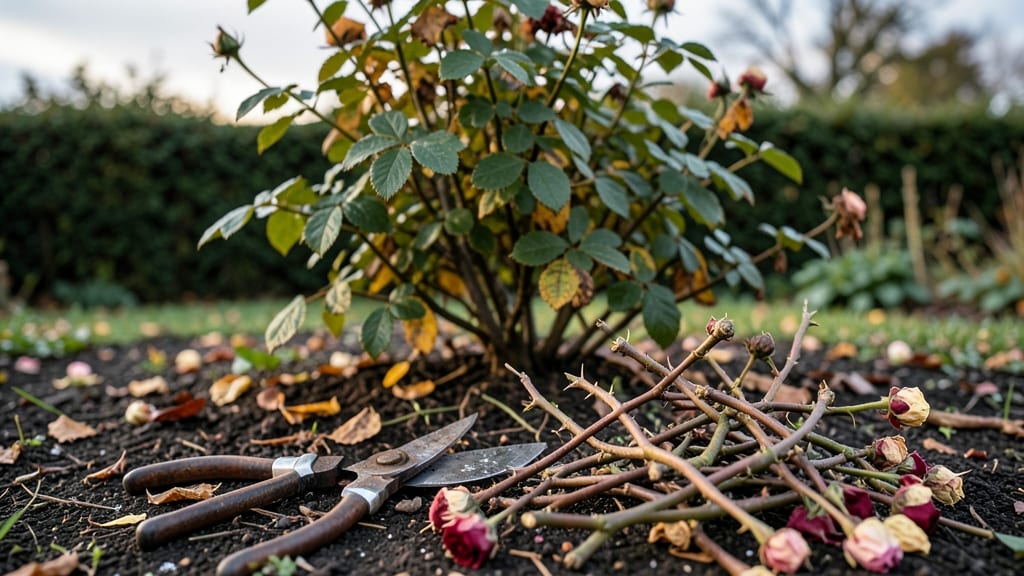
Trimming back roses for winter 4-6 weeks before your first hard frost is the key to protecting them from dieback and setting up next year’s blooms.
Winter’s harsh freeze can devastate your 🌹 if you trim them too early—or too late. Timing your prune just right ensures healthier blooms next spring and prevents the heartbreak of dead canes in spring.
In USDA Zone 6a, that window falls between mid-October and early November, but your exact timing depends on your local frost date and rose variety. Get it wrong, and you risk exposing tender growth to cold snaps or leaving too much foliage that can harbor pests.
Below, I’ll walk you through the exact steps to prune, what tools you’ll need, and how to avoid the five biggest mistakes that even experienced gardeners make every year.
The ideal late fall rose pruning timeline: when and why to trim
Winter’s harsh freeze can devastate your roses if you trim them too early—or too late. The 4-6 week window before your first hard frost is your sweet spot for late fall pruning.
This timing gives roses time to heal while still protecting them from extreme cold. In USDA zones 3-10, that means acting between late October and mid-November in most regions.
Pruning too early exposes fresh cuts to late-season pests and diseases, while waiting too long risks damaging canes that haven’t hardened off. The key is to trim when roses are dormant but not dead—look for browned leaves and slowed growth, but still-green canes.
This late fall pruning prepares your roses to survive winter and bounce back stronger in spring.
Your local climate matters more than calendar dates. In warmer zones (7-10), you might prune as late as December, while colder zones (3-6) need to finish by early November. Always check your average first frost date and count backward 4-6 weeks to set your pruning deadline.
Identifying dormant but not dead canes is crucial—this is where many gardeners go wrong. Healthy canes should feel firm but pliable, not brittle. Look for green under the bark when you scrape a small section with your fingernail.
If you see green, the cane is still alive and worth preserving. Over-pruning removes next year’s blooms, so aim to leave 3-5 strong canes per bush.
Why does timing matter so much? Pruning too early leaves cuts vulnerable to rose rosette virus and fungal infections. Waiting too long risks cane dieback from winter’s freeze-thaw cycles. The 4-6 week window gives your roses just enough time to callus over cuts while still protecting them from extreme cold.
Think of it as giving your roses a healing blanket before winter’s deep freeze.
Regional variations extend beyond USDA zones. Coastal areas with milder winters can prune later, while inland regions with sharp temperature drops need to finish earlier. Always monitor your local weather forecasts—a sudden early frost can ruin your pruning timing.
For hybrid teas, prune slightly earlier than shrub roses, as they’re more sensitive to winter damage.
Pro tip: Mark your pruning date on your garden calendar based on your local first frost date. Add a reminder to check cane health 2 weeks before your target date—this gives you flexibility if weather delays your pruning.
Remember, healthy canes = stronger blooms next spring. The effort you put into timing now will pay off with vibrant flowers in May.
If you’re unsure whether to prune, err on the side of waiting too late rather than too early. A slightly unruly rose bush can survive winter, but over-pruned canes won’t regrow.
This is especially true for older roses, which have more stored energy in their canes. Give them the benefit of the doubt—you can always prune more next spring if needed.
Once you’ve nailed your timing, the next step is proper technique. Always use clean, sharp pruners to make clean cuts at 45-degree angles just above an outward-facing bud. This encourages healthy regrowth and proper bush shape.
But first, you’ve got to get the timing right—because even the best technique won’t help if you prune at the wrong time.
🌹
Step-by-step late fall pruning guide: what to cut and what to keep
Late fall pruning is your roses' secret weapon against winter dieback. By removing dead, diseased, or weak canes while preserving healthy buds (eyes), you create a sturdy framework for next year's blooms.
The key? Prune when your roses are dormant but not frozen—typically 4-6 weeks before the first hard frost in your zone.
Use sharp, clean bypass pruners to make cuts at a 45-degree angle, about 1/4 inch above an outward-facing bud. This angle helps water run off, preventing rot.
For hybrid teas, aim to leave 12-18 inches of cane, while shrub roses can be trimmed slightly shorter to encourage bushier growth.
Your Late Fall Rose Pruning Checklist
- 1 Remove the bad first: Snip out all blackened, mushy, or hollow canes—these won’t recover. Look for cracks or oozing sap, which signal disease.
- 2 Identify the "eyes": Healthy buds (eyes) appear as tiny bumps where leaves or blooms once grew. Count 3-5 buds from the base upward on each remaining cane.
- 3 Make the cuts: Trim just above a bud facing outward (not inward). For hybrid teas, leave 12-18 inches of cane; for shrub roses, 10-12 inches is ideal.
- 4 Shape for airflow: Thin out crowded canes to improve circulation. Aim for an open vase shape—this reduces moisture buildup and fungal risks.
- 5 Clean up: Rake and dispose of pruned debris (don’t compost diseased material). Sterilize tools with rubbing alcohol to prevent spreading pathogens.
Pro tip: Label your roses before pruning if you have multiple varieties. This helps track which canes belong to which plant—especially useful for climbing roses or repeat-blooming hybrids. After pruning, apply a 3-inch layer of mulch around the base to insulate roots.
If you’re in USDA zones 7-10, where winters are milder, you can prune slightly later—even into early November. But in zones 3-6, finish by mid-October to avoid late-season growth, which is vulnerable to frost damage. Always check your local first frost date for precision.
Remember, the goal isn’t perfection—it’s health and structure. A well-pruned rose bush will reward you with vigorous new growth in spring and fewer pests over winter. Grab your pruners and get started—your roses will thank you next bloom season! 🌹