Blooming
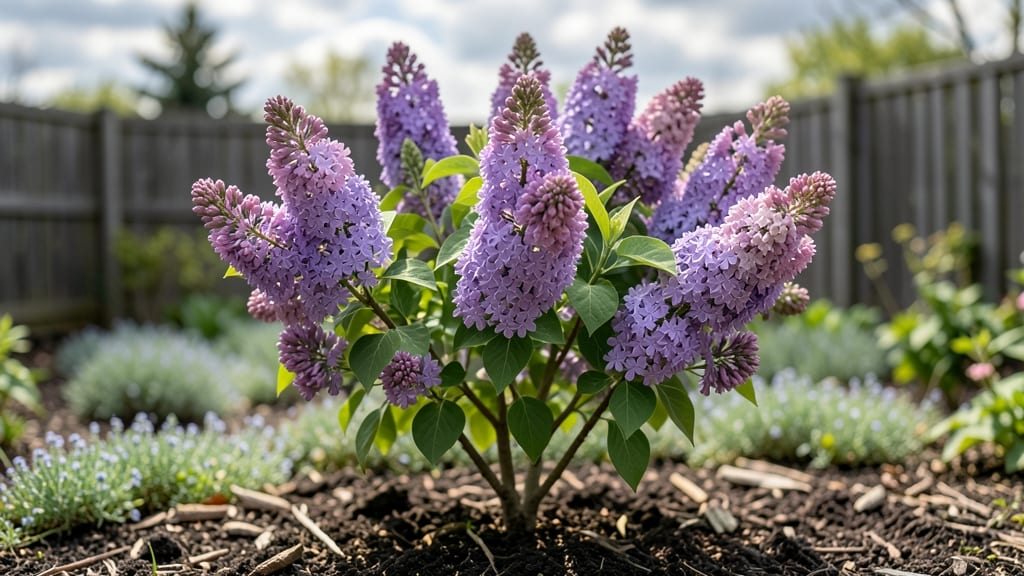
Lilacs in Colorado bloom between late April and early June, but the exact timing depends on your elevation and microclimate.
Picture this: you’ve waited all winter for that first whiff of fragrant lilac blossoms 🌸, only to realize your neighbor’s bushes are already in full bloom while yours are still dormant. That’s Colorado’s altitude at work—where a 500-foot difference can mean weeks between blooms.
The secret lies in your USDA zone and local frost patterns. Gardeners in zone 5 (higher elevations) often see lilacs open in early June, while those in zone 7 (lower elevations) may catch their first blooms as early as late April.
Below, I’ll break down how to predict your lilacs’ first bloom date—and how to nudge them into flowering just a little earlier if you’re eager to enjoy them.
You’ll also discover the best lilac varieties for Colorado’s short growing season, from early bloomers like ‘Katherine Havemeyer’ to late-season stars like ‘Miss Canada.’ With the right prep, you can extend your garden’s floral display from spring into early summer.
Colorado lilac bloom times by altitude zone: a detailed guide
Colorado’s lilacs are iconic symbols of spring, but their bloom times shift dramatically with elevation. At lower elevations near 2,500 feet, lilacs often burst into color by late April, while those above 8,000 feet may wait until early June.
This variation makes timing everything for gardeners eager to enjoy their fragrant blooms.
Understanding your altitude zone is critical because higher elevations experience cooler temperatures and shorter growing seasons. For example, the 'Katherine Havemeyer' variety might bloom in mid-May at 5,000 feet but delay until early June at 7,500 feet. Let’s break down the bloom windows for Colorado’s five primary altitude zones.
🌿
| Altitude Zone (ft) | USDA Zone | Avg. Bloom Window | Best Varieties | Notes |
|---|---|---|---|---|
| 2,500–4,000 | 6b–7a | Late April–Early May | 'Katherine Havemeyer', 'Miss Canada' | Early bloomers; full sun essential. |
| 4,000–5,500 | 5b–6a | Mid-May | 'Dwarf Korean', 'Mme. Lemoine' | Moderate elevation; prune after blooming. |
| 5,500–7,000 | 5a–5b | Late May–Early June | 'Beauty of Moscow', 'President Lincoln' | Cooler temps delay blooms; protect from late frosts. |
| 7,000–8,500 | 4b–5a | Early–Mid June | 'Arctic Beauty', 'Dwarf Blue' | Hardy varieties; shorter growing season. |
| 8,500–10,000+ | 3b–4a | Mid–Late June | 'Russian Lilac', 'Alaska' | Late bloomers; plant in sheltered spots. |
In lower elevations (2,500–4,000 ft), lilacs like 'Katherine Havemeyer' often bloom as early as late April, aligning with Colorado’s USDA Zone 6b–7a. These areas enjoy longer growing seasons, allowing lilacs to take full advantage of spring warmth.
For gardeners in Denver or Colorado Springs, this means planning for early spring pruning to encourage robust blooms.
At mid-elevations (4,000–7,000 ft), such as Fort Collins or Boulder, lilacs typically bloom in mid-May. Varieties like 'Dwarf Korean' thrive here, offering compact size and fragrant blooms.
The cooler nights at these elevations can delay blooming by 1–2 weeks compared to lower zones, so monitor bud development closely.
Above 7,000 feet, lilacs face shorter growing seasons and later frost risks. In USDA Zone 4b–5a, such as Estes Park or Salida, lilacs like 'Beauty of Moscow' may not bloom until early June.
To protect them, plant in south-facing locations and mulch heavily to retain soil warmth.
For high-altitude gardens (8,500+ ft), such as Leadville or Aspen, lilacs are still possible but require hardy varieties like 'Russian Lilac'. These plants often bloom in mid-to-late June, making them a late-spring highlight. Choose sheltered spots to minimize wind damage and extend the blooming window.
How to predict your lilacs’ first bloom date in Colorado
Predicting when your lilacs will bloom in Colorado can feel like guessing—until you factor in elevation and microclimates. While most gardeners in Denver (5,280 ft) expect blooms by mid-May, those in Fort Collins (5,000 ft) might see them a week earlier.
The key lies in understanding your last frost dates and how your yard’s sun exposure differs from neighbors’. Let’s break it down so you can plan your garden like a pro.
Start by checking Colorado State University’s historical frost data for your county. For example, Colorado Springs (6,000 ft) typically sees its last frost around April 25, while Grand Junction (4,800 ft) warms up by April 10.
Lilacs need 10–14 days of consistent warmth after the last frost to trigger blooming. Urban areas like Aurora may bloom 3–5 days earlier than rural spots due to the urban heat island effect.
🌸 5 Key Steps to Predict Lilac Blooms
- 📅 Step 1: Find your USDA Zone (5–7 for Colorado) and check last frost dates from Colorado State University.
- 🌡️ Step 2: Add 10–14 days to your last frost date for bud swell timing (when buds plump up).
- ☀️ Step 3: Adjust 1 week earlier if your yard gets full sun (6+ hours/day)** and 1 week later for partial shade.
- 🏙️ Step 4: Urban gardens bloom 3–5 days earlier than rural areas due to heat retention.
- 📊 Step 5: Track your lilac’s bud development in spring—green buds mean blooms in 7–10 days!
For high-altitude gardens (7,000+ ft), like those in Boulder or Fort Collins, lilacs often bloom 2 weeks later than their lower-elevation counterparts. This is because cooler nights delay bud opening.
If you’re planting new lilacs, choose early-blooming varieties like 'Dwarf Korean' (blooms in late April) or 'Miss Canada' (mid-May) to beat the clock.
Don’t overlook microclimates within your yard. A south-facing slope will warm up faster than a north-facing corner, potentially pushing blooms 5–7 days earlier. If your lilac is near a stone wall or pavement, it may bloom 1 week ahead of others due to retained heat.
Conversely, windy areas can delay blooming by 3–5 days by stressing the plant.
Pro tip: Use a gardening journal to record your lilac’s bloom dates for 2–3 years. Over time, you’ll spot patterns—like how late May frosts in Pueblo (4,700 ft) can nip buds, or how early April rains in Denver extend the bloom season by 10 days.
Share your data with local gardening groups to refine predictions for your neighborhood!
With these tools, you’ll go from guessing to precision planning. Soon, you’ll be the first on your block to enjoy that intoxicating lilac scent—and maybe even extend the season with a few strategic adjustments. Happy blooming! 🌸