
Plants
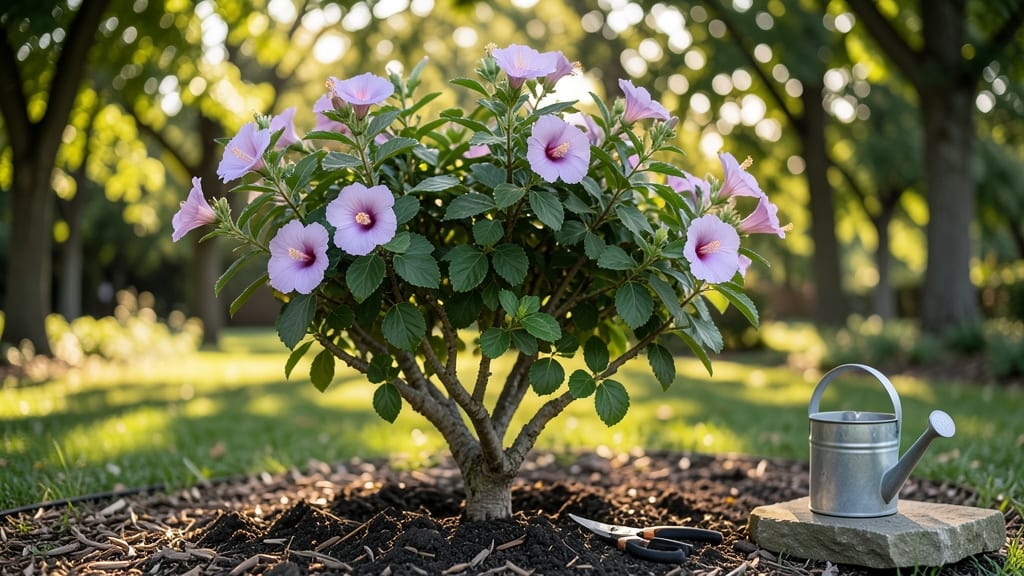
Rose of Sharon seeds look like tiny, flat capsules that split open to reveal delicate, winged seeds about 1/8-inch long, designed to spin like helicopter blades when carried by wind.
These seeds start as green, pod-like structures that harden and turn brown as they mature, eventually bursting open to release their winged cargo. 🌬️ The wing design isn't just for show—it's a clever adaptation that helps seeds travel farther from the parent plant, increasing survival odds.
I've noticed they often appear in clusters after the plant's vibrant blooms fade, making them easy to spot among dried foliage.
If you're trying to identify them in your garden, look for these papery wings that catch the light when they flutter in the breeze. They're smaller than dandelion seeds but share the same wind-dispersal strategy.
Unlike maple samaras, which have broader wings, Rose of Sharon seeds are more slender and delicate, almost like nature's version of a tiny paper airplane.
💡 In This Article
- How Rose of Sharon Seed Structure Enables Wind Propagation
- Identifying Rose of Sharon Seeds in Garden Waste and Wild Growth
How Rose of Sharon seed structure enables wind propagation
The winged seeds of Rose of Sharon (Hibiscus syriacus) are a masterclass in botanical engineering, designed to maximize wind dispersal efficiency.
Each seed's papery wing extends about 1/4-inch from the seed body, creating a total length of roughly 1/2-inch—about the size of a grain of rice with a tiny sail. These wings increase surface area by 30-40% compared to the seed itself, allowing them to catch even gentle breezes.
The aerodynamics work like a helicopter rotor: when wind hits the wing at an angle, it creates lift while the seed's lightweight (0.005 grams each) prevents excessive drag.
This design lets seeds travel 10-20 feet per minute in moderate winds, far beyond what gravity alone could achieve. 🌬️ Unlike dandelion seeds that rely on parachute-like structures, Rose of Sharon seeds use their wings to spin and glide, covering horizontal distances more efficiently than vertical ones.
This propagation strategy serves two critical purposes: first, it reduces competition between parent plants and offspring by spreading seeds widely; second, it targets disturbed or open areas where new plants can establish.
The wings' delicate nature means they're easily damaged by rain, which ensures seeds only disperse during dry periods when germination conditions are optimal. This contrasts with maple samaras, which have sturdier wings for longer-distance travel.
Interestingly, the seed pods themselves play a role in dispersal timing. They remain closed until internal moisture levels drop below 15%, at which point they split open explosively—catapulting seeds up to 3 feet into the air.
This two-stage system (pod explosion + winged flight) creates a "seed fountain" effect that maximizes dispersal range. 💫 The pods' brown, papery texture also helps them blend into dried foliage until they're ready to release seeds.
For gardeners, understanding this mechanism explains why Rose of Sharon spreads so readily: each plant can produce 1,000+ seeds per season, and their wind-propelled design means even small breezes can carry them hundreds of feet.
The wings' fragility is both their strength and weakness—while perfect for dispersal, they make seeds vulnerable to being washed away by heavy rain or eaten by birds before germination.
This wind dispersal system isn't unique to Rose of Sharon but represents an evolutionarily successful adaptation shared by many plants in open habitats.
The key difference lies in the wing's proportions: Rose of Sharon seeds have narrower, more delicate wings compared to maple's broader samaras, optimizing for shorter-distance but more precise seed placement in garden ecosystems.