
Plants
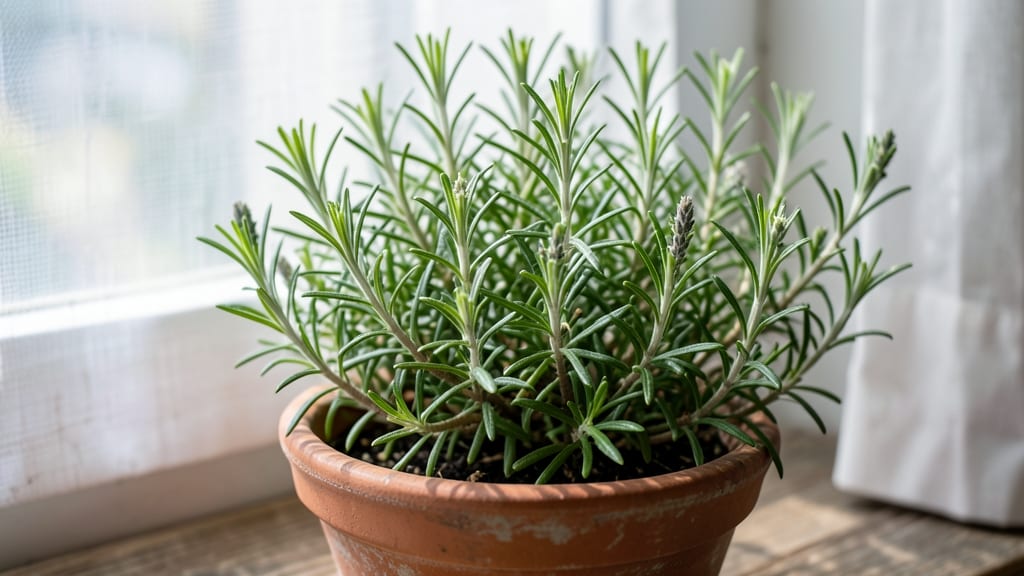
A rosemary seedling looks like miniature rosemary with tiny, needle-like leaves that grow in pairs along slender stems. The young plant has a delicate, fuzzy appearance and light green foliage, gradually developing a woody base and strong herbal aroma as it matures.
A rosemary seedling's most distinctive feature is its needle-shaped leaves, which are much smaller than adult plants but already carry the same aromatic potential. 🌱 The fuzzy texture comes from fine hairs on the stems and undersides of leaves, helping them retain moisture in dry conditions.
Unlike basil seedlings, which grow broad leaves quickly, rosemary takes its time—expect slow but steady vertical growth with stems that develop a slight woody feel at the base within a few weeks.
What sets young rosemary apart from other herbs is its growth pattern. While thyme and oregano spread low to the ground, rosemary seedlings shoot upward early, often reaching 2-3 inches in their first month.
The scent develops gradually, so you might not notice it until the plant is about 3-4 inches tall. This delayed fragrance is normal—patience pays off as the leaves mature and intensify their signature piney aroma.
💡 In This Article
- Identifying Rosemary Seedling Traits vs Other Herbs
- Caring for Young Rosemary Seedlings: Light, Soil, and Water Needs
Identifying rosemary seedling traits vs other herbs
Rosemary seedlings have needle-like leaves that grow in pairs along slender stems, a key trait that distinguishes them from other herbs. Unlike basil seedlings, which develop broad, rounded leaves within days, rosemary's foliage remains narrow and elongated—often just ¼ to ½ inch long—even as the plant grows.
The leaves also have a slightly curled or rolled appearance at the edges, giving them a delicate, almost feathery look when viewed up close.
The stem texture is another dead giveaway. Young rosemary stems are covered in fine, downy hairs that create that signature fuzzy appearance, while thyme and oregano seedlings have smoother, more hairless stems.
This fuzziness isn't just for show—it's an evolutionary adaptation to reduce water loss in rosemary's native Mediterranean climate. 🌱 What's more, rosemary's early growth is vertical, with stems reaching 2-4 inches in their first month, unlike oregano, which spreads horizontally almost immediately.
Scent plays a crucial role in identification too. While basil seedlings smell faintly sweet and anise-like, and thyme has a mild, almost grassy aroma, rosemary seedlings take 3-4 weeks to develop their signature piney fragrance.
This delayed scent is normal—it's a sign the plant is focusing energy on root development before producing volatile oils. Pro tip: Crush a few leaves between your fingers to release the aroma; if it smells faintly herbal but not overpowering, it's likely rosemary.
Here's how to spot common misidentifications:
- Basil: Broad, serrated leaves that grow in clusters; stems are square-shaped and hollow
- Thyme: Tiny, oval leaves growing low to the ground; stems are woody but hairless
- Oregano: Rounded leaves with a slightly fuzzy texture but stems spread horizontally
The woody base is another telltale sign. Within 4-6 weeks, rosemary seedlings develop a slightly rigid, green-brown stem at the base—this is your confirmation that the plant is on track.
This early woodiness is what allows mature rosemary to thrive in dry conditions, unlike basil or parsley, which remain soft-stemmed throughout their lives.
Light exposure affects these traits too. Seedlings grown in low light will have paler leaves and slower growth, while those in full sun develop a deeper green hue and stronger scent within weeks. This is why starting seeds indoors under grow lights helps preserve their true characteristics before transplanting.